
Insights
Language Interpretation and Translation Services: 7 Compliance Mistakes Healthcare Providers in Louisville KY Are Making
Published February 13, 2026 · By Stephen Gardner
Last month, a Louisville area hospital administrator called us in a panic. They'd just received notice of an upcoming civil rights compliance audit and, after a quick internal review, realized their language access policies were, in their words, "basically held together with duct tape and good intentions." They're not alone. Across Louisville's healthcare landscape, providers are unknowingly setting themselves up for compliance headaches that could result in costly fines, loss of federal funding, or worse, compromised patient safety.
If you're receiving Medicare or Medicaid reimbursements, you're obligated to provide language access under Title VI of the Civil Rights Act. That's not a suggestion. It's federal law. Yet many Louisville healthcare providers are making the same preventable mistakes when it comes to interpretation and translation services. Let's walk through the seven most common compliance errors we're seeing and how to fix them before an auditor comes knocking.
Mistake 1: Thinking "We Don't See That Many LEP Patients" Means You Don't Need a Plan
Here's a conversation we hear regularly: "We only have a handful of patients who don't speak English well. Do we really need a formal language access plan?" The short answer is yes. The longer answer involves understanding what the Department of Justice calls the Four Factor Analysis.
Federal compliance doesn't hinge on whether you think you see enough limited English proficiency patients. It's based on an objective evaluation of your patient population, the frequency of contact with LEP individuals, the nature and importance of your services, and the resources available to you.
Even if Spanish-speaking patients only represent five percent of your patient base, if they're accessing critical services like emergency care, oncology consultations, or surgical consent processes, you're required to have appropriate language access in place.

Louisville's demographics are shifting. According to recent census data, the city's Hispanic population has grown significantly over the past decade, and we're seeing increasing numbers of Burmese, Arabic, and Swahili speakers throughout Jefferson County. If your compliance plan was written in 2015 and hasn't been updated, you're likely out of step with both your current patient population and regulatory expectations.
Mistake 2: Relying on Bilingual Staff Who Aren't Certified Linguists
This one trips up even well-intentioned providers. You have a nurse who grew up speaking Spanish at home or a front desk coordinator who's conversationally fluent in Arabic. It seems logical to use these internal resources for interpretation, right? From a compliance standpoint, it's a minefield.
The problem isn't that your staff members aren't trying their best. It's that medical interpreting requires specialized training that goes far beyond conversational fluency. A certified linguist understands medical terminology in both languages, knows how to remain impartial, can navigate cultural nuances that affect care, and has been trained in HIPAA compliance and interpreting ethics.
When you use untrained bilingual staff for medical interpretation, you're exposing your organization to liability. If a medication dosage gets mistranslated, if critical symptoms are described inaccurately, or if a patient doesn't truly understand the risks they're consenting to, your organization bears the responsibility. We've worked with Louisville providers who've had to manage the fallout from these situations, and the legal and reputational costs far exceed what they would have spent on professional language services.
Mistake 3: Treating Document Translation as an Afterthought
Patient-facing documents: discharge instructions, consent forms, treatment plans, and billing statements—these aren't just nice-to-have materials. If you're serving LEP populations, translated documents are a compliance requirement. Yet this is often where Louisville healthcare providers cut corners.
We regularly see providers using free online translation tools for patient documents, asking bilingual employees to "quickly translate" complex medical forms, or worse, handing patients an English-only document and hoping for the best. None of these approaches meet compliance standards, and all of them put patients at risk.

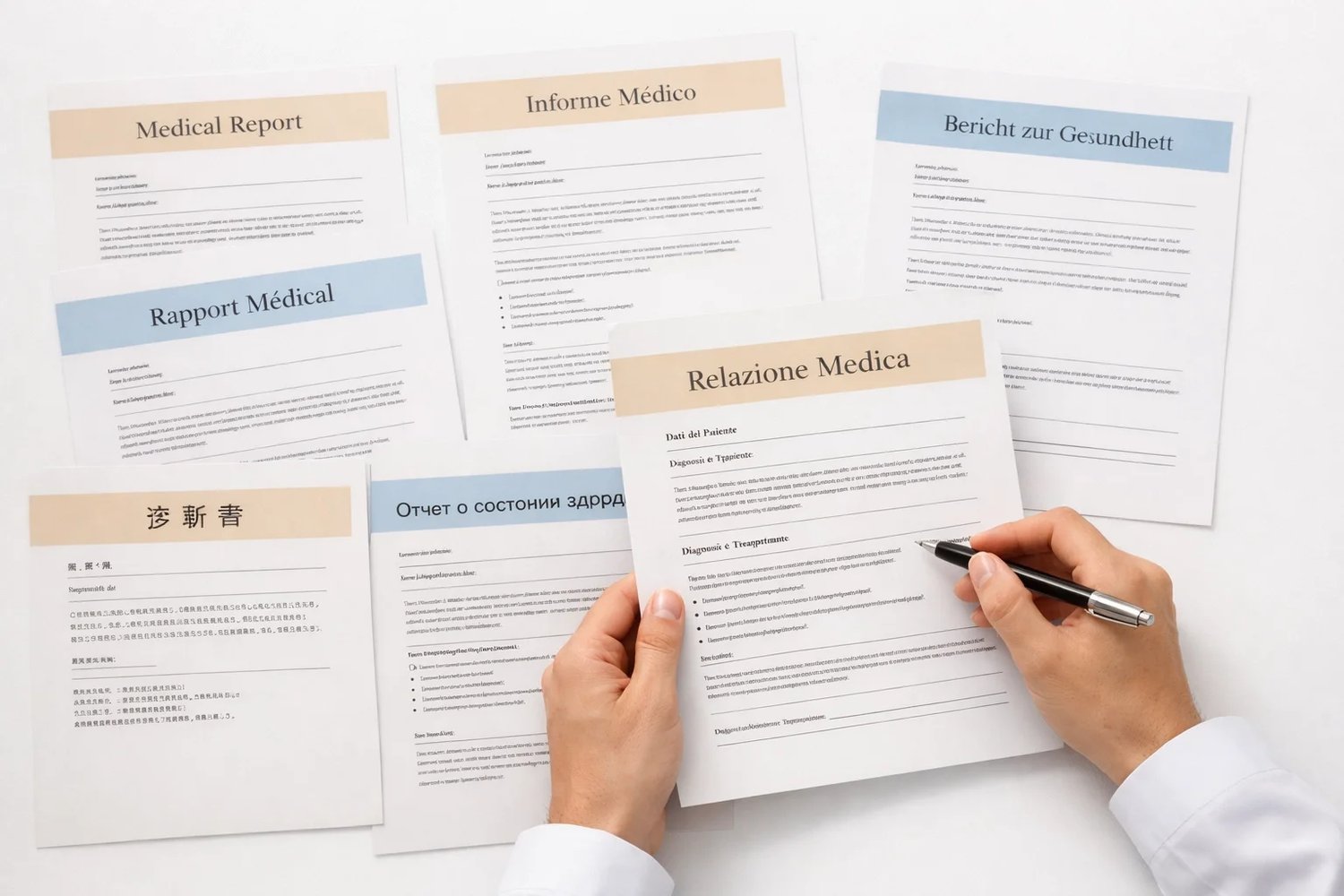
Quality certified document translations require professional translation by qualified linguists, followed by review and certification. This is especially critical for consent forms, where a mistranslation could invalidate the consent process entirely. If you're going to invest in professional language services, make sure your document translation process is as robust as your spoken interpretation protocols.
Mistake 4: Failing to Properly Notify Patients About Available Language Services
Even if you have excellent interpretation translation services in place, they're useless if patients don't know they exist. Title VI compliance requires that you prominently post notices in common languages informing patients of their right to free language assistance.
Walk through your Louisville facility with fresh eyes. Are there multilingual signs in your waiting rooms? Does your website clearly state that interpretation services are available? When patients call to schedule appointments, are they asked about language preferences? When they arrive, can they easily request an interpreter?
Too often, LEP patients either don't know help is available or feel uncomfortable asking for it. They might worry about delays, assume they'll be charged extra, or feel embarrassed about needing assistance. Your signage and staff training should make it crystal clear that language services are a standard part of care, available at no cost to the patient.
Mistake 5: Making LEP Patients Wait While You Scramble for an Interpreter
Efficiency matters, both for compliance and patient satisfaction. When a Spanish-speaking patient arrives for their appointment and your staff has to spend twenty minutes hunting down an available interpreter, you're violating the spirit of language access requirements, and you're creating a terrible patient experience.
Professional language services providers offer scheduling systems that alert interpreters when LEP patients book appointments. Whether you're using on-site interpreters, video remote interpreting, or phone interpretation, the coordination should be seamless. The patient shouldn't experience longer wait times or feel like they're creating extra work simply because they don't speak English.
This is where working with an established translation service in Louisville, KY, makes a practical difference. Local providers understand your patient flow, can maintain consistent interpreter relationships with your facility, and can respond quickly when urgent needs arise. The goal is making language access invisible from the patient's perspective: they should receive the same smooth, professional experience as any English-speaking patient.
Mistake 6: Over-Relying on AI Without Human Oversight
Technology is transforming healthcare, and AI-powered translation tools have improved dramatically in recent years. But here's what compliance auditors need to see: human review by qualified professionals. AI can be a useful tool in your language access toolkit, but it cannot replace human judgment, especially for sensitive or complex medical information.
We've seen translation services in Louisville, KY, make this mistake with increasing frequency. A provider implements a cutting-edge AI translation system, assumes that solves their compliance issues, and then discovers during an audit that they have no documentation of human review, no quality assurance process, and no way to verify the accuracy of machine-generated translations.
The federal guidance is clear: while technology can support language services, medical interpretation and translation of critical documents should involve qualified human professionals. If you're using AI for any part of your language access program, make sure you have certified linguists reviewing outputs, especially for high-stakes communications like surgical consents, mental health assessments, or end-of-life care discussions.
Mistake 7: Treating Compliance as a Checklist Rather Than an Ongoing Process
The most dangerous mistake Louisville healthcare providers make is thinking compliance is something you achieve once and then forget about. You implement a language access plan, train staff, post some signs, and consider the job done. Then three years pass, your patient population shifts, staff turnover happens, new services are added, and suddenly your once-adequate program has significant gaps.
Effective compliance requires ongoing evaluation. Are you regularly reviewing encounter data to understand your LEP patient demographics? Are you surveying patients to assess their satisfaction with language services? Are you updating staff training to reflect current best practices? Are you budgeting adequately for professional language services rather than cutting corners when finances get tight?

The providers who stay audit-ready treat language access as a core component of quality care, not an administrative burden. They build relationships with professional language services partners who understand healthcare compliance. They invest in staff education so everyone from admissions to discharge planning understands their role in language access. They document their processes, track their outcomes, and continuously improve their programs.
Moving Forward: Building a Compliance-Ready Language Access Program
If you recognized your organization in any of these seven mistakes, don't panic. Most Louisville healthcare providers have room for improvement in their language access programs. The key is taking action before compliance issues become compliance violations.
Start with an honest assessment of your current state. Review your language access policy: when was it last updated? Evaluate your interpreter qualifications: are you using certified linguists or relying on ad hoc bilingual staff? Audit your patient-facing documents: are critical forms available in the languages your patients actually speak? Walk through your facility as if you were an LEP patient: would you know how to request interpretation services?
Then build relationships with professional language services providers who understand both healthcare compliance and the Louisville market. Look for partners who offer a full range of interpretation translation services, from on-site certified interpreters to document translation to video remote interpreting for after-hours needs. Make sure they understand HIPAA requirements and can provide the documentation you'll need during audits.
Compliance doesn't have to be complicated, but it does require intentionality. The Louisville healthcare providers who excel at language access treat it as a quality initiative, a patient safety priority, and a competitive advantage: not just a regulatory checkbox. They recognize that when LEP patients re- ceive clear communication in their preferred language, outcomes improve, satisfaction increases, and everyone benefits.
Your move is simple: review these seven common mistakes, identify where your organization has gaps, and take steps to close them. Whether you're a small practice or a major health system, getting language access right isn't optional: it's essential for compliance, patient safety, and the inclusive care Louisville's diverse community deserves.
About the author
Stephen Gardner
Stephen Gardner shares practical guidance from Heartland Language Services on clear, reliable communication for multilingual workplaces.
Keep reading
Related articles
July 23, 2026
Interpretation and Translation Services Indiana: A Tri-State Guide
Spoken conversations and written documents require different language solutions. This guide helps Tri-State teams choose the right service before a communication gap becomes a delay, safety risk, or compliance problem.
Read article →July 10, 2026
Spanish Interpretation Services in Evansville, Indiana
Businesses across Evansville and the Tri-State area rely on professional Spanish interpretation to communicate clearly, protect compliance, and serve multilingual communities. Learn how Heartland Language supports healthcare, legal, manufacturing, and business teams.
Read article →June 4, 2026