

Language access insights
Practical guidance for healthcare, manufacturing, and legal teams navigating language barriers in the Tri-State.
September 19, 2026
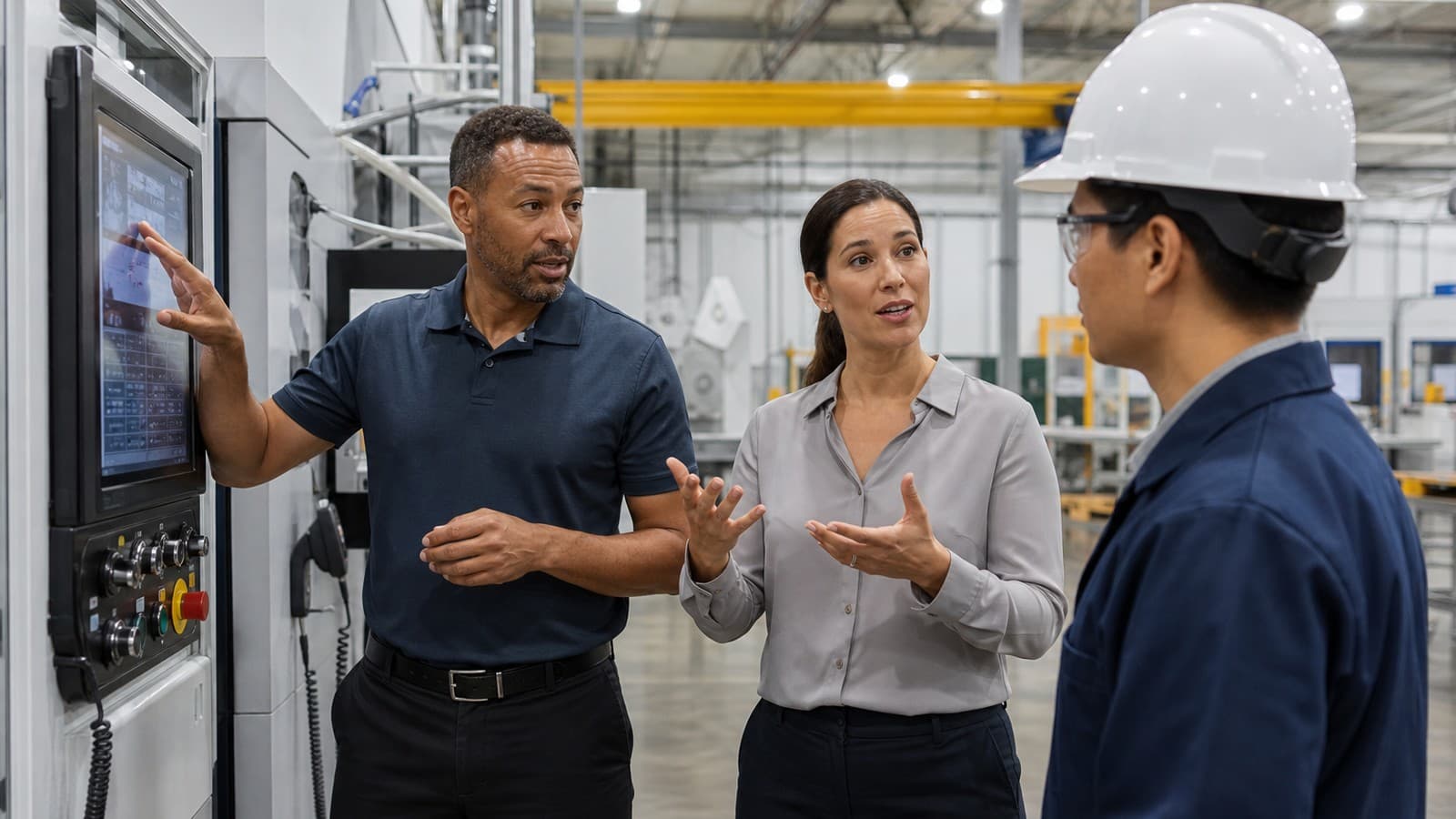
Manufacturing Equipment Training Interpreters Indiana
A new machine only pays off if every operator understood the vendor's commissioning and safety training. This guide helps Tri-State manufacturers get equipment installation and training right in every language on the floor.

September 16, 2026
Occupational Health Clinic Interpreters Indiana
A pre-employment physical, respirator clearance, or injury visit only counts if the employee actually understood it. This guide helps Tri-State manufacturers get occupational health clinic visits right in every language on the floor.

September 13, 2026
Forklift Operator Certification Interpreters Indiana
A forklift certification only counts if the operator actually understood it. This guide helps Tri-State manufacturers certify every operator in a language they understand.

September 10, 2026
Orthopedic Interpreters Indiana: Workplace Injury Guide
A workplace injury and the orthopedic care that follows are both moments where a patient's understanding shapes the outcome. This guide helps Tri-State clinics and employers interpret it correctly.

September 7, 2026
Manufacturing Performance Review Interpreters Indiana Guide
A performance review or disciplinary write-up is one of the few conversations an employer may have to defend later. This guide helps Tri-State manufacturers interpret it correctly the first time.

September 4, 2026
Hospital Discharge Instructions Interpreters Indiana Guide
A rushed discharge conversation is a top cause of preventable readmissions. This guide helps Tri-State hospitals interpret discharge instructions correctly the first time.

September 1, 2026
Manufacturing Onboarding Interpreters Indiana: Day-One Guide
A new hire's first week is the highest-risk week for safety comprehension. This guide helps Tri-State manufacturers onboard every employee in a language they understand.

August 29, 2026
Emergency Department Interpreters Indiana: ER Guide
Triage, treatment, and discharge decisions happen fast in an ER. This guide helps Tri-State hospitals interpret emergency care correctly under real time pressure.

August 24, 2026
Lockout/Tagout Training Interpreters Indiana: Machine Safety Guide
A locked-out machine only stays safe if every worker near it understands what the lock means. This guide helps Tri-State manufacturers interpret lockout/tagout training correctly.

August 20, 2026
Corporate Language Training Indiana: Employer Guide
A language class that ignores your shift schedule and job vocabulary rarely finishes. This guide helps Tri-State employers design corporate language training that actually sticks.

August 17, 2026
Legal Client Intake Interpreters Indiana: Firm Guide
Multilingual client intake works best when language access is planned before the first detailed conversation. This guide gives Tri-State law firms a practical workflow.

August 13, 2026
Prenatal Care Interpreters Indiana: Maternity Guide
A planned interpreter workflow turns a rushed maternity appointment into a conversation the patient can actually follow, from the first prenatal visit through postpartum care.
Older articles
- 2026-08-10Food Manufacturing Interpreters Indiana: Compliance Guide
- 2026-08-06Medical Consent Interpreters Indiana: Clinic Guide
- 2026-08-03Manufacturing Work Instruction Translation Indiana Guide
- 2026-07-30Same-Day Medical Interpreters Indiana: Tri-State Clinic Guide
- 2026-07-27Multilingual Incident Reporting Indiana: A Manufacturing Guide
- 2026-07-23Interpretation and Translation Services Indiana: A Tri-State Guide
- 2026-07-20Preparing a Limited-English-Proficient Witness for a Deposition: A Tri-State Law Firm Checklist
- 2026-07-16The Language Barrier Hidden in Your Turnover Numbers
- 2026-07-16OSHA Safety Training Interpreters for Indiana Manufacturers
- 2026-07-14Certified Medical Interpreter Evansville, IN: HIPAA, Section 1557 & Patient Safety
- 2026-07-13Workers' Compensation Interpreters in Indiana: A Guide for Law Firms
- 2026-07-10Spanish Interpretation Services in Evansville, Indiana
- 2026-07-06Manufacturing Interpreter Indiana: Protecting Workers Through Language Access
- 2026-07-02Pediatric Medical Interpreters in Indiana: Protecting Every Child's Right to Care
- 2026-06-29Employee Handbook Translation for Indiana Manufacturers: What HR Teams Should Fix Before the Next Hire
- 2026-06-26Safety Data Sheet Translation for Indiana Manufacturers: OSHA HazCom Compliance and the Multilingual Workforce
- 2026-06-22Behavioral Health Interpretation in Indiana: Why Certified Interpreters Are Essential for Mental Health Care
- 2026-06-19How to Build a Language Access Plan for Your Tri-State Organization: A Practical Guide for HR and Operations Leaders
- 2026-06-16Immigration Court Interpretation in Indiana: Why Getting It Right Is a Matter of Freedom
- 2026-06-12On-Site Interpreters vs. Translation Apps: Why Indiana Manufacturers Can't Afford to Get This Wrong
- 2026-06-10VRI vs. On-Site Medical Interpretation: How Indiana Hospitals and Clinics Should Choose
- 2026-06-04Section 1557 Language Access Compliance: What Indiana Healthcare Providers Must Know in 2026
- 2026-06-01Certified Legal Translation Services for Indiana Law Firms: What You Need to Know
- 2026-05-28Top Languages Spoken in Indiana Healthcare Settings — And How Hospitals Can Serve Every Patient
- 2026-05-26How Can HR Leaders Create Better Outcomes in 3 Hours?
- 2026-05-22Behavioral Health Interpretation in Indiana: Why Mental Health Providers Need Certified Interpreters
- 2026-05-19Language Access in Indiana’s Auto Manufacturing Sector: How Interpreters Keep Workers Safe and Compliant
- 2026-05-18Safety in the Details: How a Professional Linguist Interpreter Prevents Costly Communication Breakdowns
- 2026-05-18FSMA, OSHA, and Language Access: Why Indiana Food Manufacturers Can’t Afford Language Gaps
- 2026-05-14Retaining Haitian Creole-Speaking Employees: The HR Communication Strategy That Works
- 2026-05-11The Local Advantage: Why a Louisville-Based Translator LLC Beats Out Global Agencies
- 2026-05-10Why Indiana Hospitals Need 24/7 Interpreter Access — And How to Get It
- 2026-05-07Communicating Workplace Safety to Haitian Creole-Speaking Employees
- 2026-05-07Why Indiana Courts Require Certified Interpreters — And What Law Firms Need to Know
- 2026-05-05Empowered by Confidence HR Professionals Bridge the Language Divide
- 2026-05-04The Culture-First Lens: Navigating Implicit Bias in Spanish to Build Deeper Trust
- 2026-05-04Multilingual Safety Meetings: How On-Site Interpreters Reduce Workplace Injuries in Indiana Factories
- 2026-05-01How Medical Interpreting Prevents Misdiagnosis: A Guide for Evansville Healthcare Providers
- 2026-04-30The Language of Safety: Why Haitian Creole Fluency is the New Standard for Tri-State Operations
- 2026-04-30How to Onboard Haitian Creole-Speaking Employees More Effectively
- 2026-04-29Language Barriers in the Workplace: What the Spring Spanish Cohort Taught Us About HR Communication
- 2026-04-27The SPEAK Act Shift: Why Louisville Medical Firms are Rethinking Telehealth Interpretation and Translation Services
- 2026-04-27More Than a Translation: The Human Impact of Haitian Creole Training for Tri-State HR Teams
- 2026-04-23Why HR Professionals Are Learning Haitian Creole in 2026
- 2026-04-20Beyond the Handshake: How Culturally Accurate Interpreting is Transforming Southern Indiana Schools
- 2026-04-18The High Stakes of "Gist" Interpretation: Why Louisville Law Firms Can't Risk Using Uncertified Translators
- 2026-04-16A Day in the Life of a Heartland Healthcare Interpreter
- 2026-04-15Why "Bilingual Enough" Doesn’t Cut It for Evansville’s Manufacturing Sector
- 2026-04-10The Hidden Cost of 'Close Enough': Why Indiana Factories are Rethinking Workplace Translation
- 2026-04-07Beyond the Chatbot: Why Louisville Healthcare Providers are Choosing Certified Linguists Over AI
- 2026-04-06The Silent Risk: Why Tri-State Law Firms Rely on Professional Interpreting Services
- 2026-04-03Beyond the Literal: How Implicit Bias in Spanish Interpretation Impacts Patient Care
- 2026-03-26The Patient-First Approach: Why Relying on Ad-Hoc Interpreters Puts Your Healthcare Practice at Risk
- 2026-03-23Bridging the Safety Gap: How Workplace Translation Drives Productivity in Midwest Manufacturing
- 2026-03-23On-Site, Video, or Phone: How to Choose the Right Type of Interpretation
- 2026-03-23What Language Barriers Cost Your Business
- 2026-03-23How to Assess Your Organization's Language Needs
- 2026-03-19Louisville's Language Gap: Finding Professional Language Services That Actually Scale
- 2026-03-18A Plain-Language Guide to the OBBB's Biggest Changes for Midwest Producers
- 2026-03-16Beyond the Bot: Why Your Legal Firm Needs a Certified Linguist for Document Authentication
- 2026-03-14The Operations Manager's Guide to Workplace Translation: Ensuring Safety for Your Diverse Team
- 2026-03-11Do You Really Need a Certified Linguist? Here’s the Truth for Legal Firms and Corporations Man- aging High-Risk Files
- 2026-03-05Looking for Interpretation Near Me? 10 Things You Should Know About Finding Vetted Linguists for Haitian Creole and Marshallese Communities
- 2026-03-04Do You Really Need Professional Language Services? The Truth About the 2026 ADA Digital Accessibility Deadline for Tri-State Schools and Hospitals
- 2026-02-26How to Choose the Best VRI Platform for Your Louisville Healthcare Facility (5 Questions You Must Ask)
- 2026-02-24Can AI Translation Really Handle OSHA Safety Communications? Here's What SE Illinois Manufacturers Need to Know
- 2026-02-20Section 1557 Language Access Requirements 2025: Are You Making These Common Mistakes?
- 2026-02-20The Human-in-the-Loop Protocol for Regulated Industries
- 2026-02-17How to Measure ROI of Interpreter Services (And Stop Treating Language Access Like a Cost Cen-ter)
- 2026-02-13Language Interpretation and Translation Services: 7 Compliance Mistakes Healthcare Providers in Louisville KY Are Making
- 2026-02-09Workplace Translation Secrets: What "HIPAACompliant" Really Means (And Why Your SE Illinois Clinic Needs to Know)
- 2026-02-05Haitian Creole & Marshallese: How Specialized Interpreting is Transforming Patient Outcomes in Evansville
- 2026-02-03Compliance Corner: Meeting Title VI & OSHA 2026 Standards
- 2026-02-03The 2026 Midwestern Industrial Pivot: Why Your Technical Operations Need a Multilingual Audit
- 2026-02-02The Hidden ROI of Corporate Language Training for Tri-State HR Managers
- 2026-01-31How to Choose the Best Translation Services in Louisville KY (Compared)
- 2026-01-27Does AI Interpreting Really Matter in 2026? Here's the Truth for Healthcare Providers
- 2026-01-23Safety Without Borders: Why Manufacturing Plants in Henderson, KY Need Professional Workplace Translation
- 2026-01-20Improving Patient Outcomes: The Role of Certified Linguist Interpreters in Evansville Medical Facilities
- 2026-01-15Spoken vs. Written Language Services: What Every Business Should Know
- 2026-01-12Legal Document Translation: Avoiding Costly Errors for Illinois Law Firms
- 2026-01-08Manufacturing Workplace Safety: Language Barriers in Kentucky Plants
- 2026-01-05Avoiding Compliance Risks: Certified Medical Translation for Illinois Providers
- 2026-01-02Multilingual Safety: Reducing Workplace Injuries in Southwest Indiana Factories
- 2025-12-30Certified Medical Document Translation: What Healthcare Providers in Illinois Must Know
- 2025-12-255 Everyday Scenarios Where Professional Interpreting Makes All the Difference (and How to Book Locally)
- 2025-12-22Certified Linguist vs. Bilingual Employees: Who Should Handle Your Workplace Translation?
- 2025-12-19Stop Wasting Money on Language Barriers: 5 Signs Your Business Needs Professional Translation Services
- 2025-12-16Are You Really Getting Quality Translation? Here's What Certified Linguists Actually Check?
- 2025-12-11The Hidden Cost of "We'll Figure It Out Later": How to Budget for Language Access
- 2025-12-11Hiring an Interpreter LLC: The 5 Most Important Credentials to Ask For (and Why They Matter in Legal Settings)
- 2025-12-09Local Language Barriers Cost Businesses Thousands: Is Your Company Prepared for the Next Compliance Audit?
- 2025-11-21Workplace Translation: 7 Signs You Need a Professional Language Services Partner
- 2025-11-17Healthcare Interpreter Gap: 5 Steps How to Find Certified Language Services Near You (Easy Guide for Medical Practices)
- 2025-11-15Our Linguist Guarantee: What Quality Translation Really Means (And Why It Matters)
- 2025-11-14Are You Only Using 20% of Your On-Demand App? 5 Untapped Ways to Expand Your Reach
- 2025-11-09Implicit Bias in Spanish-Speaking Workplaces: 7 Mistakes You're Making (and How Professional Interpreters Fix Them)
- 2025-11-05The Impartiality Checklist: A 3-Point Guide for Sensitive Conversations
- 2025-11-04Break Language Barriers Instantly with Remote Interpretation
- 2025-10-28The 5-Point "Good Enough" Risk Checklist
- 2024-05-17State of the language market: southwest Indiana mirroring the trend
- 2023-11-10Are you really “specialized”?
- 2023-09-01Language for the Sake of Language
- 2023-07-27The Interpreter and Implicit Bias
- 2023-07-05Language and Workplace Efficiency
- 2023-05-11Does “naturalness” promote parochialism?
- 2023-02-24An Analysis of Danica Seleskovitch’s “Fundamentals of the Interpretive Theory of Translation”
Facing this challenge in your organization?
Get a free, no-obligation quote — a real team member responds within 24 hours.