
Insights
Manufacturing Interpreter Indiana: Protecting Workers Through Language Access
Manufacturing interpreter services help Indiana employers reduce safety risk, improve HR communication, and support multilingual teams across Evansville, Henderson, Louisville, Jasper, and Southeast Illinois.
Published July 6, 2026 · By Jacob Brown
Quick Summary
Manufacturing language access supports safety training, HR communication, incident response, and quality control.
Professional interpreters are especially valuable for onboarding, OSHA-related safety discussions, injury reporting, investigations, disciplinary meetings, and benefits conversations.
Written translation should cover employee handbooks, safety data sheets, emergency instructions, training materials, signage, consent forms, and key HR policies.
Employers should plan ahead instead of waiting until an accident, complaint, audit, or urgent production issue exposes a communication gap.
Manufacturing interpreter support is not just a convenience for Indiana employers with multilingual teams. In a plant, warehouse, fabrication shop, or food production facility, language access can directly affect safety, training, quality control, incident response, and employee trust. For employers across Evansville, Henderson, Louisville, Jasper, and Southeast Illinois, clear communication helps keep production moving while reducing avoidable risk.
Heartland Language works with organizations that need professional interpretation and translation in real-world, high-stakes settings. Manufacturing is one of the clearest examples: a misunderstood instruction, incomplete safety briefing, or poorly translated policy can turn into downtime, injury, rework, or a difficult HR situation.
This guide explains where manufacturing teams commonly need interpreters, which materials should be translated before problems arise, and how to build a practical language access plan for industrial workplaces.
Why Language Access Matters in Manufacturing
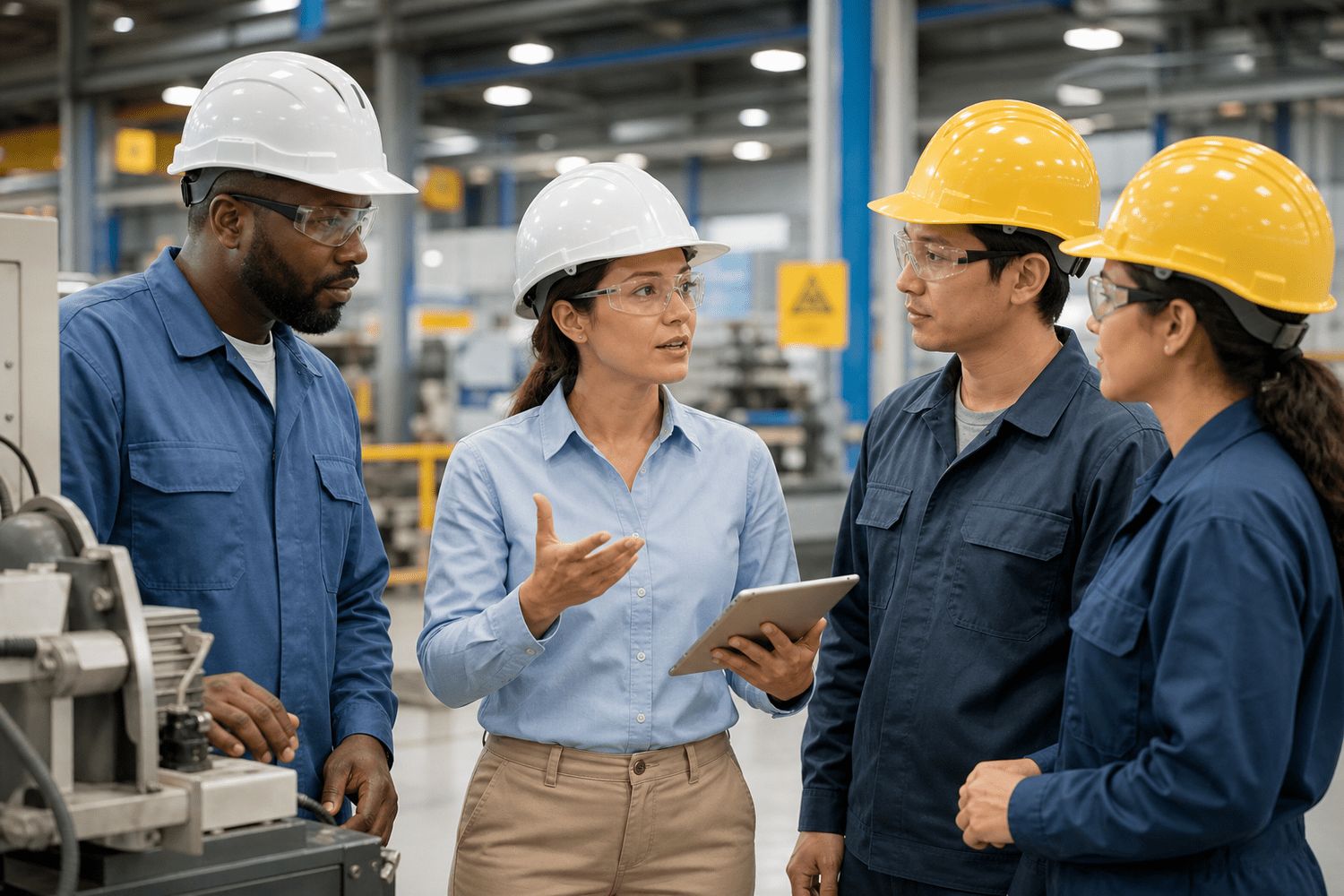
Manufacturing teams often run on speed, precision, and repeatable processes. Employees need to understand machine procedures, hazard warnings, supervisor instructions, PPE requirements, sanitation protocols, shift expectations, and emergency steps. When an employee’s primary language is not English, relying on informal bilingual coworkers can create inconsistent communication and unnecessary liability.
A professional interpreter gives both sides a more reliable channel. Supervisors can explain policies in full. Employees can ask questions without embarrassment. HR can document that important information was communicated accurately. Operations leaders can avoid the hidden cost of “I thought they understood.”
This is especially important in regional manufacturing environments where teams may include Spanish speakers, Marshallese speakers, Burmese speakers, Haitian Creole speakers, Arabic speakers, and other language communities. The exact language mix varies by facility, but the operational need is the same: critical instructions should be understood, not guessed.
Where Miscommunication Creates Safety Risk
Safety communication is one of the strongest reasons to use qualified interpretation. Training that sounds clear to an English-speaking supervisor may not be clear to the employee who needs to apply it on the floor. OSHA’s Hazard Communication standard requires employers to provide effective information and training about hazardous chemicals in the work area, and safety programs are strongest when employees can actually understand the hazards, labels, procedures, and protective measures being discussed.
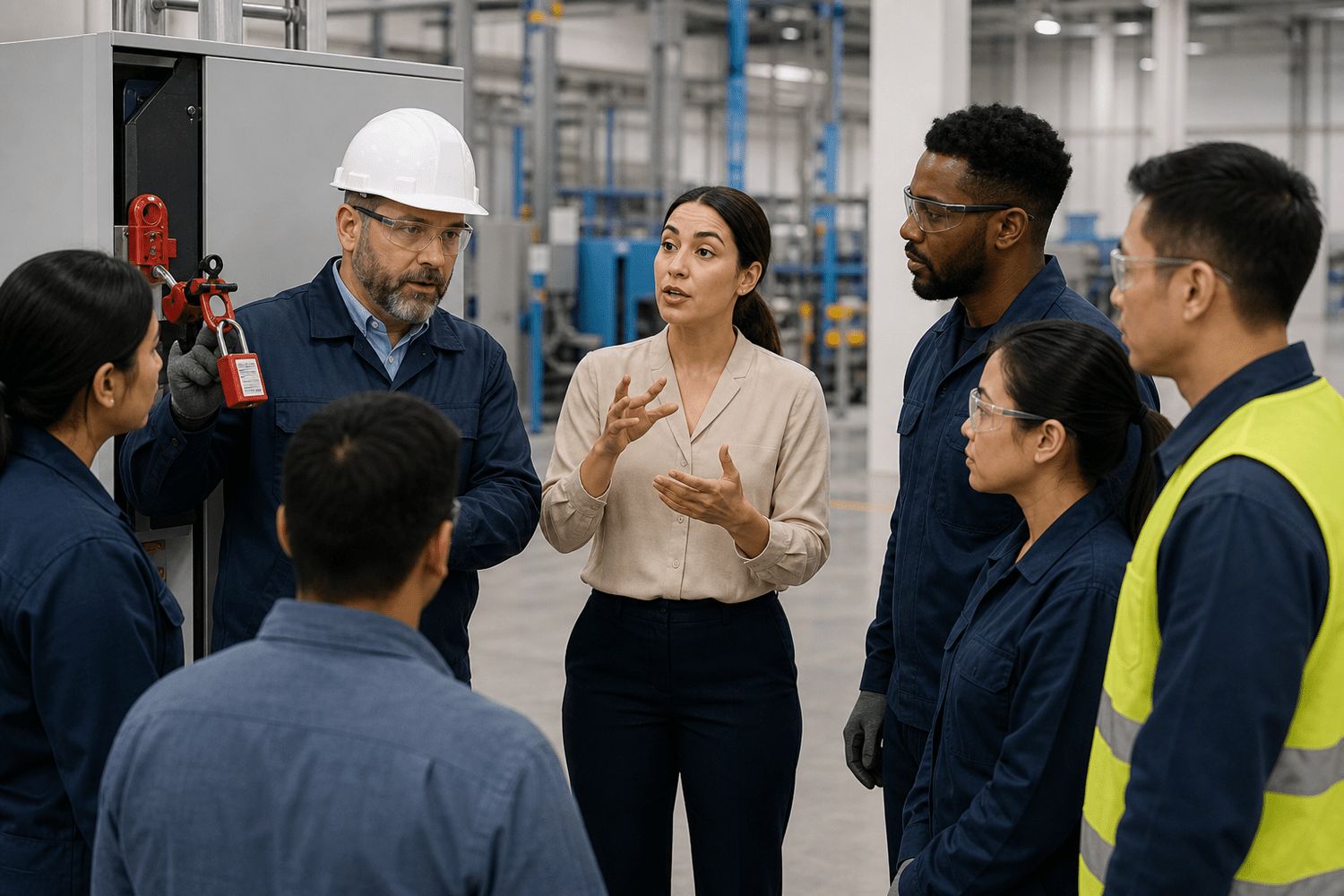
Common manufacturing safety moments that benefit from interpretation include machine guarding instructions, lockout/tagout training, chemical handling, forklift and powered industrial truck communication, confined-space procedures, personal protective equipment requirements, sanitation protocols, heat stress prevention, and emergency evacuation drills.
Interpretation is also valuable after an incident. If a worker is injured or nearly injured, the employer needs an accurate account of what happened. The employee needs to understand medical instructions, workers’ compensation steps, modified-duty expectations, and return-to-work requirements. A trained interpreter helps keep that process clear and respectful.
Do Not Use a Coworker as the Default Interpreter
Bilingual employees are valuable, but they should not automatically become interpreters for complex or sensitive matters. A coworker may summarize instead of interpreting, omit technical details, misunderstand legal or medical vocabulary, or feel pressure because of workplace relationships. In HR, safety, medical, or disciplinary settings, this creates avoidable risk.
Professional interpreters are trained to preserve meaning, remain neutral, manage turn-taking, and ask for clarification when needed. That matters when the topic involves chemical exposure, workplace injury, harassment, benefits enrollment, immigration documentation, or corrective action.
What to Translate Before an Incident Happens
Written translation is the foundation that supports live interpretation. If a facility waits until an accident or complaint to translate critical documents, the team is already behind. The better approach is to identify the documents employees rely on most and translate them before they become urgent.
Manufacturers should prioritize employee handbooks, safety orientation materials, emergency procedures, injury reporting instructions, anti-harassment policies, attendance policies, PPE rules, sanitation and quality procedures, equipment-specific training aids, safety data sheet summaries, benefits enrollment materials, and posted notices that affect daily work.
Translation also helps supervisors. When written materials are consistent, supervisors can reinforce the same message across shifts instead of improvising different explanations. That consistency is useful for training, quality control, and documentation.

A Practical Language Access Plan for Indiana Manufacturers
A practical plan does not have to be complicated. Start by identifying the languages spoken in the facility and the situations where misunderstanding would create the most risk. Then decide which items need written translation, which meetings require live interpretation, and how supervisors should request support.
For many manufacturing employers, the first phase includes translated onboarding materials, safety orientation, emergency instructions, and access to interpreters for HR and safety conversations. The second phase may add translated SOPs, quality-control instructions, annual refresher training, supervisor scripts, and interpretation support for investigations or medical follow-up.
The plan should also define when not to rely on family members, minors, or untrained coworkers. Sensitive workplace conversations deserve a professional channel.
Regional Manufacturing Teams Need Local Context
Manufacturers in the Tri-State area often serve and hire across state lines. A company headquartered in Evansville may employ workers from Henderson, support facilities near Louisville, coordinate vendors in Jasper, and recruit across Southeast Illinois. Language access planning should reflect that regional footprint.
Local context matters because interpretation needs are rarely limited to one meeting. A facility may need onsite interpretation for a safety training, remote video interpretation for an HR check-in, and written translation for a new policy rollout. Heartland Language can help employers match the format to the situation instead of treating every need the same way.
When to Bring in a Professional Interpreter
Use a professional interpreter when the conversation involves safety rules, injury reporting, medical restrictions, workers’ compensation, investigations, discipline, harassment, benefits, legal documents, immigration-related paperwork, or any policy that affects employment status. These conversations need accuracy and neutrality.
For routine daily instructions, some teams may also benefit from translated visual aids, bilingual glossaries, supervisor training, or scheduled interpretation during recurring meetings. The goal is not to overcomplicate communication. The goal is to remove the moments where guessing creates risk.
How Heartland Language Supports Manufacturing Employers
Heartland Language provides interpretation and translation services for organizations that need clear communication across languages. For manufacturing teams, this can include onsite interpretation, remote interpretation, translated HR materials, translated safety content, and language access planning for recurring operational needs.
If your team operates in Evansville, Henderson, Louisville, Jasper, Southeast Illinois, or the surrounding region, Heartland can help you identify the highest-risk communication gaps and build a practical support plan.
For help with manufacturing interpretation or translation, request a quote at /quote.
FAQ
Do manufacturers need interpreters for safety training?
If employees cannot fully understand safety training in English, professional interpretation is a practical risk-control measure. It helps ensure employees understand hazards, procedures, PPE expectations, and emergency steps.
Can a bilingual supervisor interpret for employees?
Sometimes, for informal and low-risk communication. For safety, HR, medical, legal, disciplinary, or incident-related conversations, a trained professional interpreter is the safer choice.
Which manufacturing documents should be translated first?
Start with employee handbooks, safety orientation, emergency instructions, injury reporting steps, PPE rules, critical SOPs, benefits materials, and policies employees must follow every day.
Does Heartland Language support onsite interpretation?
Yes. Heartland Language supports interpretation and translation needs for organizations across the Tri-State region, including manufacturing, healthcare, legal, and general business settings.

About the author
Jacob Brown
Jacob Brown shares practical guidance from Heartland Language Services on clear, reliable communication for multilingual workplaces.
Keep reading
Related articles
July 2, 2026
Pediatric Medical Interpreters in Indiana: Protecting Every Child's Right to Care
Qualified pediatric medical interpreters help protect non-English-speaking children and families across Indiana by ensuring diagnoses, consent, discharge instructions, and follow-up care are clearly understood. This guide explains why trained interpreters are essential for pediatric clinics, hospitals, and specialty practices serving Evansville, Henderson, Louisville, Jasper, and SE Illinois.
Read article →July 14, 2026
Certified Medical Interpreter Evansville, IN: HIPAA, Section 1557 & Patient Safety
Clear communication is a patient-safety requirement. Learn how qualified medical interpreters help Evansville-area healthcare providers protect privacy, support Section 1557 language access, and reduce preventable communication errors.
Read article →August 10, 2026
Food Manufacturing Interpreters Indiana: Compliance Guide
Learn how food manufacturing interpreters in Indiana support safer training, regulatory compliance, audits, and clear communication across multilingual teams.
Read article →