
Insights
Improving Patient Outcomes: The Role of Certified Linguist Interpreters in Evansville Medical Facilities
Published January 20, 2026 · By Jacob Brown
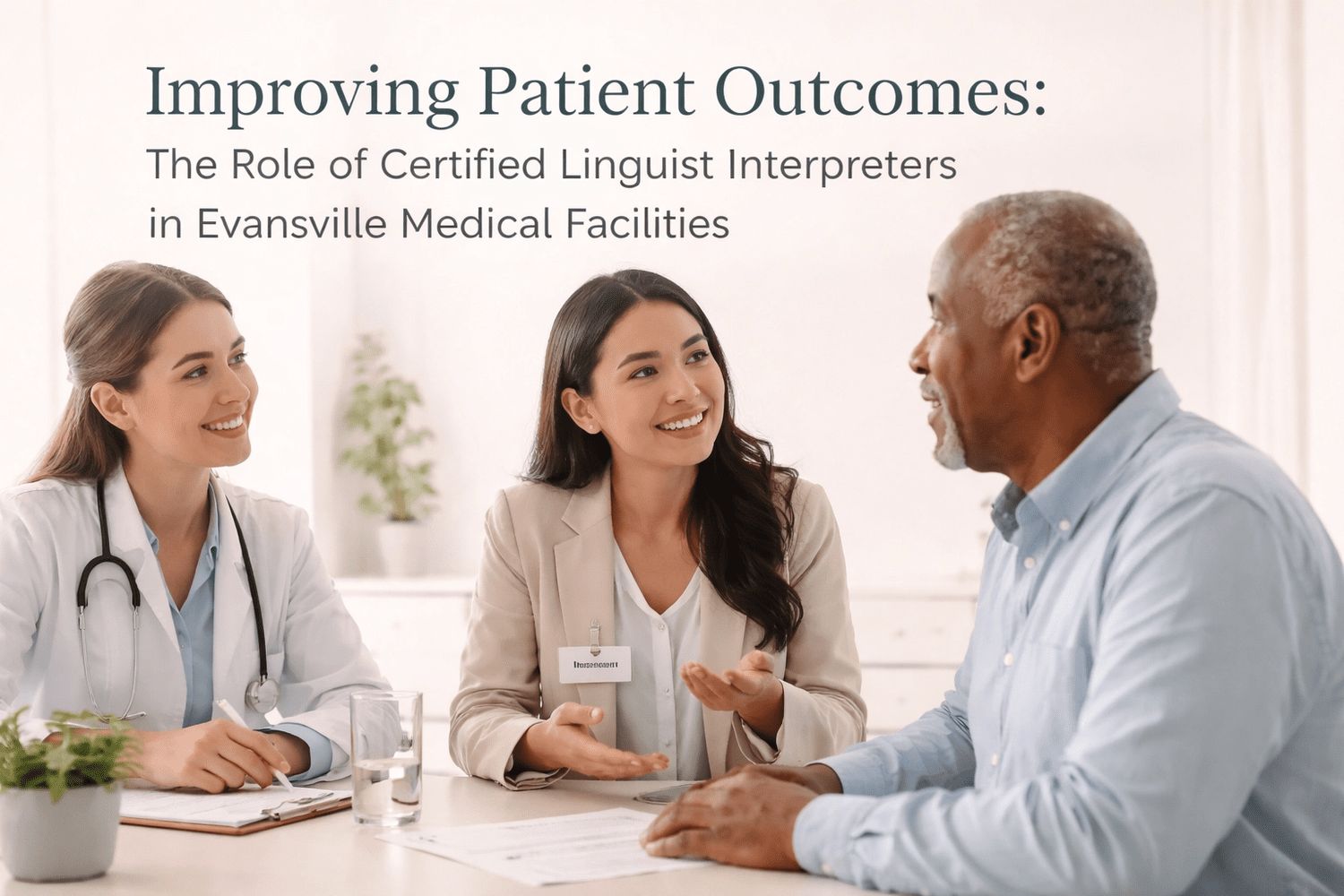
In healthcare, communication is not just important: it is essential. When a patient cannot clearly communicate their symptoms, understand their diagnosis, or follow discharge instructions, the consequences can be severe. For medical facilities in Evansville and throughout Southwest Indiana, thegrowing diversity of patient populations has made certified linguist interpreters an indispensablecomponent of quality care.
Over 25 million people in the United States have limited English proficiency (LEP). In Evansville's hospitals, urgent care centers, and specialty clinics, this reality presents both a challenge and an opportunity. Healthcare providers who invest in professional interpreting services are not only meeting regulatory requirements: they are actively improving patient outcomes, reducing liability, and buildingtrust within their communities.
The Language Access Challenge in Southwest Indiana
Evansville serves as a regional healthcare hub for Southwest Indiana, drawing patients from Vanderburgh County and the surrounding tri-state area. As the region's demographics continue to evolve,medical facilities encounter patients who speak Spanish, Burmese, Mandarin, Arabic, and dozens ofother languages.
For these patients, a language barrier can mean the difference between an accurate diagnosis and adangerous misunderstanding. Studies consistently show that LEP patients experience higher rates ofmedical errors, longer hospital stays, and lower satisfaction with their care. When critical informationis lost in translation, the consequences extend far beyond inconvenience: they can be life-threatening.

Many healthcare organizations initially turn to bilingual staff members or family interpreters to bridgethis gap. While well-intentioned, this approach carries significant risks. Untrained interpreters maylack medical terminology knowledge, omit crucial details, or inject personal opinions into the conversation. In contrast, certified linguists bring specialized training, professional standards, and accountability to every patient encounter.
What Sets Certified Medical Interpreters Apart
Not all interpreters are created equal. Certified medical interpreters possess a unique combination ofskills that make them essential partners in clinical settings:
Mastery of Medical Terminology
Healthcare is one of the most technical fields in existence. From pharmacological terms to anatomicalreferences, certified interpreters must possess deep fluency in medical vocabulary across multiple languages. This expertise ensures that complex concepts: such as treatment protocols, surgical risks, ormedication interactions: are conveyed with precision.
Simultaneous and Consecutive Interpreting Skills
Medical encounters often require interpreters to switch seamlessly between interpreting modes.Whether facilitating a rapid-fire emergency room intake or a lengthy informed consent discussion,certified interpreters adapt their approach to meet the clinical need.
Cultural Competency
Language is only part of the equation. Certified interpreters understand the cultural nuances that influence how patients perceive illness, authority, and medical intervention. This cultural bridge-building fosters trust and encourages patients to share information they might otherwise withhold.
Adherence to Ethical Standards
Professional interpreters follow strict codes of ethics, including principles of accuracy, impartiality,and confidentiality. These standards protect both the patient and the healthcare provider, ensuringthat communication remains clear and unbiased.
Our Rigorous Vetting Process
At Heartland Language Services, we understand that the quality of an interpreter directly impacts patient safety. That is why we have developed a comprehensive vetting process that goes far beyondbasic language proficiency.

Every interpreter in our network undergoes:
Credential Verification: We verify all certifications, including national credentials from organizations such as the Certification Commission for Healthcare Interpreters (CCHI) and the NationalBoard of Certification for Medical Interpreters (NBCMI).
Subject Matter Testing: Candidates complete rigorous assessments in medical terminology, interpreting accuracy, and ethical decision-making.
Background Checks: All interpreters pass thorough background screening to ensure the safetyand security of patients and healthcare staff.
Ongoing Quality Assurance: We continuously monitor interpreter performance through clientfeedback, peer review, and quality checks to maintain the highest standards.
This commitment to excellence reflects our belief that healthcare communication demands nothingless than the best. When Evansville medical facilities partner with us, they gain access to interpreterswho have been rigorously evaluated for expertise, experience, authoritativeness, and trustworthiness.
HIPAA Compliance and Patient Privacy
In healthcare, confidentiality is non-negotiable. The Health Insurance Portability and AccountabilityAct (HIPAA) establishes strict requirements for protecting patient information, and language servicesare no exception.
All Heartland Language Services interpreters receive comprehensive HIPAA training and sign BusinessAssociate Agreements (BAAs) that formalize their obligation to safeguard protected health information (PHI). This means that every interpreted conversation: whether conducted in person, over thephone, or via video: meets the same privacy standards as any other clinical interaction.
For Evansville medical facilities, this level of compliance is essential. Relying on ad hoc interpreters,family members, or untrained staff exposes organizations to significant privacy risks and potentialregulatory penalties. By working with a language services partner that prioritizes HIPAA compliance,healthcare providers can focus on what matters most: delivering excellent patient care.

Impact on Patient Outcomes and Hospital Liability
The connection between professional interpretation and patient outcomes is well-documented. Whenpatients understand their diagnoses, treatment options, and discharge instructions, they are morelikely to adhere to care plans and experience positive health outcomes.
Conversely, communication failures contribute to a significant percentage of medical errors. Misunderstood medication dosages, missed follow-up appointments, and incorrect symptom reporting canall result from inadequate interpretation. For hospitals and clinics, these errors translate into increased readmission rates, extended lengths of stay, and diminished patient satisfaction scores.
Beyond clinical outcomes, there is a substantial liability dimension to consider. Medical malpracticeclaims frequently cite communication breakdowns as contributing factors. When healthcare organiza-tions can demonstrate that they provided qualified interpretation services, they establish a strong defense against allegations of negligence.
Investing in certified interpreters is not merely a cost: it is a risk management strategy. Evansvillemedical facilities that prioritize language access protect themselves from costly litigation while simultaneously improving the quality of care they deliver.
Real-World Applications in Evansville Medical Facilities
Certified interpreters support patient care across a wide range of clinical settings in Southwest Indiana:
Emergency Departments
When seconds count, accurate communication is critical. Certified interpreters help emergency physicians gather vital patient history, explain urgent procedures, and obtain informed consent: even inhigh-pressure situations.
Primary Care and Specialty Clinics
Routine appointments, chronic disease management, and specialty consultations all benefit from professional interpretation. Patients who fully understand their conditions are more engaged in their owncare and more likely to follow through on recommendations.
Inpatient Units
Hospitalized patients interact with multiple care team members each day. Certified interpreters ensure continuity of communication throughout the hospital stay, from admission to discharge planning.
Behavioral Health Services
Mental health assessments and therapy sessions require nuanced communication. Certified interpreters with behavioral health training help clinicians build rapport and accurately assess patientneeds.
For organizations seeking guidance on integrating interpreter services into their workflows, our resource on finding certified language services for medical practices offers practical steps to get started.
Building Trust Through Language Access
Ultimately, language access is about more than compliance or risk mitigation. It is about treatingevery patient with dignity and respect. When LEP patients receive care in their preferred language,they feel seen, heard, and valued. This trust translates into stronger patient-provider relationships,better health outcomes, and a reputation for excellence within the community.

Heartland Language Services is proud to support medical facilities throughout Southwest Indianawith certified interpreter services tailored to the unique needs of healthcare. Our interpreters areavailable on-site, via phone, and through secure video platforms: ensuring that language access is always within reach.
Partner With Heartland Language Services
Evansville's healthcare community deserves a language services partner that shares its commitmentto patient safety, regulatory compliance, and clinical excellence. At Heartland Language Services, webring decades of experience, a rigorously vetted interpreter network, and a deep understanding ofthe healthcare landscape to every engagement.
If your facility is ready to elevate its language access program, we invite you to contact us to learnhow our certified linguist interpreters can support your patients and your team. Together, we can ensure that every patient: regardless of the language they speak( receives the care they deserve.)

About the author
Jacob Brown
Jacob Brown shares practical guidance from Heartland Language Services on clear, reliable communication for multilingual workplaces.
Keep reading
Related articles
July 14, 2026
Certified Medical Interpreter Evansville, IN: HIPAA, Section 1557 & Patient Safety
Clear communication is a patient-safety requirement. Learn how qualified medical interpreters help Evansville-area healthcare providers protect privacy, support Section 1557 language access, and reduce preventable communication errors.
Read article →May 28, 2026
Top Languages Spoken in Indiana Healthcare Settings — And How Hospitals Can Serve Every Patient
Which languages do Indiana hospitals encounter most? Learn how Evansville-area healthcare facilities meet Section 1557 language access requirements with certified interpreters.
Read article →February 5, 2026