
Insights
How to Build a Language Access Plan for Your Tri-State Organization: A Practical Guide for HR and Operations Leaders
Most Tri-State employers wait for a language crisis before acting. Here's how Indiana, Kentucky, and Illinois organizations can build a proactive language access plan that protects staff, serves patients or customers, and keeps you compliant.
Published June 19, 2026 · By Jacob Brown

Quick Summary
A language access plan tells your team who needs language support, what type of service to use, and when to call in a professional. For healthcare, manufacturing, and legal organizations in the Tri-State region, having a documented plan isn't just good HR practice — it's the difference between smooth operations and costly compliance failures. This guide walks you through every step.
If you've ever had a situation where a non-English-speaking employee couldn't understand a safety briefing, or a patient left a clinic without fully grasping their discharge instructions, you already know the stakes. Language gaps are not a minor inconvenience. They're a source of workplace injuries, medical errors, legal liability, and — in regulated industries — federal compliance violations.
And yet, the majority of Tri-State employers have no formal language access plan. They rely on ad-hoc solutions: a bilingual coworker who "handles it," a smartphone translation app, or hoping the situation resolves itself.
This guide is for HR directors, operations managers, compliance officers, and healthcare administrators who are ready to do better. We'll walk through how to assess your needs, choose the right language services, build a plan your team can actually follow, and measure its impact.
Why a Language Access Plan Matters Now
Indiana, Kentucky, and Illinois are home to growing immigrant and refugee communities. In Evansville alone, the population of Spanish, Haitian Creole, Burmese, Karen, Somali, Arabic, and other language speakers has expanded significantly over the past decade. Many Tri-State manufacturers, hospitals, and courts are now routinely serving individuals who have limited English proficiency (LEP).
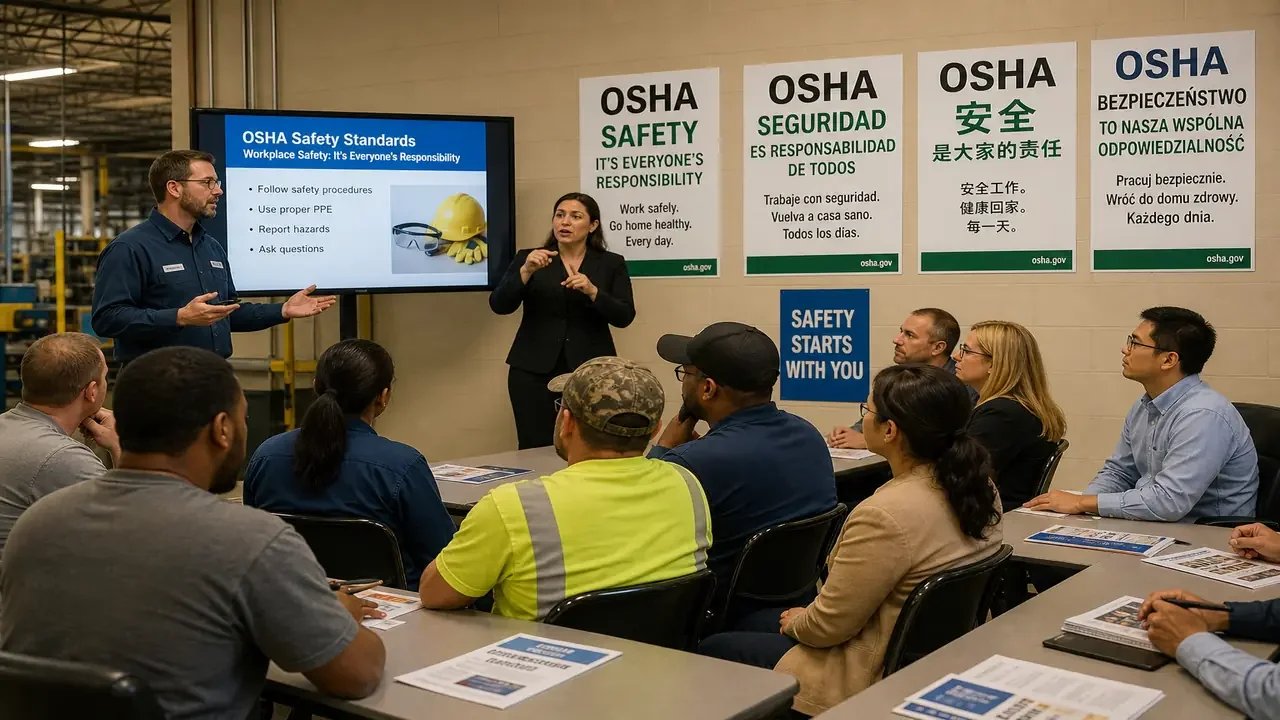
Federal law isn't silent on this. Under Title VI of the Civil Rights Act, organizations receiving federal funding — including hospitals, community health centers, and many nonprofits — are legally required to provide meaningful language access to LEP individuals. Section 1557 of the Affordable Care Act extends similar requirements to health programs. OSHA requires that employers ensure workers can understand safety training, regardless of the language barrier.
Beyond compliance, the operational case is clear. Studies show that language-concordant care reduces hospital readmissions and improves patient satisfaction scores significantly. On the plant floor, multilingual safety communication directly correlates with reduced incident rates.
Step 1: Assess Your Language Landscape
Before you can build a plan, you need to understand your current situation. A language needs assessment answers four key questions:
Which languages are present in your workforce or customer base? Start with HR records, intake forms, and any informal knowledge your team has.
What percentage of your LEP population uses each language? In the Tri-State region, Spanish is often the dominant need, followed by Haitian Creole, Burmese/Karen, Somali, and Arabic.
In what contexts does language support most often fail? Think about the moments where misunderstanding is most costly: safety training, medical informed consent, HR disciplinary meetings, emergency situations.
What are you currently doing — and where are the gaps? Audit your existing solutions honestly. Relying on bilingual staff carries risk — they aren't trained interpreters and may introduce bias.
Step 2: Match Service Types to Situations
Not every language needs calls for the same solution. Here's a practical decision framework:
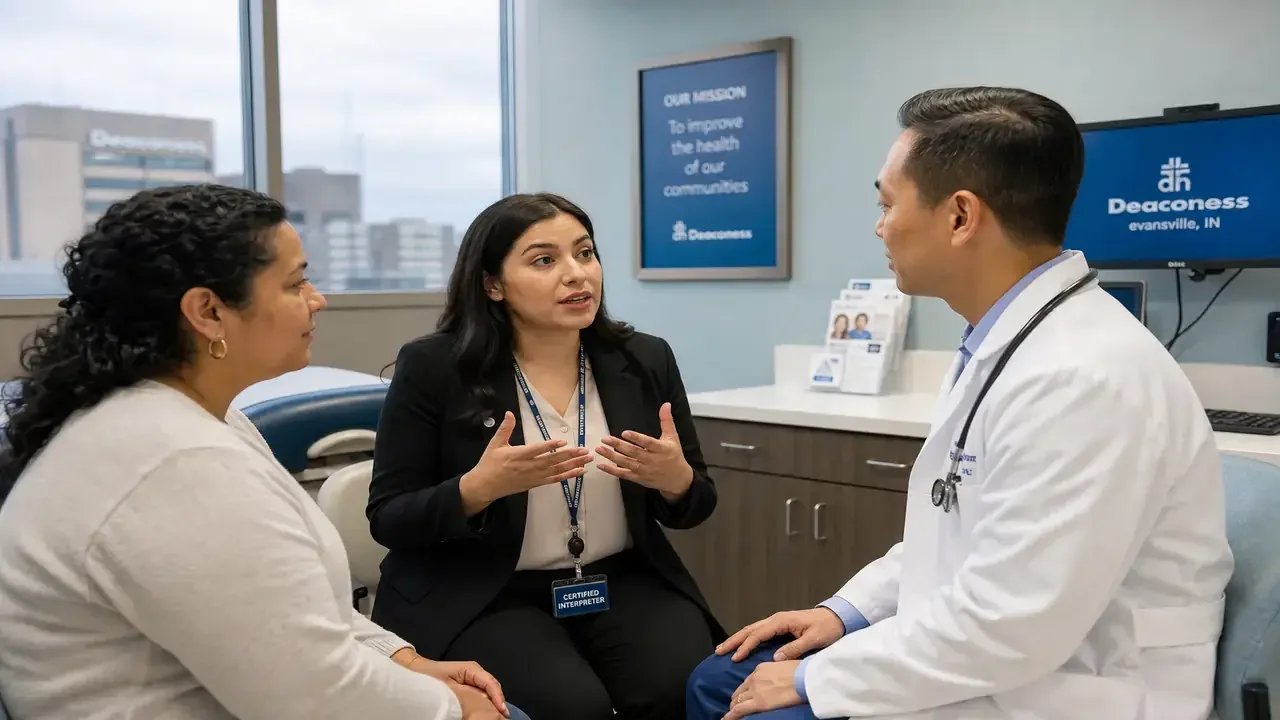
On-Site Interpretation: Best for high-stakes, emotionally complex, or technically detailed interactions: medical appointments involving diagnosis, HR disciplinary hearings, legal proceedings, safety incident investigations. Gold standard — the interpreter reads the room, catches body language, and adjusts for cultural context.
Video Remote Interpretation (VRI): Best for situations where on-site isn't feasible but visual communication is still important: telehealth, urgent hospital encounters, remote plant locations, multi-site HR meetings. Connects within minutes; significantly more accurate than a phone for complex conversations.
Over-the-Phone Interpretation (OPI): Best for quick, straightforward exchanges: intake calls, scheduling, simple customer service. Immediate access in 350+ languages, 24/7. Not recommended for medically informed consent or complex technical instruction.
Document Translation (Certified): Best for any written content that must be accurate and legally defensible: employee handbooks, safety data sheets, OSHA documents, medical consent forms. Certified translation includes a signed attestation of accuracy — required for regulatory and legal purposes.
Step 3: Write the Plan
A language access plan doesn't need to be a 40-page policy document. A well-organized three-to-five page guide that your department heads can actually find and use is far more valuable than a comprehensive policy that sits in a folder.
Your plan should cover:
Coverage Commitment: State clearly your commitment to meaningful language access and cite applicable regulations.
Language Inventory: List the primary languages you support and whether interpretation, translation, or both are provided for each.
Modality Decision Tree: A simple flowchart or table your team can reference in real time to choose the right service.
Vendor Contact Information: Name, phone, email, and booking instructions for your language service provider.
Staff Responsibilities: Who is authorized to request services, budget codes, approval process for translation.
Quality and Complaint Protocol: How to capture feedback and how LEP individuals can raise concerns.
| Situation | Recommended Modality |
|---|---|
| Medical diagnosis/treatment discussion | On-site interpretation |
| Telehealth appointment | VRI |
| Scheduling call | OPI |
| Safety training — new employee | On-site or VRI |
| Safety data sheet distribution | Certified document translation |
| HR performance review | On-site interpretation |
| Routine customer service inquiry | OPI |
Step 4: Train Your Team
A plan no one knows about is useless. Plan for at least one training session with department managers and include it in the new employee orientation.
Key training points:
Never ask a bilingual coworker to serve as an interpreter for high-stakes situations — this creates liability.
Do not rely on family members or children of LEP individuals — explicitly prohibited under Section 1557 and HIPAA guidance.
Know the trigger: if the LEP individual cannot demonstrate basic comprehension in English, bring in a professional interpreter.
Booking isn't hard: 24–48 hours' advance notice is typical; Heartland also accommodates urgent requests.
Step 5: Measure and Improve
Once your plan is live, build in a simple annual review. Gather data on:
Volume by modality: how many on-site, VRI, OPI, and translation requests were fulfilled
Languages requested: is your inventory still accurate, or have new needs emerged?
Incidents: were there situations where language access failed?
Staff feedback: do team members feel confident using the plan?
LEP individual feedback: are patients/clients able to provide communication quality feedback?
Frequently Asked Questions
Q: Do small organizations need a formal language access plan?
A: If you receive any federal funding — through Medicaid, Medicare, grants, or contracts — yes, and federal guidance is clear. Even for private organizations without federal funding, a basic framework protects you legally and operationally. The cost of a plan is far lower than the cost of a discrimination complaint or workplace incident investigation.
Q: Can we use AI or machine translation for documents?
A: For internal, low-stakes documents, machine translation can play a supporting role — but it should always be reviewed by a bilingual human. For any document with legal weight, distributed to employees as a binding communication, or used in regulated healthcare contexts, certified human translation is required.
Q: What's the difference between an interpreter and a translator?
A: Interpreters work with spoken language in real time. Translators work with written documents. The skills and training are different. A professional interpreter certified for medical or legal settings has domain-specific credentialing — not just general bilingualism.
Q: How do we handle after-hours interpretation needs?
A: Heartland provides 24/7 emergency interpretation access for healthcare and other time-sensitive settings. Your language access plan should include an after-hours contact protocol.
Q: What should we budget for language services?
A: On-site interpretation is billed per session or hourly. OPI is typically per-minute. Document translation is per-word. Organizations often underestimate their need in year one and find the actual cost quite manageable relative to the risk they were carrying. Heartland offers volume-based rates — contact for a custom quote.
Q: What happens if we don't have a language access plan and there's an incident?
A: Without documentation of your language access efforts, you face personal and organizational liability. In healthcare, the consequences can include OCR complaints, loss of federal funding, and private lawsuits. In manufacturing, OSHA penalties for safety training failures can reach $15,625 per serious violation and $156,259 for willful violations.
Getting Started
Building a language access plan doesn't require a six-month project. Most organizations can go from zero to a functional, documented plan in three to four weeks with the right partner.
Heartland Interpretation & Translation Services works with hospitals, manufacturers, law firms, nonprofits, and employers across Southwest Indiana, Northwest Kentucky, and Southeast Illinois to build practical language access frameworks.

About the author
Jacob Brown
Jacob Brown shares practical guidance from Heartland Language Services on clear, reliable communication for multilingual workplaces.
Keep reading
Related articles
June 26, 2026
Safety Data Sheet Translation for Indiana Manufacturers: OSHA HazCom Compliance and the Multilingual Workforce
Indiana manufacturers with multilingual workforces must provide OSHA HazCom-compliant Safety Data Sheets in every language their employees speak. Learn how certified SDS translation keeps your facility compliant with 29 CFR 1910.1200, GHS standards, and OSHA penalty thresholds — and how Heartland serves the Tri-State region.
Read article →March 23, 2026
How to Assess Your Organization's Language Needs
Many organizations only realize the cost of language gaps after a problem occurs, like an accident, a lost deal, or a failed audit. Here’s how you can identify these issues before they cause trouble.
Read article →August 20, 2026
Corporate Language Training Indiana: Employer Guide
A language class that ignores your shift schedule and job vocabulary rarely finishes. This guide helps Tri-State employers design corporate language training that actually sticks.
Read article →