
Insights
Looking for Interpretation Near Me? 10 Things You Should Know About Finding Vetted Linguists for Haitian Creole and Marshallese Communities
Published March 5, 2026 · By Stephen Gardner
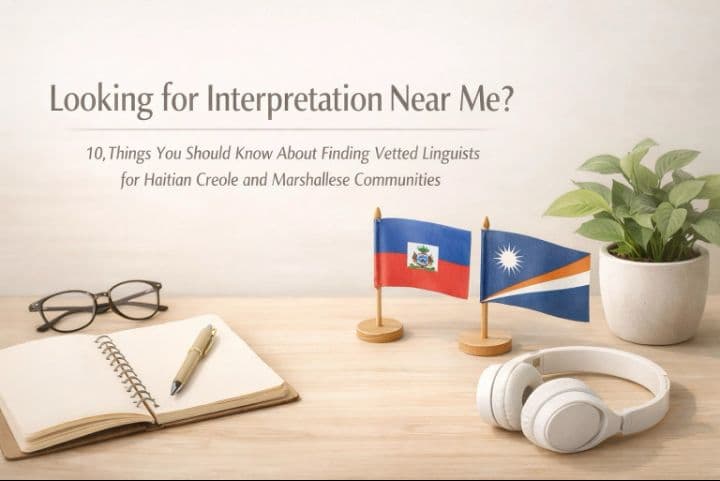
In the heart of the Tri-State area, the linguistic landscape is shifting with remarkable speed. From the bustling healthcare corridors of Louisville to the manufacturing hubs of Evansville and the tight-knit communities of Southeast Illinois, the demand for high-quality communication has never been more pressing. While Spanish has long been the primary focus for many local organizations, the rapid growth of the Haitian Creole and Marshallese communities has introduced new complexities. When a project manager or a healthcare administrator begins a search for interpretation near me, they are often looking for more than a simple bilingual speaker. They are looking for a bridge between cultures and a safeguard against the legal and medical risks of miscommunication.
The first and perhaps most critical consideration involves the formal vetting process of any linguist. It is a common misconception that native fluency alone qualifies an individual for professional interpretation. While speaking Haitian Creole or Marshallese as a first language provides an essential foundation, it does not automatically grant a person the skills necessary to navigate a high-stakes medical diagnosis or a complex legal deposition. Professional-grade interpretation requires a specific set of cognitive skills, including the ability to process and convert complex information in real time while maintaining strict neutrality. Organizations that prioritize quality look for linguists who adhere to the standards set by the National Association of Judiciary Interpreters and Translators or the American Translators Association. This level of professionalism ensures that every word spoken is an accurate reflection of the original intent, which is vital for maintaining compliance in any highly regulated industry, and it is exactly why many organizations choose on-site and remote interpreting instead of relying on ad-hoc bilingual staff.

Beyond basic linguistic accuracy, true cultural competence is the second pillar of effective communication, and it is also where ongoing staff development can make or break your results. For the Marshallese community in the Tri-State region, social hierarchies and specific cultural protocols can dictate how information is shared and received, which is why many teams pair professional language access with staff development and training to strengthen day-to-day communication. A well-vetted interpreter understands these nuances and can navigate them without overstepping their role as a neutral party. Similarly, within the Haitian Creole community, there are often cultural perceptions regarding authority and healthcare that can influence an individual's willingness to speak openly. A professional linguist acts as more than just a voice; they are a cultural expert who can parse subtext and connotation that a generic machine translation or an unvetted speaker might miss entirely. This deep-seated understanding is why many local facilities rely on qualified medical interpreters to ensure that their message is not only heard but truly understood, especially when those services are integrated into everyday operations instead of being treated as a last-minute fix.
The third factor to consider is the depth of professional experience. A seasoned interpreter who has spent years working in specialized environments like courtrooms or emergency rooms brings a level of composure and technical knowledge that a novice simply cannot replicate, which is why it pays to work with a provider that offers vetted, field-tested interpreting for healthcare and legal settings. In Southeast Illinois, where manufacturing plants often require workplace safety briefings, an interpreter must be familiar with industry-specific terminology to ensure that every worker remains safe on the floor. This type of specialized knowledge is essential when discussing OSHA standards or proprietary operational procedures. When an organization integrates professional-grade translation services into their safety protocols, they are making a proactive investment in their workforce's well-being, and the best outcomes usually come when those written materials are reinforced with live qualified workplace safety interpreters during trainings and toolbox talks.
As we look toward the fourth consideration, the mode of service becomes increasingly important. Not every situation requires an on-site presence, but every situation does require reliability. In the Tri-State area, many clinics and legal offices find that video remote interpretation offers the perfect balance of accessibility and visual connection. This is particularly useful for languages like Marshallese, where the number of local, qualified professionals might be lower than the demand. Having the ability to connect with a vetted expert via a secure, state-of-the-art platform ensures that no patient or client is left waiting due to a language barrier. This flexibility is a hallmark of modern language services and allows for a more responsive approach to community needs.

Domain expertise represents the fifth critical element. A linguist who excels in a community outreach setting might not have the specialized vocabulary required for a cardiovascular consultation or a complex immigration hearing. When searching for a partner, it is essential to verify that the linguists have a proven track record in your specific field. In the medical sector, for example, a deep understanding of HIPAA regulations and medical terminology is non-negotiable. For legal firms in Louisville, knowledge of USCIS procedures and the specific jargon of Kentucky law can be the difference between a successful outcome and a costly mistrial.
The sixth point of focus is the importance of dialect specialization. Haitian Creole, while unified in many ways, can have regional variations that impact clarity. Marshallese also features major dialects that a professional must be prepared to navigate. An unvetted interpreter might struggle with these differences, leading to minor errors that can snowball into significant misunderstandings. A vetted professional, however, has the training to identify these variations and adjust their delivery accordingly to ensure that the communication remains seamless.

Point seven involves the rigorous standards of privacy and confidentiality. In small, close-knit communities where everyone seems to know everyone else, the role of an impartial, professional interpreter is vital, and reputable HIPAA-compliant interpreters are built around exactly this kind of ethical accountability. A community member acting as an ad-hoc interpreter might inadvertently share sensitive information, leading to a breach of trust or even a violation of federal privacy laws. Professional linguists are bound by a strict code of ethics that prioritizes the confidentiality of every interaction. This is especially important for sensitive social services or legal matters involving the Haitian Creole and Marshallese populations in Indiana and Kentucky, and it extends to written records as well when you are handling sensitive forms through professional certified document translation.
The eighth consideration is the availability of 24/7 support. Emergencies do not follow a nine-to-five schedule, and neither should your language access plan. Whether it is a midnight emergency room visit in Evansville or an urgent legal matter in Henderson, having a partner who can provide immediate access to qualified linguists is essential. This level of readiness is a key indicator of a professional service provider's commitment to the community.

Compliance with federal mandates, such as Title VI of the Civil Rights Act and the upcoming 2026 ADA digital accessibility requirements, is the ninth factor. Many organizations in the Tri-State area are currently under-prepared for the level of language access that will soon be legally required. By partnering with a firm that understands these evolving regulations, businesses can avoid the steep penalties associated with non-compliance. This involves not just spoken interpretation through on-demand interpreter support but also the translation of vital documents through professional-grade translation, ensuring that all community members have equal access to essential services.
Finally, the tenth thing you should know is that the most successful communication strategies are built on long-term partnerships rather than one-off transactions. When you work with a dedicated language service provider, they become familiar with your organization’s specific needs, terminology, and community goals. This ongoing relationship leads to more consistent results and a higher standard of care for the Spanish, Haitian Creole, and Marshallese speakers you serve. As your organization continues to grow and adapt to the diverse demographics of the Tri-State area, having a reliable team of vetted linguists is your most valuable asset.
Building a truly inclusive environment requires a commitment to excellence that goes beyond the surface level. It requires a partner who understands the high-stakes nature of your work and the cultural nuances of the people you serve, and it helps when your approach blends qualified medical interpreters, certified document translation, and practical staff development through corporate language training programs. If you are ready to elevate your language access plan and ensure that your organization is fully prepared for the future, we invite you to get a free quote today. Together, we can ensure that no voice in our community goes unheard.
About the author
Stephen Gardner
Stephen Gardner shares practical guidance from Heartland Language Services on clear, reliable communication for multilingual workplaces.
Keep reading
Related articles
February 5, 2026
Haitian Creole & Marshallese: How Specialized Interpreting is Transforming Patient Outcomes in Evansville
Read article →October 22, 2026
Marshallese Language Services: A Practical Guide for Clinics and Employers
Serving Marshallese-speaking patients or staff? How to plan interpreting and translation, what federal rules say, and seven questions to ask before you book.
Read article →August 24, 2026
Lockout/Tagout Training Interpreters Indiana: Machine Safety Guide
A locked-out machine only stays safe if every worker near it understands what the lock means. This guide helps Tri-State manufacturers interpret lockout/tagout training correctly.
Read article →