
Insights
Top Languages Spoken in Indiana Healthcare Settings — And How Hospitals Can Serve Every Patient
Which languages do Indiana hospitals encounter most? Learn how Evansville-area healthcare facilities meet Section 1557 language access requirements with certified interpreters.
Published May 28, 2026 · By Stephen Gardner
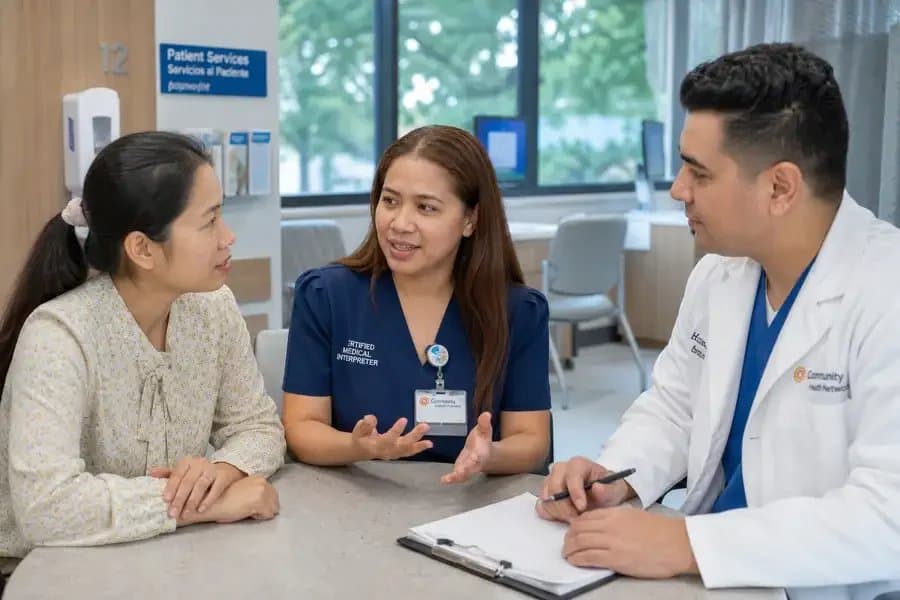
Indiana's patient population is more linguistically diverse than ever. Spanish, Burmese, Haitian Creole, Arabic, Somali, Karen, and Marshallese are among the most frequently encountered languages in Southwest Indiana emergency rooms, clinics, and specialty practices. Under Section 1557 of the Affordable Care Act and HIPAA, healthcare providers are legally obligated to offer meaningful language access — at no cost to the patient. This guide breaks down which languages appear most often in Tri-State healthcare settings and what certified interpreter coverage looks like in practice.
Introduction
When a Burmese-speaking grandmother arrives at an Evansville emergency room after a fall, the attending physician needs more than a translation app to ensure safe, HIPAA-compliant care. When a Marshallese family seeks prenatal services in Henderson, KY, the clinical team must be able to communicate with precision, not approximations.
Indiana's Tri-State region — spanning Southwest Indiana, Northwest Kentucky, and Southeast Illinois — has experienced a quiet but profound demographic shift over the past two decades. Refugee resettlement programs, agricultural workforce migration, and growing immigrant communities have introduced dozens of language groups into healthcare settings that were once primarily English-speaking.
For hospital administrators, clinical teams, and practice managers, understanding which languages appear in your patient population isn't just a cultural awareness exercise. It is a compliance and patient-safety imperative.
At Heartland Interpretation & Translation Services, our interpreters work every week in hospitals, clinics, urgent care centers, and behavioral health facilities across the Tri-State. This post reflects what we see on the ground — the languages, the populations, and the standards of care that protect both patients and providers. Learn more about our medical interpretation services.
Why Language Diversity in Indiana Healthcare Is Growing
Refugee Resettlement in Southwest Indiana
Evansville has been an active refugee resettlement destination for more than three decades. The city's Catholic Charities and partner agencies have welcomed families from Myanmar (Burma), Somalia, Iraq, Sudan, the Democratic Republic of Congo, and other conflict-affected regions. Many of these families remain in the Tri-State area long-term, forming settled communities with ongoing healthcare needs.
The result: a stable, predictable patient population speaking Burmese, Karen, Karenni (Kayah), Somali, Arabic, and Kinyarwanda who require interpreter support at nearly every healthcare encounter.
Agricultural and Manufacturing Workforce Migration
The western and southern counties of Indiana — along with adjacent areas of Kentucky — have seen significant growth in Spanish-speaking populations tied to agricultural work (poultry processing, grain farming), food manufacturing, and construction. Towns like Jasper, Vincennes, and Princeton have community Spanish-language healthcare needs that now rival larger urban centers.
Marshall Islands Compact of Free Association (COFA) Communities
Indiana has one of the fastest-growing Marshallese communities in the Midwest. Marshallese individuals are U.S. citizens under the COFA agreement and have historically experienced poor health outcomes, in part due to language barriers in healthcare. Interpreter access for Marshallese patients is both a clinical and civil rights priority.
Haitian Creole Communities
Haitian Creole speakers have established communities in several Indiana cities, including Evansville. Heartland has offered Haitian Creole interpreter services and language training programs for years. In healthcare settings, Haitian Creole requires certified interpreters with both linguistic skills and cultural competency around health literacy and medical terminology.
The Most Common Languages in Indiana Healthcare Settings
Based on our interpreter deployment patterns and publicly available data from Indiana hospital language access reports, here are the languages most frequently encountered in Southwest Indiana and Tri-State healthcare facilities.
1. Spanish
Spanish is the most requested language in virtually every Indiana healthcare facility. The state's Spanish-speaking population includes both long-established Latino communities and more recent arrivals. Spanish speakers range from fluent bilinguals to patients with minimal English proficiency (LEP) who require full interpreter coverage for every clinical conversation.
Key healthcare contexts: Emergency medicine, obstetrics and prenatal care, pediatrics, behavioral health, diabetes management, chronic disease follow-up.
Compliance note: Many healthcare facilities incorrectly rely on bilingual staff or family members for Spanish interpretation. This practice creates HIPAA risks, violates Section 1557 requirements, and can lead to adverse outcomes in clinical situations requiring precision — such as medication reconciliation, informed consent, or mental health assessment.
2. Burmese
Evansville's Burmese community — primarily composed of refugees from Myanmar — has grown steadily since the early 2000s. Burmese interpreters must navigate the language's formal register system and be familiar with concepts like Buddhist perspectives on end-of-life care, cultural attitudes toward mental health disclosure, and dietary practices that affect care planning.
Key healthcare contexts: Primary care, chronic disease management, behavioral health, maternal health.
Compliance note: Machine translation performs particularly poorly with Burmese due to complex script, tone markers, and formal/informal register distinctions. Certified human interpreters are required.
3. Karen (Sgaw Karen / Pwo Karen)
Karen-speaking refugees — primarily Sgaw Karen — represent a distinct linguistic community from Burmese speakers, despite originating from Myanmar. Many Karen refugees have lived in Thai refugee camps for years before resettlement, adding layers of trauma, health history, and cultural context that interpreters must navigate.
Key healthcare contexts: Refugee health screenings, TB and parasite screening, maternal health, trauma-informed care, dental care.
Compliance note: Do not use Burmese interpreters for Karen-speaking patients. These are distinct, mutually unintelligible languages. Misassignment is a common error in facilities without structured language access programs.
4. Haitian Creole
Haitian Creole is a French-based creole language with distinct grammar, vocabulary, and health literacy context. Haitian Creole-speaking patients in Indiana frequently encounter providers who mistake their language for French — an error that can result in missed communication in life-critical situations.
Key healthcare contexts: Obstetrics, maternal health, infectious disease, behavioral health, primary care.
Compliance note: French and Haitian Creole are not interchangeable. A standard French interpreter is not an appropriate substitute for a Haitian Creole interpreter.
5. Somali
Somali-speaking refugees resettled in Indiana bring significant healthcare needs, including mental health concerns related to displacement, and cultural contexts around gender (many Somali women prefer female interpreters for gynecological or maternal care) and religious practices (Ramadan, halal dietary restrictions, prayer time during inpatient stays).
Key healthcare contexts: Maternal health, behavioral health, primary care, emergency medicine, pediatrics.
Compliance note: Gender concordance (same-sex interpreter) is a documented clinical quality concern in Somali patient populations and should be accommodated whenever possible.
6. Arabic
Arabic-speaking patients in the Tri-State area include Iraqi, Syrian, and Sudanese refugee populations, as well as Arabic-speaking immigrants in professional and academic communities. Arabic has significant dialectal variation — Modern Standard Arabic (MSA) is used in formal contexts, but patients may speak Egyptian, Iraqi, Levantine, or Sudanese Arabic dialects that differ meaningfully.
Key healthcare contexts: Chronic disease management, behavioral health, emergency medicine, specialty care.
Compliance note: Certified medical interpreters should be matched to the patient's dialect whenever possible. An Egyptian Arabic speaker may not effectively communicate with a patient speaking rural Iraqi Arabic.
7. Marshallese
Marshallese communities in Indiana have historically experienced disproportionate rates of Type 2 diabetes, heart disease, and certain cancers — conditions closely linked to nuclear testing contamination in the Marshall Islands in the mid-20th century. Marshallese patients often have complex, multi-generational health histories that interpreters must be prepared to navigate.
Key healthcare contexts: Chronic disease management (diabetes, cardiovascular), nephrology (dialysis is common), oncology, primary care.
Compliance note: Marshallese is classified as a language of limited diffusion — trained, certified Marshallese medical interpreters are rare and in high demand. Healthcare facilities serving Marshallese populations should establish interpreter relationships well in advance of need.
8. Karenni (Kayah)
Karenni-speaking refugees are a smaller but distinct community from Karen speakers. Like Karen, Karenni is mutually unintelligible with Burmese and requires its own trained interpreter pool.
Key healthcare contexts: Refugee health screening, primary care, pediatrics, trauma-informed mental health care.
9. Kinyarwanda / Kirundi
Refugees from Rwanda, Burundi, and the Democratic Republic of Congo speak Kinyarwanda and Kirundi — related but distinct languages. This community is smaller in Southwest Indiana but present, particularly in Evansville's resettlement community.
Key healthcare contexts: Primary care, trauma-informed care, maternal health, pediatrics.
10. Vietnamese
A well-established Vietnamese community, particularly in Louisville and Indianapolis, creates healthcare language needs across the region. Vietnamese interpreters are more widely available than for some refugee languages, but still require certification for clinical settings.
Key healthcare contexts: Primary care, oncology, geriatrics, dental, specialty care.
What Section 1557 and HIPAA Require
Section 1557 of the Affordable Care Act
Section 1557 prohibits discrimination in healthcare programs receiving federal funding (Medicare, Medicaid, ACA marketplace insurers, federally funded clinics) on the basis of national origin, which includes language. The law requires:
- Qualified interpreters — trained in medical terminology and subject to confidentiality requirements; cannot be a minor child or typically a family member
- Free of charge — patients cannot be billed for interpreter services
- Timely access — interpretation must be available when the patient needs it, not scheduled days later
- Notice of language rights — patients must be notified of their right to language access in their primary language
Non-compliance exposes healthcare organizations to Office for Civil Rights (OCR) complaints, HHS investigation, and potential loss of federal funding.
HIPAA
Under HIPAA, the use of unqualified interpreters — including family members and untrained bilingual staff — in clinical conversations constitutes a privacy risk. When a family member interprets sensitive medical information (HIV status, mental health diagnosis, reproductive health), the patient's PHI is disclosed to a third party without the patient's informed authorization.
Additionally, interpretation errors by unqualified interpreters can result in incorrect medication dosing, missed informed consent, inaccurate patient history, and delayed diagnosis — each of which exposes hospitals and practices to malpractice liability, OCR complaints, and Joint Commission scrutiny.
How Heartland Serves Indiana's Linguistic Diversity
Heartland Interpretation & Translation Services maintains an active roster of certified interpreters across all ten languages listed above — and more than 350 languages total. See the full range of our language services.
On-Site Interpretation
For scheduled appointments, procedures, or situations where physical presence is necessary — labor and delivery, surgical consent, complex behavioral health assessments, trauma-informed care encounters — Heartland dispatches certified on-site interpreters to hospitals, clinics, and specialty practices across the Tri-State region.
Video Remote Interpretation (VRI)
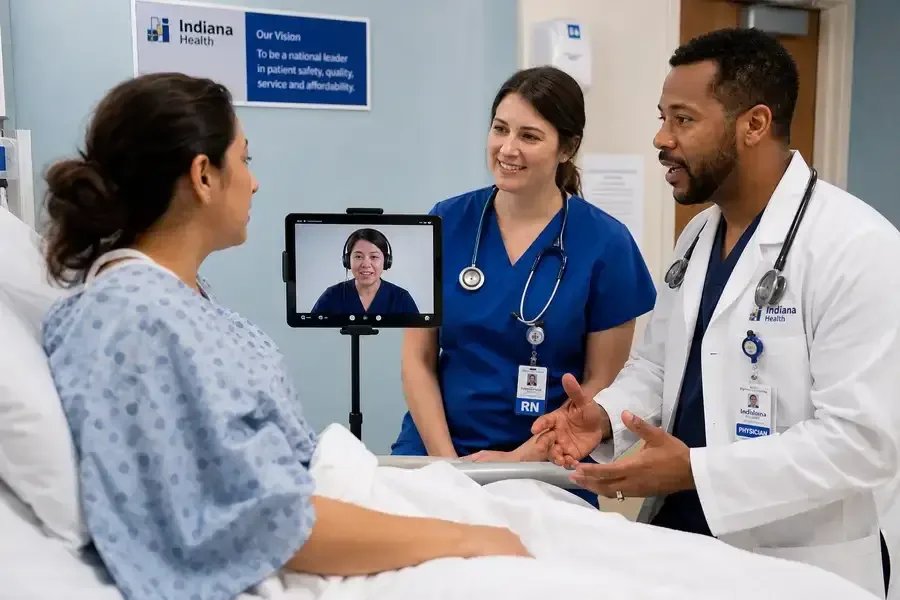
VRI is the gold standard for unplanned encounters, after-hours needs, and language combinations where on-site coverage is unavailable within the required timeframe. VRI provides a certified interpreter via HIPAA-compliant video connection — visible to both patient and provider, allowing nonverbal communication cues to be observed.
Over-the-Phone Interpretation (OPI)
OPI is appropriate for brief, non-emergency clinical conversations — prescription refill confirmations, appointment scheduling, and simple follow-up questions. Heartland provides OPI access for facilities with high-volume, low-acuity language needs.
24/7 Emergency Language Access
Medical emergencies do not follow business hours. Heartland provides round-the-clock interpretation access for participating healthcare facilities — ensuring that a Somali-speaking patient presenting to an Evansville ER at 2 a.m. on a Saturday has access to a certified interpreter, not a translation app.

Building a Language Access Program at Your Facility
Most healthcare organizations in the Tri-State don't lack goodwill toward LEP patients — they lack infrastructure. Here's where to start:
Step 1: Know your languages. Pull your past 12 months of patient registration data and identify which primary languages are most frequently listed. If you serve more than 5% of patients with a given language need, that language likely requires structured access — not ad-hoc phone calls to bilingual staff.
Step 2: Establish a standing interpreter relationship. A signed service agreement with a qualified language services provider gives your facility documented compliance infrastructure and on-call access when needs arise.
Step 3: Train your clinical staff. Staff should know how to request interpreter services, how to use VRI equipment, and — critically — when NOT to ask a patient's family member to interpret (almost always, unless the patient explicitly requests it after being informed of their right to a professional interpreter).
Step 4: Post your language access notices. Section 1557 requires facilities to post notices of language access rights in the languages most common in their service area. These notices must be in the primary language of each covered group — a Spanish notice alone is insufficient if your patient population also includes Burmese and Somali speakers.
Step 5: Review and update annually. Language demographics shift. Your access program should be reviewed at least annually to ensure coverage matches the current patient population — not the population from five years ago.
For more guidance on building a compliant language access program, visit our About page to learn how we partner with healthcare facilities across the Tri-State.
Frequently Asked Questions
Q: Can we use our bilingual staff to interpret for patients?
Generally, no, not for clinical conversations. While bilingual staff can help with basic navigation questions, they are not qualified medical interpreters. Using bilingual staff for clinical interpretation exposes the facility to HIPAA risks, Section 1557 violations, and malpractice liability if a miscommunication leads to an adverse event. Bilingual staff should only interpret if the patient specifically requests it after being informed of their right to a professional interpreter.
Q: We serve a small patient population from a given language group. Do we still need to provide interpreter services?
Yes. Section 1557 and HIPAA apply regardless of the size of the language group. The requirement is based on individual patient need, not population thresholds. However, for very rare languages, VRI or OPI is an appropriate and compliant alternative to on-site interpretation.
Q: Are telephone apps like Google Translate acceptable for clinical interpretation?
No. Translation apps are not HIPAA-compliant (text may be stored on third-party servers), are not trained in medical terminology, and produce errors at rates that are clinically unacceptable. The American College of Physicians, AHA, and CMS all recommend against using machine translation for direct patient care encounters.
Q: How quickly can Heartland provide on-site interpretation for a scheduled appointment?
For scheduled appointments, we request 24–48 hours’ advance notice for common languages (Spanish, Burmese, Karen, Somali, Arabic, Haitian Creole) and 48–72 hours for less common languages. For urgent unscheduled needs, VRI and OPI are available immediately.
Q: Does Heartland provide certified medical interpreters or general interpreters?
Heartland's interpreters are vetted for language proficiency, medical terminology knowledge, and confidentiality compliance. Our medical interpreters are trained in HIPAA requirements, clinical communication protocols, and the ethical standards of medical interpretation — including the principle of accurate and complete message transfer without editorializing or summarizing.
Conclusion
Indiana's healthcare facilities are serving an increasingly diverse population — and the gap between language access need and language access infrastructure is a patient safety issue, a compliance issue, and an equity issue.
Knowing which languages your patients speak is the first step. Building the interpreter infrastructure to serve those patients — before the next LEP patient walks through your ER doors — is the standard of care.
Heartland Interpretation & Translation Services partners with hospitals, clinics, specialty practices, and behavioral health facilities across Southwest Indiana, Northwest Kentucky, and Southeast Illinois to deliver certified interpreter services in 350+ languages — on-site, via VRI, or over the phone, 24 hours a day.
Need professional interpretation or translation services in Indiana, Kentucky, or Illinois? Contact Heartland Language Services in Evansville — call (812) 499-1696 or get a free quote online.
About the author
Stephen Gardner
Stephen Gardner shares practical guidance from Heartland Language Services on clear, reliable communication for multilingual workplaces.
Keep reading
Related articles
July 14, 2026
Certified Medical Interpreter Evansville, IN: HIPAA, Section 1557 & Patient Safety
Clear communication is a patient-safety requirement. Learn how qualified medical interpreters help Evansville-area healthcare providers protect privacy, support Section 1557 language access, and reduce preventable communication errors.
Read article →May 10, 2026
Why Indiana Hospitals Need 24/7 Interpreter Access — And How to Get It
Indiana hospitals serve patients who speak 50+ languages. Learn why around-the-clock interpreter access is a legal requirement, a patient safety imperative, and a practical necessity for Tri-State healthcare providers.
Read article →July 10, 2026
Spanish Interpretation Services in Evansville, Indiana
Businesses across Evansville and the Tri-State area rely on professional Spanish interpretation to communicate clearly, protect compliance, and serve multilingual communities. Learn how Heartland Language supports healthcare, legal, manufacturing, and business teams.
Read article →