
Insights
The SPEAK Act Shift: Why Louisville Medical Firms are Rethinking Telehealth Interpretation and Translation Services
Published April 27, 2026 · By Jacob Brown
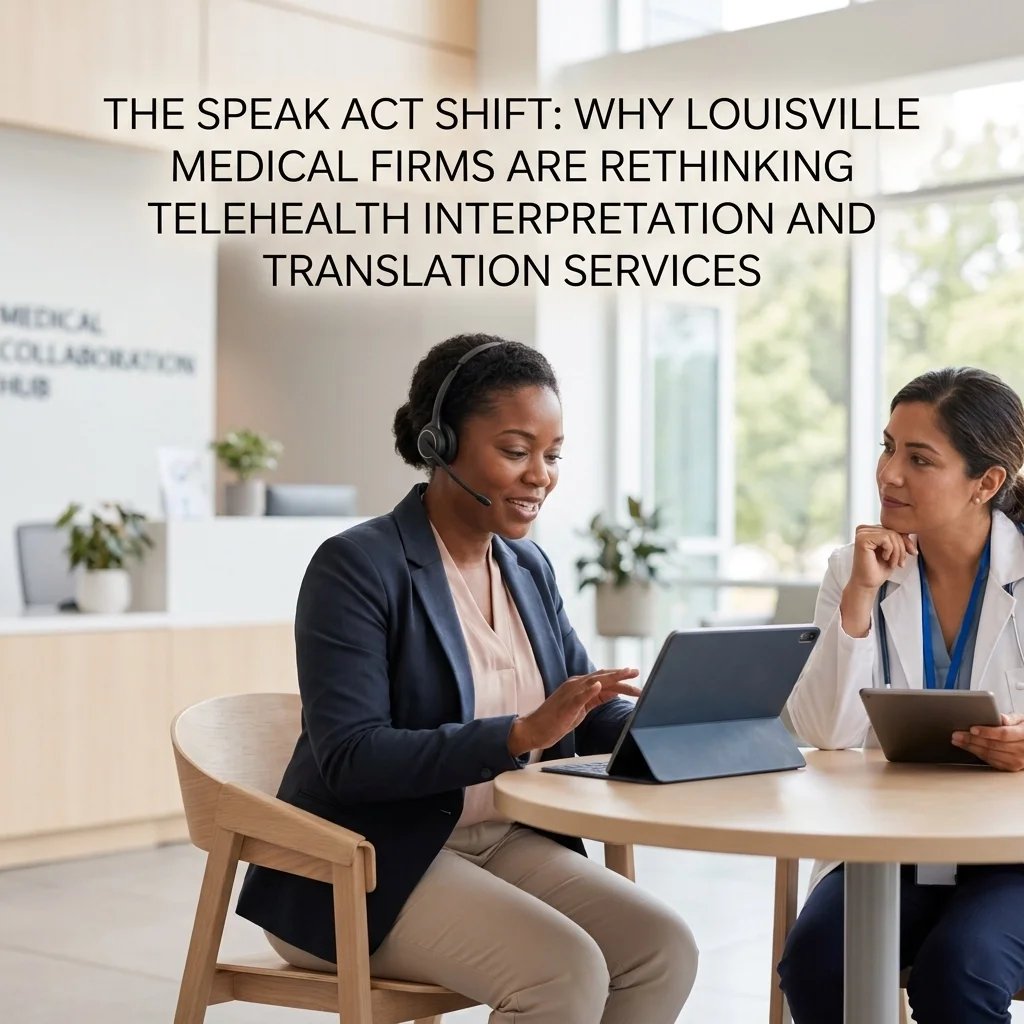
The medical landscape in Louisville has always been defined by its commitment to community health and its ability to adapt to the shifting tides of federal regulation. From the bustling corridors of the downtown medical district to the specialized clinics in the East End, healthcare providers are currently navigating a significant legislative evolution that is fundamentally changing how they interact with their patients. The catalyst for this transformation is the SPEAK Act, a piece of legislation signed into law in early February 2026. This act has sent a clear message to medical firms across the Commonwealth: the era of treating language access as a secondary, ad hoc service is over. As Louisville firms look toward the 2027 implementation of new federal guidance, they are realizing that their current telehealth infrastructures require a massive overhaul to ensure that every patient, regardless of their native tongue, receives the same caliber of care.
For years, many healthcare providers relied on makeshift solutions to bridge the communication gap. A family member might have been asked to step in as an impromptu translator, or a staff member who spoke a bit of Spanish might have been pulled away from their primary duties to assist in a consultation. However, the SPEAK Act specifically targets these gaps by requiring the Department of Health and Human Services to establish rigorous standards for language access in telehealth and digital health technology. This means that for a limited-English-speaking patient in Louisville, the digital divide is no longer just about having a stable internet connection or a smartphone; it is about having access to a qualified medical interpreter who is seamlessly integrated into the telehealth platform itself. Local firms are now beginning to understand that language access is not just a polite add-on but a critical component of their clinical infrastructure.
The shift is particularly felt in the realm of telehealth, which saw an unprecedented boom over the last several years. While digital visits offered convenience, they often left limited-English-speaking individuals behind because the platforms themselves were not designed with multilingualism in mind. The new federal mandates are pushing Louisville medical firms to rethink their digital patient portals, appointment reminders, and discharge instructions. It is no longer enough to offer a translated website if the actual video consultation lacks the capability to add a third-party interpreter with high-fidelity audio and video. Providers are discovering that without these integrated systems, they risk significant communication-related adverse events that can lead to misdiagnosis or improper treatment plans.
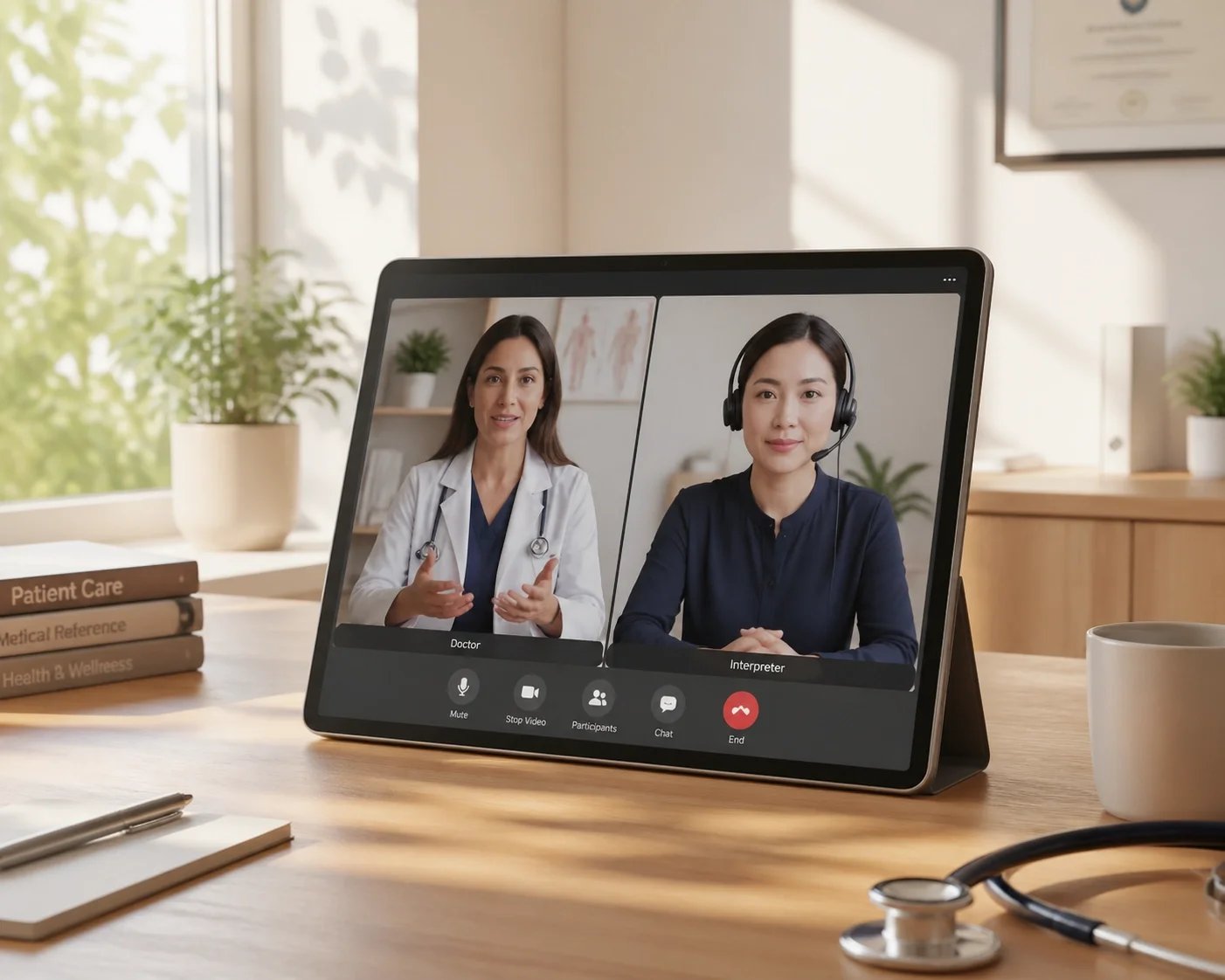
One of the primary drivers of this rethinking is the heightened focus on HIPAA compliance. In the rush to adopt telehealth, some firms utilized consumer-grade video conferencing tools that lacked the necessary security protocols. Now, as the SPEAK Act formalizes the requirements for language access, it is also shining a light on the data privacy risks associated with uncertified translation tools and non-secure interpretation methods. Louisville healthcare providers are moving away from general-purpose software and toward specialized platforms that guarantee end-to-end encryption while hosting professional linguists. They are realizing that protecting patient data is just as vital as the accuracy of the translation itself, and the two are now inextricably linked in the eyes of federal regulators.
This transition is not merely about staying on the right side of the law; it is also about addressing the unique demographic needs of the Tri-State area. Louisville has become a vibrant hub for diverse communities, including significant populations of Spanish, Arabic, and Vietnamese speakers. To serve these neighbors effectively, medical firms must move beyond simple word-for-word translation. They are beginning to prioritize cultural competency, recognizing that a professional interpreter understands the nuances of local dialects and cultural nuances that AI-driven tools often miss. Many organizations are finding that choosing certified linguists over AI is the only way to build the trust necessary for successful long-term patient outcomes.
Integrating these services requires a strategic approach to multilingual workflows. A medical firm cannot simply flip a switch and become fully accessible overnight. It involves auditing every touchpoint a patient has with the practice, from the initial phone call for an appointment to the follow-up email after a procedure. If a limited-English-speaking patient receives a text reminder in a language they do not understand, the likelihood of a missed appointment skyrockets, impacting the firm’s efficiency and the patient’s health. Louisville firms are increasingly partnering with language service providers who can help them map out these journeys and implement translation services that are as fluid as the medical care they provide.

The SPEAK Act also emphasizes the importance of multi-person video platforms. In a typical medical scenario, a consultation might involve a specialist, a primary care physician, the patient, and a family member. Adding a professional interpreter to this mix requires a platform that can handle multiple high-quality video feeds simultaneously without lagging or dropping calls. For Louisville medical firms, this means upgrading their hardware and software to meet these new technical benchmarks. It also means training staff on how to initiate these multi-party calls so that the interpreter is an integrated participant rather than a distracting afterthought. The goal is to make the technology invisible so that the human connection between the provider and the patient remains the focal point of the visit.
Beyond the video call, the translation of written materials is undergoing a similar revolution. The SPEAK Act mandates that health information technology, including patient portals and mobile apps, be accessible to those with limited English proficiency. This is a tall order for many smaller practices that have historically struggled to keep their digital tools updated. However, the cost of inaction is far higher than the investment in professional translation. Clear, accurate discharge instructions and prescription information are essential for patient safety. Louisville medical firms are learning that "close enough" is a dangerous standard when it comes to dosage instructions or post-operative care. They are turning to professional translation services to ensure that every document is linguistically accurate and medically sound.
As the February 2027 deadline for HHS guidance approaches, the sense of urgency in the Louisville medical community is palpable. Firms that have already begun the transition are finding that it provides a competitive advantage. Patients who feel heard and understood are more likely to return and recommend the practice to others in their community. Furthermore, by choosing the right modality of service: whether that be on-site, video, or phone interpretation: providers can tailor their approach to the specific needs of the clinical situation. An emergency room visit might require the immediate availability of a phone interpreter, while a complex surgical consultation might benefit from the visual cues provided by a video or on-site professional.

Ultimately, the SPEAK Act shift is about more than just compliance checkboxes or technical upgrades; it is a fundamental reaffirmation of the principle of healthcare equity. It acknowledges that a language barrier should never be a barrier to quality care. Louisville medical firms are at the forefront of this movement, proving that they are ready to invest in the linguistic and cultural infrastructure necessary to serve all members of the community. By rethinking their telehealth interpretation and translation services now, these organizations are not just preparing for a new set of federal rules; they are building a more inclusive and effective healthcare system for the future of the city. The transition may be complex, but for the thousands of limited-English-speaking residents who call Louisville home, it is a change that is both necessary and long overdue.

About the author
Jacob Brown
Jacob Brown shares practical guidance from Heartland Language Services on clear, reliable communication for multilingual workplaces.
Keep reading
Related articles
April 18, 2026
The High Stakes of "Gist" Interpretation: Why Louisville Law Firms Can't Risk Using Uncertified Translators
Read article →February 13, 2026
Language Interpretation and Translation Services: 7 Compliance Mistakes Healthcare Providers in Louisville KY Are Making
Read article →September 10, 2026
Orthopedic Interpreters Indiana: Workplace Injury Guide
A workplace injury and the orthopedic care that follows are both moments where a patient's understanding shapes the outcome. This guide helps Tri-State clinics and employers interpret it correctly.
Read article →