
Insights
Beyond the Chatbot: Why Louisville Healthcare Providers are Choosing Certified Linguists Over AI
Published April 7, 2026 · By Jacob Brown
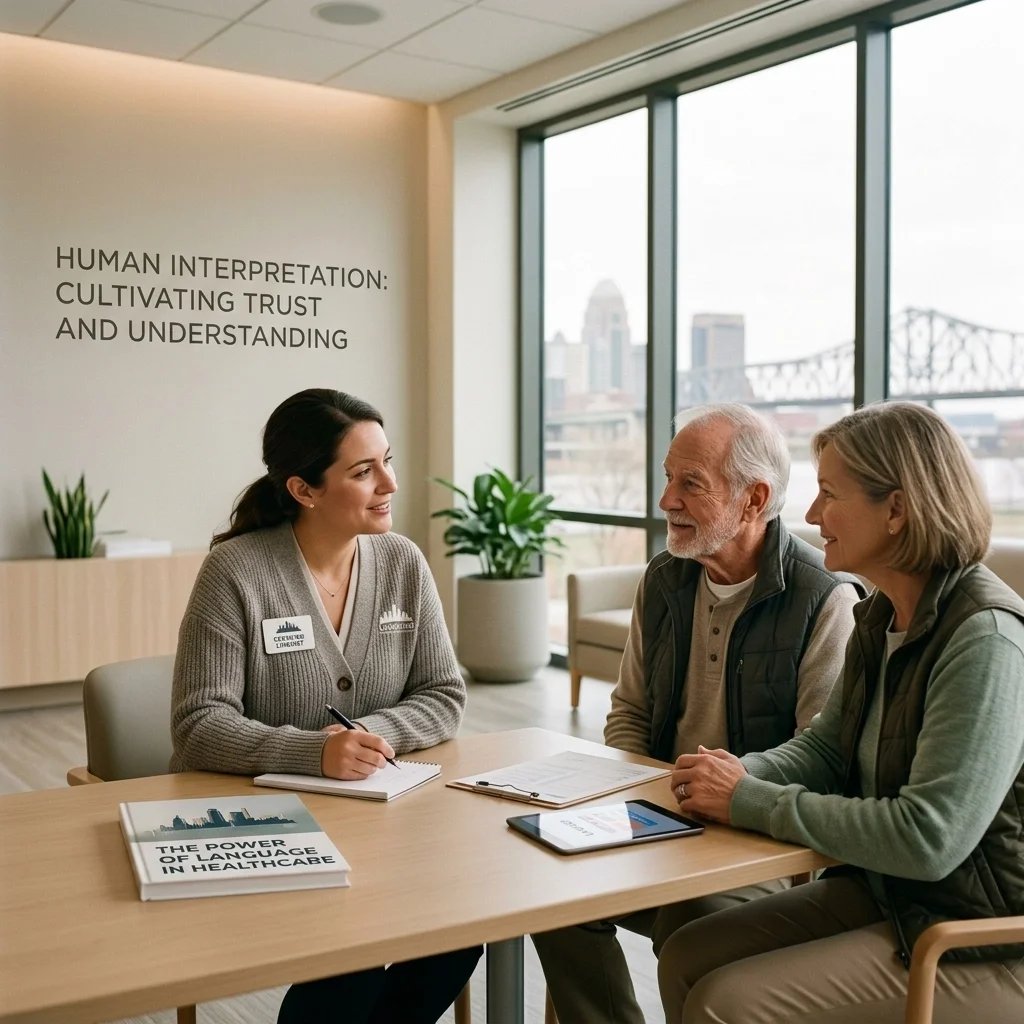
The waiting room of a bustling medical facility in downtown Louisville often serves as a microcosm of the world. On any given Tuesday morning, you might hear the soft cadence of Spanish, the melodic tones of Vietnamese, or the rhythmic flow of Arabic. For the healthcare providers working within these walls, this diversity is a source of pride, but it also presents a significant challenge. When a patient arrives with a complex set of symptoms and limited proficiency in English, the stakes for clear communication immediately skyrocket. In recent years, the allure of rapid-fire artificial intelligence has tempted many administrators looking for a quick fix. However, as the limitations of technology become clearer in high-stakes clinical environments, providers across the Tri-State region are making a deliberate return to the human element, prioritizing the expertise of a certified linguist over the convenience of a chatbot.
The primary driver behind this shift is the realization that medical communication is rarely just about swapping words from one language to another. It is a deeply nuanced process that requires an understanding of clinical urgency, emotional weight, and regional dialect. While a generative AI model can translate a grocery list with impressive speed, it often falters when faced with the high-pressure environment of a Louisville emergency room. A certified linguist brings a level of situational awareness that a machine simply cannot replicate. They can sense the hesitation in a patient’s voice, notice the subtle physical cues of discomfort, and adjust their tone to ensure the patient feels heard and respected. This level of empathy is not just a "nice-to-have" feature; it is a fundamental component of effective healthcare that directly impacts patient outcomes.
In the medical field, the cost of a "close enough" translation can be devastating. Research comparing AI-driven tools to professional human translation has shown that while machines might perform adequately for common languages in low-stakes scenarios, they frequently produce clinically impactful errors in more complex medical contexts. For a limited-English-speaking patient, a mistranslated dosage instruction or a misunderstood symptom can lead to improper treatment plans or dangerous drug interactions. Healthcare facilities in Louisville and the surrounding Tri-State area are increasingly aware that relying on unvetted technology creates a liability gap that they are not willing to bridge. Instead, they are turning to professional translation services in Louisville, KY, to ensure that every interaction is handled by a trained professional who understands the gravity of the medical setting.

One of the most critical areas where AI falls short is in addressing the complexities of cultural competency in healthcare. Language is inextricably linked to culture, and a literal translation often misses the underlying meaning of a patient’s concerns. For example, when discussing mental health or sensitive diagnostic results, different cultures have different ways of expressing distress or asking questions. A linguist interpreter who is well-versed in these cultural nuances can act as a bridge, helping the provider navigate potential misunderstandings. This is particularly relevant when addressing the issue of implicit bias in Spanish, where a machine might provide a correct word-for-word translation but fail to convey the respect or formality required in a specific cultural context. By utilizing human experts, providers can actively work toward cultural competency in healthcare, fostering an environment of trust that encourages patients to be more open and honest about their health.
Beyond the clinical risks, there is the ever-present concern of data security and regulatory compliance. In a world where HIPAA compliance is non-negotiable, the use of free or unvetted AI tools presents a significant security risk. Many consumer-grade chatbots store the data they receive to further train their models, which means that any protected health information entered into the system could potentially be compromised. For a healthcare provider in Louisville or Southern Indiana, this is a risk that could lead to massive fines and a loss of public trust. Heartland Language Services addresses this concern by providing a secure, HIPAA-compliant platform where patient data is handled with the utmost confidentiality. Our vetted linguists are not only experts in their respective languages but are also rigorously trained in privacy protocols, ensuring that every interaction meets the highest standards of legal and ethical compliance.
The role of a certified linguist also extends into the realm of specialized care, where terminology becomes even more technical and specific. In specialized fields like cardiology, oncology, or neurology, the vocabulary is dense and often lacks direct equivalents in other languages. An AI might attempt to approximate a term, but a certified medical interpreter knows how to explain complex concepts in a way that is accessible to the patient without losing the medical accuracy required by the physician. This precision is vital for obtaining informed consent and ensuring that the patient fully understands their treatment options. Providers across the Tri-State region have found that having a dedicated professional available, whether on-site, over the phone, or via video, drastically reduces the time spent on clarifications and follow-up appointments.

Heartland Language Services has seen a growing trend among Louisville medical groups who are moving away from "automated-only" strategies in favor of a more balanced, human-centric approach. These organizations recognize that the ultimate goal of language access is not just to fulfill a regulatory requirement but to provide the best possible care for every member of the community. By choosing to work with a certified linguist, these facilities are investing in the long-term health and satisfaction of their patients. Our seamless approach ensures that providers can access a linguist interpreter quickly, allowing them to maintain the flow of a busy clinic without sacrificing the quality of the patient experience. We understand the unique needs of the Midwest healthcare landscape, from the urban centers of Louisville to the rural clinics of Kentucky and Illinois, and we tailor our services to meet those specific demands.
Furthermore, the human element is irreplaceable when it comes to advocating for the patient. A certified linguist is trained to recognize when a patient might be nodding in agreement out of politeness rather than true understanding. They can gently intervene to ask for clarification, ensuring that the provider is aware of the patient’s actual level of comprehension. This proactive stance is something no algorithm can replicate. It requires a deep understanding of human psychology and the social dynamics of the patient-provider relationship. In the diverse communities of the Tri-State region, where many residents may be navigating a new healthcare system for the first time, having a supportive human voice can make all the difference in their willingness to follow through with prescribed care.
The move toward human-led interpretation is also a financial decision. While AI might seem cheaper on the surface, the hidden costs of errors, re-admissions, and legal complications far outweigh the initial savings. Louisville healthcare providers are looking for reliability and accountability. This is why Heartland Language Services stands behind our work with a money-back guarantee. We believe that if our service does not meet the rigorous standards required for professional medical communication, our clients should not have to bear the cost. This commitment to quality and transparency is why we have become a trusted partner for hospitals and private practices throughout the region.
As we look toward the future of healthcare in the Tri-State area, it is clear that technology will continue to play a role in administration and logistics. However, when it comes to the sacred interaction between a patient and their doctor, the human voice remains supreme. The choice between a chatbot and a certified linguist is ultimately a choice between a transaction and a relationship. By prioritizing professional translation services in Louisville, KY, healthcare providers are choosing to put their patients first, ensuring that language is never a barrier to quality care. Heartland Language Services remains dedicated to this mission, providing the vetted expertise and seamless integration that the modern medical landscape demands. In the end, the goal is simple: to ensure that every patient, regardless of the language they speak, receives the clear, compassionate, and accurate care they deserve.

About the author
Jacob Brown
Jacob Brown shares practical guidance from Heartland Language Services on clear, reliable communication for multilingual workplaces.
Keep reading
Related articles
July 14, 2026
Certified Medical Interpreter Evansville, IN: HIPAA, Section 1557 & Patient Safety
Clear communication is a patient-safety requirement. Learn how qualified medical interpreters help Evansville-area healthcare providers protect privacy, support Section 1557 language access, and reduce preventable communication errors.
Read article →February 13, 2026
Language Interpretation and Translation Services: 7 Compliance Mistakes Healthcare Providers in Louisville KY Are Making
Read article →December 30, 2025