
Insights
The Hidden Cost of 'Close Enough': Why Indiana Factories are Rethinking Workplace Translation
Published April 10, 2026 · By Jacob Brown
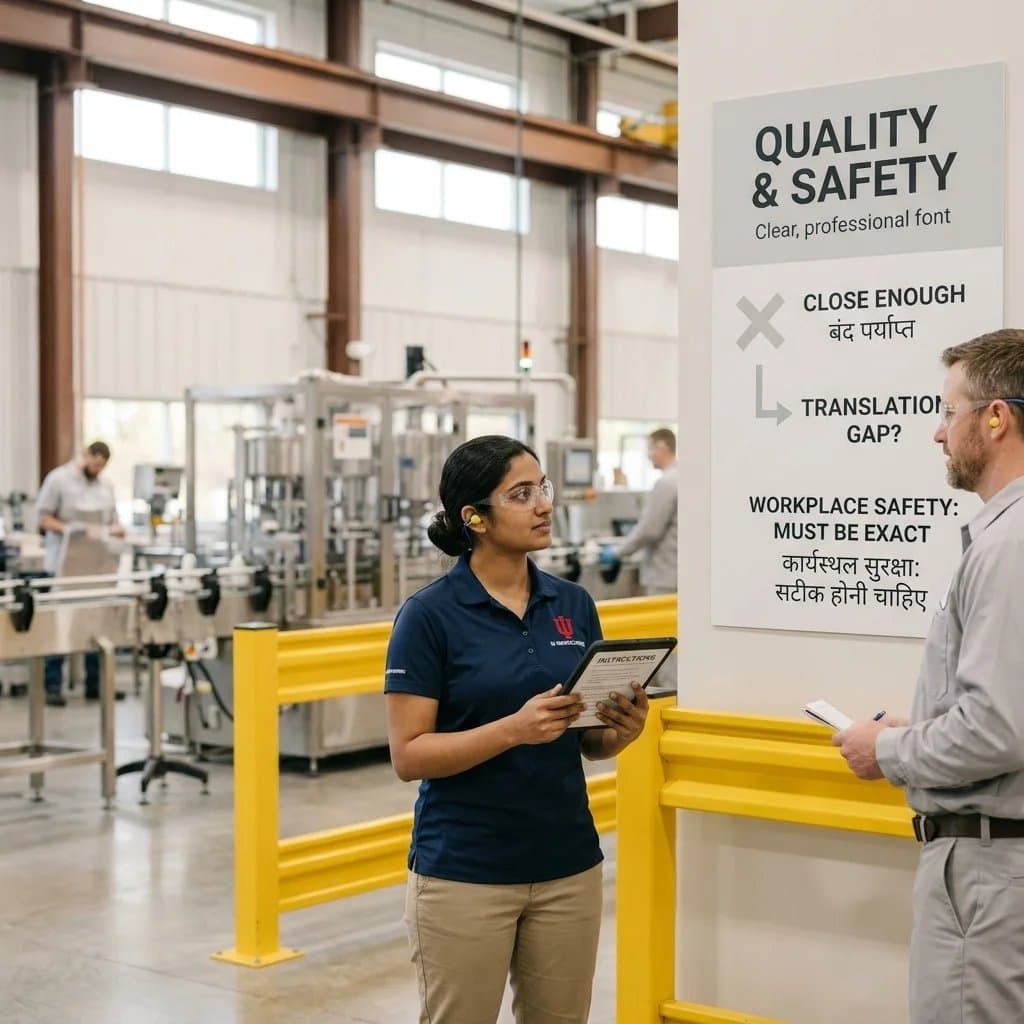
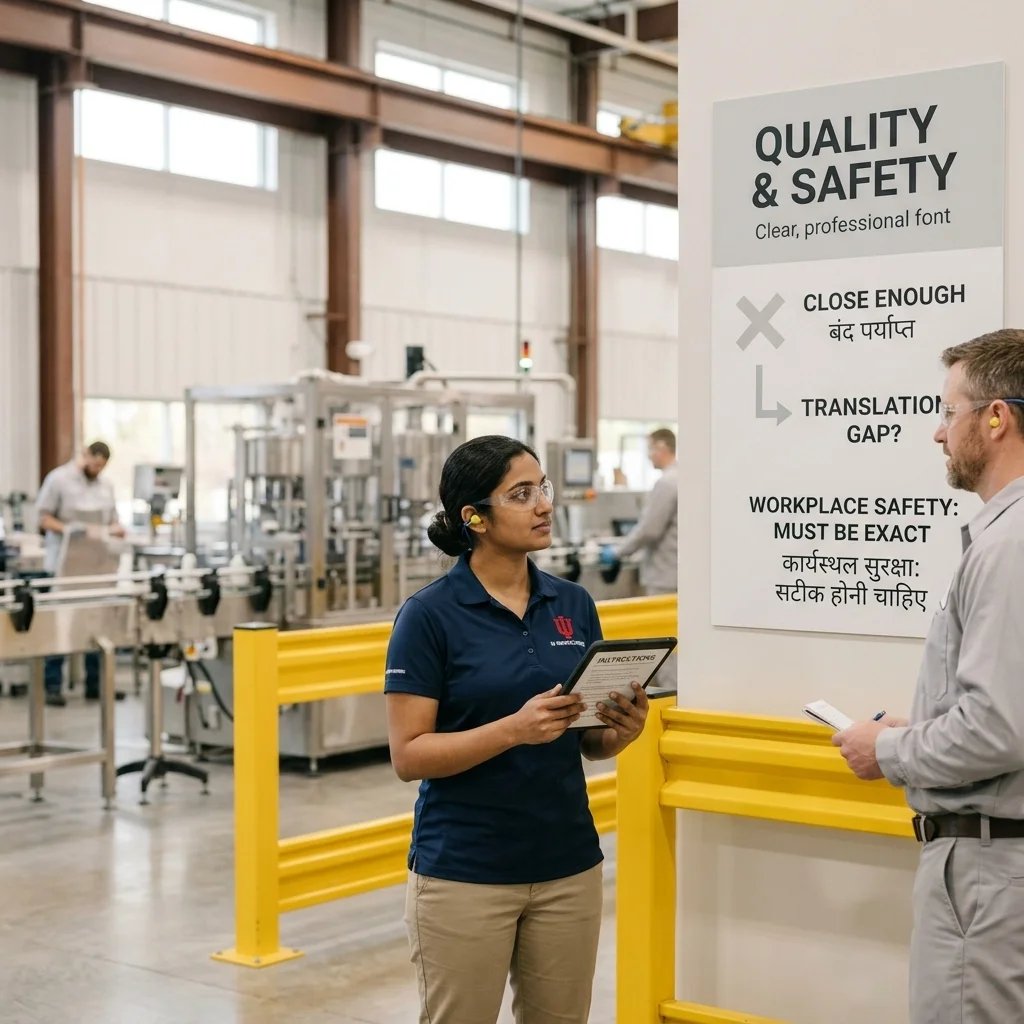
On a humid Tuesday afternoon in an Evansville automotive parts plant, the rhythmic hum of the assembly line was suddenly punctuated by the sharp hiss of a pneumatic failure. The shift lead, a veteran with twenty years on the floor, shouted instructions to a nearby technician to hit the emergency override. However, the technician, a talented newcomer whose primary language was Spanish, hesitated for a split second too long. In that fragment of time, a three-thousand-dollar mold was damaged beyond repair. This was not a failure of skill or a lack of work ethic; it was a failure of the "close enough" approach to workplace translation that has quietly drained the bottom lines of manufacturing facilities across the Tri-State area for decades.
For many Indiana factory managers, the solution to a multilingual workforce has historically been a well-intentioned but flawed reliance on the "bilingual buddy" system. When a complex safety manual needs explaining or a new piece of equipment arrives from overseas, the standard operating procedure often involves pulling the nearest bilingual employee away from their primary task to serve as a makeshift interpreter. While this feels like an efficient, low-cost fix in the moment, recent data suggests that Indiana manufacturers are losing a staggering amount of money through these hidden labor costs. A 2024 study by Relay highlighted that manufacturers lose an average of nearly half a million dollars every year in productivity leaks directly tied to inadequate translation practices.
The financial drain begins with the disruption of high-value workflows. When a bilingual frontline worker is pulled from the line to translate for a coworker, they aren't just helping out; they are effectively abandoning their primary role. Research indicates that these employees spend an average of four hours per week serving as impromptu linguists, which translates to a loss of approximately seven thousand five hundred dollars per bilingual employee annually. When you multiply that across a large-scale facility in Indianapolis or Fort Wayne, the "free" translation provided by a staff member starts to look like one of the most expensive line items on the budget.
Beyond the immediate loss of billable hours, there is the even more pressing concern of safety and liability. The Tri-State area, spanning Indiana, Kentucky, and Illinois, is home to a diverse workforce where limited-English-speaking individuals play a critical role in the manufacturing ecosystem. However, OSHA has noted that language barriers are a contributing factor in roughly twenty-five percent of all on-the-job accidents. In a heavy-industrial environment, "close enough" is a dangerous standard. A misinterpreted warning label or a misunderstood safety briefing during a shift change can lead to catastrophic injuries that far outweigh the cost of professional language services.
This is precisely why forward-thinking operations are moving away from ad-hoc solutions and toward a more structured workplace translation safety strategy for multilingual teams. In the high-stakes world of industrial production, the nuance of a single technical term can be the difference between a successful run and a costly shutdown. A professional linguist understands that "pressure" in a hydraulic context is vastly different from "pressure" in a logistical sense, a distinction that a well-meaning but untrained coworker or a generic translation app might easily miss.
The shift toward professional interpretation translation services is also a response to the growing complexity of modern manufacturing equipment. As Indiana plants integrate more advanced automation and IoT-enabled machinery, the technical documentation becomes increasingly dense. Relying on a bilingual employee to translate a five-hundred-page manual for a new robotic arm is not only an unfair burden on that staff member but also a massive risk for the company. Professional language services provide a layer of vetting and precision that ensures every operator, regardless of their native tongue, understands the exact parameters of the equipment they are managing.

Heartland Language Services has seen this transition firsthand across the Tri-State region. The movement is no longer just about compliance or "doing the right thing"; it is about a cold, hard look at the interpreter services ROI. When a factory invests in professional workplace translation, they aren't just buying words; they are buying back four hours of their bilingual employees' time every week. They are buying a reduction in insurance premiums by lowering their accident rates. They are buying the peace of mind that comes with knowing their safety protocols are understood with one hundred percent clarity by every person on the floor.
At Heartland, our approach to supporting Indiana’s industrial sector is built on a foundation of vetted, trained linguists who specialize in the technical vocabulary of the manufacturing world. We understand that a factory cannot stop its operations to wait for a translator to catch up. Our services are designed to be a seamless addition to the workday, whether that involves on-site interpretation for a safety training session or the precise translation of technical SOPs and employee handbooks. We don't just provide someone who speaks two languages; we provide a professional who understands the specific pressures and risks of a production environment.
The reality of the modern Tri-State workforce is that it is becoming more multilingual every year. Attempting to force a "monolingual-only" communication style or relying on the "close enough" method is a strategy with a shelf life that has already expired. Employees themselves are feeling the strain; research shows that over eighty percent of frontline workers want their employers to invest more in professional, technology-driven translation solutions. They recognize that their safety and their ability to do their jobs effectively depend on clear, accurate communication.

When a facility makes the switch to Heartland’s professional language services, the atmosphere often changes. The burden is lifted from the bilingual staff, allowing them to focus on the specialized skills they were actually hired for. The limited-English-speaking team members feel more valued and empowered, which leads to higher retention rates in an era where finding reliable labor is one of the greatest challenges in the manufacturing sector. It turns out that clarity is a powerful tool for morale as much as it is for safety.
We are so confident in our ability to integrate into your existing workflows and provide immediate value that we offer a money-back guarantee. We believe that professional translation should be a tool that helps your business grow, not a hurdle you have to clear. By removing the "hidden costs" of lost productivity and safety risks, we help Indiana factories operate at their highest potential.
In the end, the choice for Indiana manufacturers is between continuing to pay the silent, escalating tax of "close enough" translation or investing in the precision that professional language services provide. As the Tri-State area continues to lead the way in American manufacturing, the companies that will thrive are those that recognize language as a critical component of their infrastructure. Communication is the lubricant that keeps the gears of industry turning smoothly; without it, friction is inevitable, and as every plant manager knows, friction eventually leads to a breakdown. By choosing a seamless, professional approach to workplace translation, you aren't just avoiding an accident; you are fueling the future of your facility.

About the author
Jacob Brown
Jacob Brown shares practical guidance from Heartland Language Services on clear, reliable communication for multilingual workplaces.
Keep reading
Related articles
July 16, 2026
The Language Barrier Hidden in Your Turnover Numbers
Turnover is a cost that arrives sideways — recruiting fees, lost productivity, the two weeks before the new hire is useful, the institutional knowledge that walked out the door with the person who left.
Read article →May 4, 2026
Multilingual Safety Meetings: How On-Site Interpreters Reduce Workplace Injuries in Indiana Factories
Read article →April 27, 2026