
Insights
The Operations Manager's Guide to Workplace Translation: Ensuring Safety for Your Diverse Team
Published March 14, 2026 · By Stephen Gardner
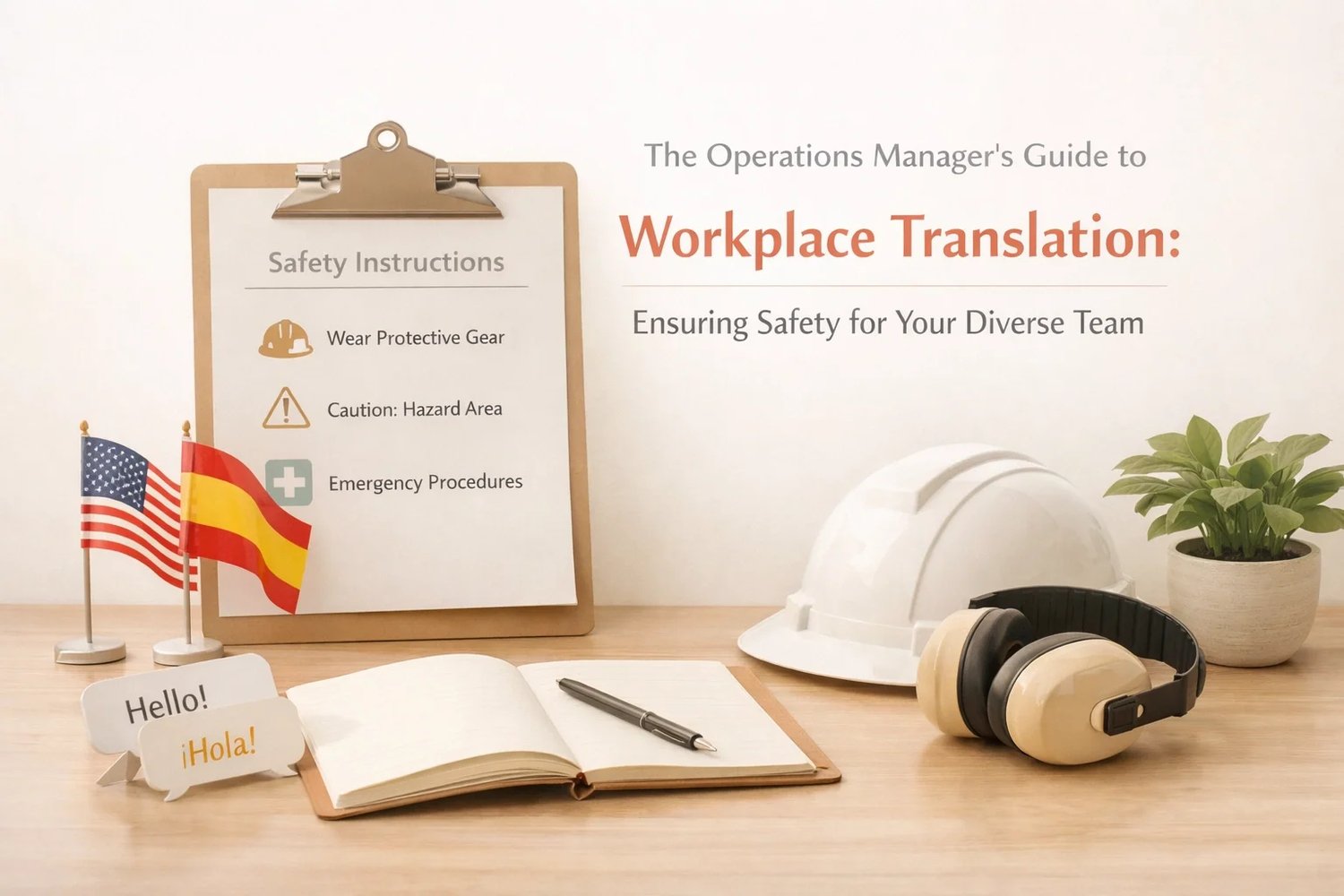
Managing a high-volume facility in the Tri-State area requires more than just logistical precision and a solid supply chain. Whether you are overseeing a massive manufacturing plant in Evansville, a fast-paced distribution center in Louisville, or an expansive agricultural operation in Southern Illinois, your greatest asset and your greatest responsibility is your workforce. As demographics across Indiana, Kentucky, and Illinois continue to shift, operations managers are finding themselves at the helm of increasingly multilingual teams. While this diversity brings a wealth of talent and resilience to the floor, it also introduces a silent, high-stakes risk: the language gap. When a team member does not fully comprehend a safety protocol, a warning label, or an emergency instruction, the result can be catastrophic for both the individual and the organization.
The burden of bridging this gap often falls squarely on the shoulders of the operations manager. It is no longer enough to rely on a bilingual floor lead to "get the point across" or to hope that non-English speaking employees can infer meaning from hand gestures and context clues. To truly ensure workplace safety and operational excellence, a comprehensive strategy for workplace translation is essential. This guide explores how to navigate the complexities of multilingual communication, moving beyond mere word-for-word translation to create a culture of safety where every employee, regardless of their native tongue, feels informed, empowered, and protected.
The primary driver behind professional translation in the industrial sector is, inevitably, safety. Occupational safety and health regulations are clear: workers have a right to receive safety information and training in a language and vocabulary they can understand. In a loud, fast-moving environment, the difference between "stop" and "caution" can be a matter of life and limb. When an operations manager implements high-quality spoken language interpreting during safety briefings, they are not
just checking a compliance box; they are actively preventing workplace injuries. If a worker in a Louisville warehouse misunderstands the weight limits of a racking system or the proper lockout-tagout procedure for a malfunctioning conveyor belt, the liability rests on the lack of clear communication.

One of the most common pitfalls in workplace communication is the reliance on machine-translated documents or unofficial "ad-hoc" interpreters. While AI tools have made significant strides, they often fail to capture the technical nuance required in a specialized manufacturing or agricultural setting. A literal translation of a chemical warning or a technical manual can lead to dangerous misinterpretations. This is why investing in certified document translations is a critical step for any facility that prioritizes precision. Professional linguists who understand the specific terminology of your industry ensure that every warning sign, employee handbook, and standard operating procedure is accurate and culturally relevant. This level of detail is particularly important when adhering to evolving OSHA safety standards, which demand that information be accessible to all.
Beyond the immediate concerns of physical safety, there is the matter of operational efficiency and morale. Imagine the frustration of a skilled technician in Southern Illinois who cannot fully grasp the nuances of a new production quota or a refined quality control process because the instructions were poorly translated. This leads to a drop in productivity, an increase in waste, and a growing sense of isolation among the multilingual workforce. By providing clear, professional communication, an operations manager signals to their team that their contributions are valued and that their safety is a priority. This is where corporate language training can play a transformative role. By equipping supervisors with basic industry-specific phrases in the languages of their team, and by offering English-as-a-second-language support to employees, you build a bridge that strengthens the entire organizational structure.
The geographical context of the Tri-State area also plays a significant role in how communication strategies should be deployed. In Louisville, for instance, the presence of a large and vibrant interna-
A national community means that a single facility might employ speakers of Spanish, Vietnamese, and Arabic. Knowing how to choose the best translation services in Louisville, KY, is not just a procurement task; it is a strategic safety decision. Each of these groups may have different cultural expectations regarding hierarchy, feedback, and emergency response. A one-size-fits-all approach to translation often ignores these cultural nuances, leading to messages that are technically correct but practically ignored. Effective communication requires localization: adapting the message so that it resonates with the specific cultural and linguistic background of the audience.
Operations managers must also consider the legal implications of communication failures. In the event of an accident, one of the first questions investigators will ask is whether the employee was properly trained in a language they understood. Failure to provide adequate linguistic support can lead to massive fines, increased insurance premiums, and devastating lawsuits. Staying ahead of these risks means keeping a close eye on compliance standards and ensuring that all language services meet the highest professional benchmarks. It is a proactive investment that pays dividends in the form of a lower Incident Rate and a more stable, loyal workforce.
Creating a truly inclusive and safe workplace also involves the use of standardized resources. Operations managers should work with language service providers to develop a glossary of technical terms specific to their facility. This ensures consistency across all platforms, whether it is a printed manual, a digital alert on a mobile device, or a live announcement over the intercom. When terminology is standardized, there is less room for confusion. For example, if "emergency shut-off" is translated three different ways in three different documents, a worker in a high-stress situation may hesitate. Consistency saves time, and in an emergency, time is the most precious resource of all.

Furthermore, the implementation of a feedback loop is essential for continuous improvement. Operations managers should encourage their multilingual employees to speak up if a translation feels "off" or if a certain phrase is confusing. This creates a culture of mutual respect and shared responsibility for safety. It is not enough to simply hand out a translated document and assume the job is done. Engagement through training sessions, where interpreters are present to facilitate real-time Q&A, ensures that the message has been received and understood as intended. This level of engagement is what separates a mediocre operations plan from a world-class safety program.
In the digital age, the speed of communication is faster than ever, but the speed of understanding must keep pace. As facilities across Indiana, Kentucky, and Illinois integrate more advanced technology, the need for accurate, professional language services only grows. Whether you are conducting a multilingual audit of your technical operations or preparing for an upcoming safety inspection, the goal remains the same: ensuring that every person on your floor has the information they need to do their job correctly and return home safely at the end of the day.
The journey toward a safer, more communicative workplace is an ongoing process, but it begins with a commitment to professional language standards. By moving away from informal solutions and embracing a structured approach to translation and interpreting, operations managers can mitigate risk, enhance productivity, and foster an environment where diversity is a strength rather than a barrier.
Heartland Language Services stands ready to support the Tri-State business community in this mission, providing the expertise and local knowledge necessary to bridge the gap between English-speaking management and a global workforce. The safety of your team depends on the clarity of your voice; make sure they can hear you clearly in every language.
About the author
Stephen Gardner
Stephen Gardner shares practical guidance from Heartland Language Services on clear, reliable communication for multilingual workplaces.
Keep reading
Related articles
June 26, 2026
Safety Data Sheet Translation for Indiana Manufacturers: OSHA HazCom Compliance and the Multilingual Workforce
Indiana manufacturers with multilingual workforces must provide OSHA HazCom-compliant Safety Data Sheets in every language their employees speak. Learn how certified SDS translation keeps your facility compliant with 29 CFR 1910.1200, GHS standards, and OSHA penalty thresholds — and how Heartland serves the Tri-State region.
Read article →March 23, 2026
Bridging the Safety Gap: How Workplace Translation Drives Productivity in Midwest Manufacturing
Read article →February 9, 2026