
Insights
Fall Protection Training Interpreters Indiana Manufacturing: Closing the Height-Safety Language Gap
Fall protection training only works if every worker understands anchor points, harness inspection, and rescue plans in their own language. See how Tri-State manufacturers close that gap before someone gets hurt.
Published October 13, 2026 · By Heartland Language Team
By the Heartland Language Team
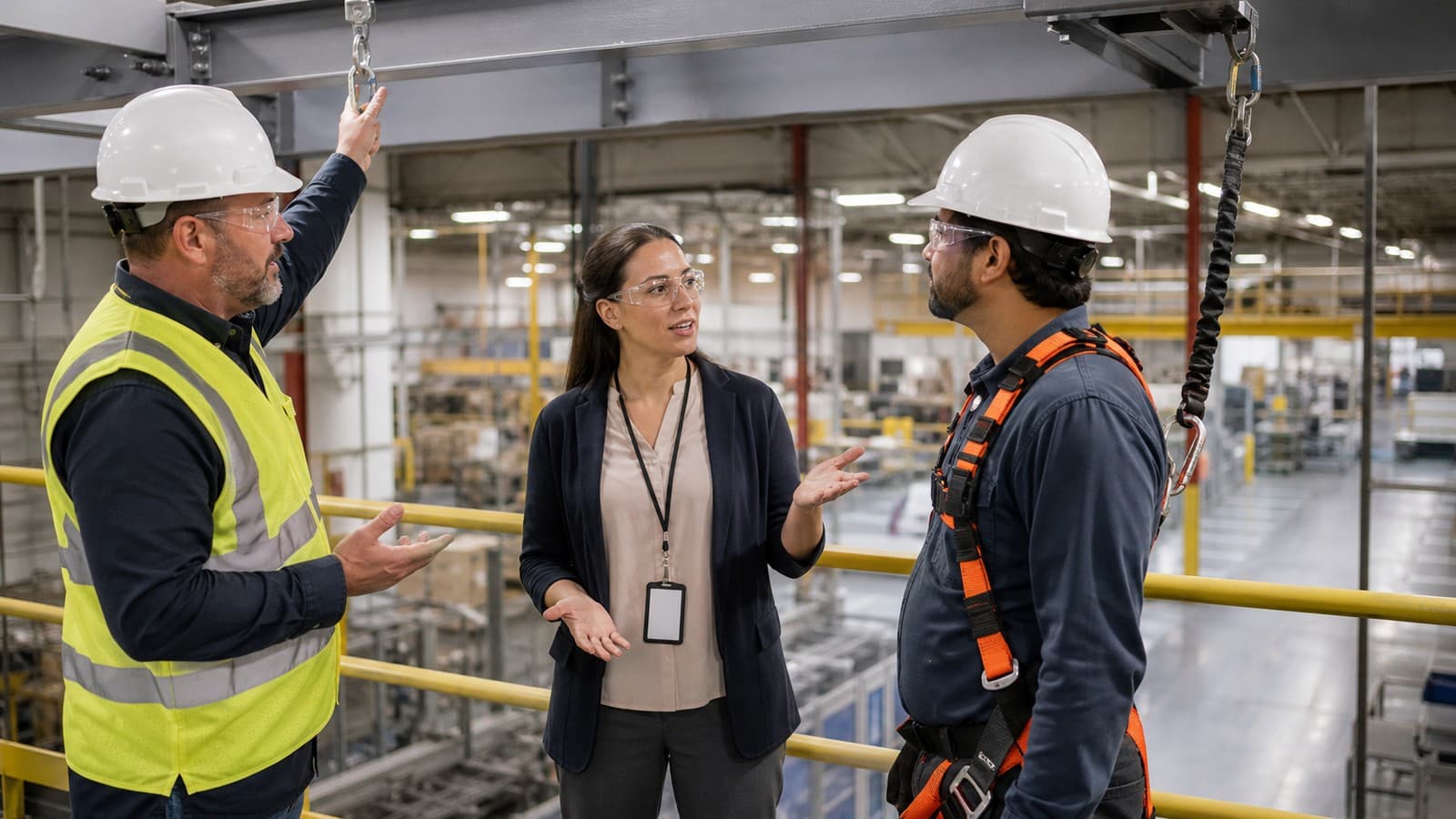
Fall protection training interpreters Indiana manufacturing crews depend on do more than translate a harness demonstration — they confirm a worker actually understood it, because a nod is not training when someone is clipped in at height. Falls remain one of the most consistent causes of serious injury on elevated work platforms, mezzanines, and rooftop equipment across Tri-State manufacturing sites, and a training session a worker only partly followed does not change that.
Quick summary
- OSHA's walking-working surfaces and fall protection standards require employers to train workers in a language and vocabulary they understand, not just hand them a signed form.
- A worker who cannot describe back a harness inspection step or an anchor point location has not actually been trained, regardless of what the sign-in sheet says.
- Rescue plan communication is the piece most often skipped in language access planning, and it is the piece that matters most in an actual emergency.
- Gesture-based or supervisor-paraphrased training creates a documentation gap that surfaces during an OSHA inspection or after an incident, not before.
- A qualified interpreter turns a one-time training event into an ongoing safety practice workers can question and confirm understanding of in real time.
Why fall protection training interpreters Indiana manufacturing relies on are a compliance issue, not a courtesy
29 CFR 1910.30, OSHA's training requirements for walking-working surfaces and fall protection systems, requires employers to train each worker who might be exposed to a fall hazard to recognize the hazards and to use the correct procedures to minimize them — training the regulation describes employers must provide in a manner the employee understands. 29 CFR 1910.28 sets out the underlying duty to have fall protection in place for the work itself, from unprotected sides and edges to fixed ladders and dangerous equipment below. A translated handout read once at onboarding does not satisfy either standard if a worker cannot demonstrate the procedure back months later on the platform where it matters.
A training record that exists on paper but not in a worker's working knowledge is not a defense — it is a liability waiting for an inspection or an incident to find it.
Where language gaps put fall protection at risk
Harness and anchor-point selection depends on the worker making the right call alone, every time. A worker who was shown which anchor points are rated for their task, rather than told and asked to repeat it back, may choose a faster but unrated point once a supervisor is not standing next to them.
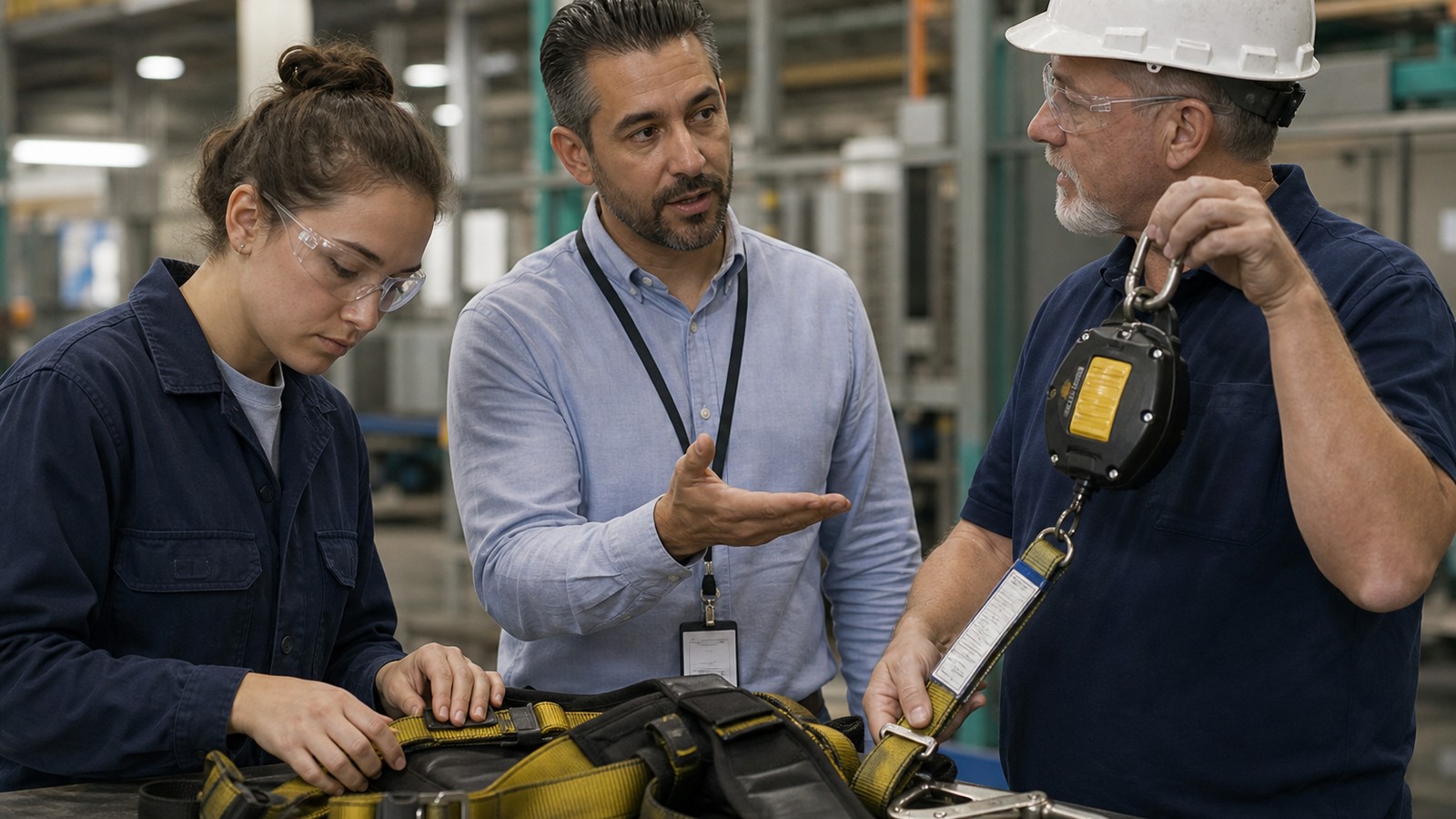
Inspection steps get skipped when workers do not fully understand what they are checking for. A pre-use harness, lanyard, and self-retracting lifeline inspection has specific failure signs — fraying, stitching damage, deployed shock indicators — that a worker needs to understand well enough to find on their own, not recognize only when pointed at directly.
Rescue plans are the piece most often left out of language access planning entirely. A suspension trauma rescue plan that only the English-speaking crew lead understands is not a rescue plan for the rest of the crew — it is a plan for someone else to translate under pressure during the worst five minutes of their shift.
Permit-required work at height compounds the risk when instructions arrive secondhand. A worker relying on a coworker's rushed paraphrase of a toolbox talk about wind limits, exclusion zones, or equipment changes is working from an incomplete version of the actual instruction.
New equipment and procedure changes reset the risk for experienced workers too. A worker who was fully trained on an older fall arrest system can be just as exposed as a new hire when a facility switches anchor hardware or lanyard types without retraining them in a language they understand.
Building a fall protection training program every worker can follow
A fall protection program is only as strong as the training session the newest or least-English-proficient worker on the crew actually understood.
Use a qualified interpreter for initial fall protection training, not only translated handouts. A live interpreter lets a worker ask a question mid-demonstration instead of guessing and finding out they were wrong at height.
Confirm understanding by having workers demonstrate the procedure back, interpreted in real time. A worker who can correctly identify a rated anchor point and walk through a harness inspection in their own words has been trained; a worker who only watched has been shown something.
Interpret rescue plans with the same priority as the training itself. Every worker exposed to a fall hazard needs to understand what happens if a fall occurs on their shift — who responds, how, and how fast — not just how to prevent one.
Retrain through an interpreter whenever equipment, anchor points, or procedures change. A hardware or procedure change is a new training event, and treating it as a quick verbal update in English to a multilingual crew recreates the same gap the original training was meant to close.
Document which language each training and competency check was conducted in. This record protects the program during an OSHA inspection and flags exactly which workers need their understanding reconfirmed when equipment or sites change.
Plan interpreter coverage for toolbox talks, not only formal certification sessions. Daily or weekly fall protection reminders delivered in English-only toolbox talks quietly erode a program that was built correctly at the start.
Fall protection interpretation checklist for Tri-State manufacturers
- Use a qualified interpreter for initial and refresher fall protection training, not translated handouts alone.
- Confirm each worker can demonstrate anchor-point selection and harness inspection back, interpreted in real time.
- Interpret rescue plan procedures with the same priority as hazard-recognition training.
- Retrain through an interpreter whenever equipment, anchor hardware, or procedures change.
- Extend interpreter coverage to toolbox talks and daily safety reminders, not only formal sessions.
- Document the language each training and competency check was conducted in alongside the attendance record.
- Revisit interpreter coverage needs whenever crew composition changes on a job or shift.
This checklist is an operational starting point. Facilities should confirm their specific OSHA documentation and training obligations with their own safety and compliance professionals.
Fall protection language access for Evansville, Henderson, Louisville, and Jasper manufacturers
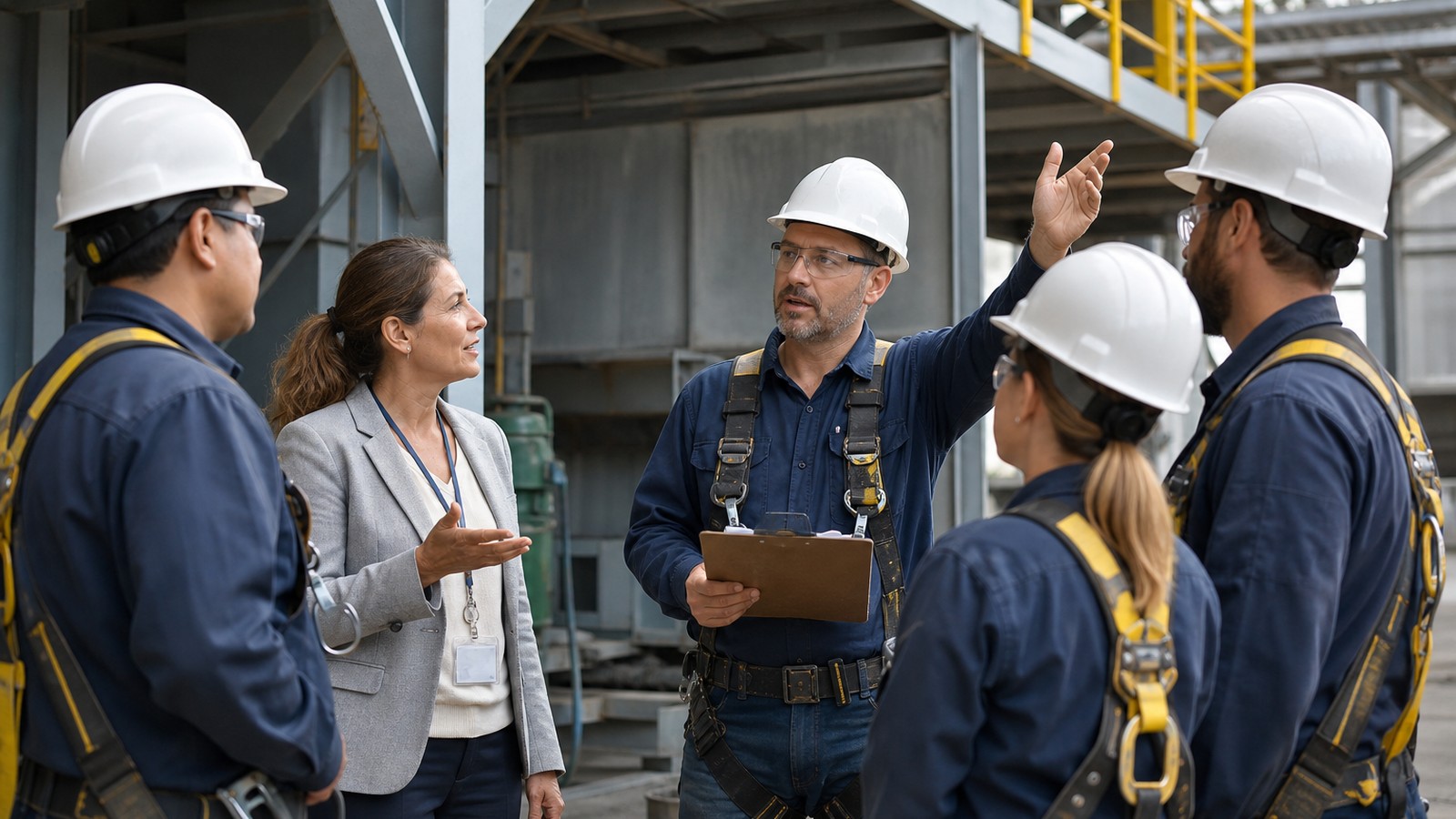
Manufacturers, distribution centers, and food processing facilities across the Tri-State region put workers at height on mezzanines, rooftop units, loading docks, and elevated platforms every shift. Heartland supports manufacturing facilities with on-site and phone interpreting for fall protection training, toolbox talks, and incident response, across the languages spoken by crews across Evansville, Henderson, Louisville, Jasper, and Southeast Illinois.
Fall protection training shares the same hazard-recognition standard as other high-risk manufacturing procedures. Our guide to lockout/tagout training interpreters in Indiana covers how that standard applies to energy-isolation work, and our overview of confined space entry interpreters in Indiana manufacturing explains how the same training gap shows up in another permit-required hazard.
Fall protection training workers can actually use
A manufacturer's fall protection program, inspection record, and OSHA defense all depend on workers understanding training well enough to use it on the platform, not just sign for it in the classroom. Qualified interpretation for hazard recognition, equipment inspection, and rescue planning gives Tri-State manufacturers a defensible training record and gives workers at height the understanding that actually keeps them safe.
Need interpreter coverage for fall protection training? Request a quote from Heartland Language and include your location, the languages your crew speaks most, and whether you need on-site or phone coverage.
Frequently Asked Questions
Does OSHA require fall protection training to be given in a worker's own language?
OSHA's training requirements for walking-working surfaces and fall protection under 29 CFR 1910.30 direct employers to train workers in a manner they understand, which means training conducted only in English for a worker with limited English proficiency does not satisfy the standard even if a form is signed.
Can a bilingual coworker interpret fall protection training instead of a qualified interpreter?
A bilingual coworker can help with scheduling and general communication, but hazard-recognition training, equipment inspection steps, and rescue plans benefit from a qualified interpreter who conveys technical and safety information completely and accurately, without summarizing or softening it under time pressure.
How often does fall protection training need to be interpreted again?
Training needs to be interpreted again whenever anchor points, harness or lanyard hardware, or rescue procedures change, and interpreter coverage should also extend to routine toolbox talks and refreshers, not just the initial certification session.
What part of fall protection training is most often missed in language access planning?
Rescue plan communication is the piece most often left out, even when initial hazard-recognition training is interpreted well, which leaves workers without a clear understanding of what happens if a fall actually occurs on their shift.
About the author
Heartland Language Team
Heartland Language Team shares practical guidance from Heartland Language Services on clear, reliable communication for multilingual workplaces.
Keep reading
Related articles
August 24, 2026
Lockout/Tagout Training Interpreters Indiana: Machine Safety Guide
A locked-out machine only stays safe if every worker near it understands what the lock means. This guide helps Tri-State manufacturers interpret lockout/tagout training correctly.
Read article →October 1, 2026
Electrical Safety Training Interpreters Indiana: Arc-Flash Boundary Guide
Arc-flash boundaries and PPE categories are precise numbers, not general caution. This guide shows Tri-State manufacturers how qualified interpreters keep electrical safety training understood by every worker.
Read article →September 19, 2026
Manufacturing Equipment Training Interpreters Indiana
A new machine only pays off if every operator understood the vendor's commissioning and safety training. This guide helps Tri-State manufacturers get equipment installation and training right in every language on the floor.
Read article →