
Intake
The reason for the visit, history, medications, and insurance happen before the exam. Patients should be able to give that information themselves.
Based in southwest Indiana. Supporting language access nationwide. Available when it actually matters.Based in southwest Indiana. Supporting language access nationwide. Available when it actually matters.
Healthcare specialty
Language support for eye-care visits, including exam findings, treatment discussions, and the next appointment.
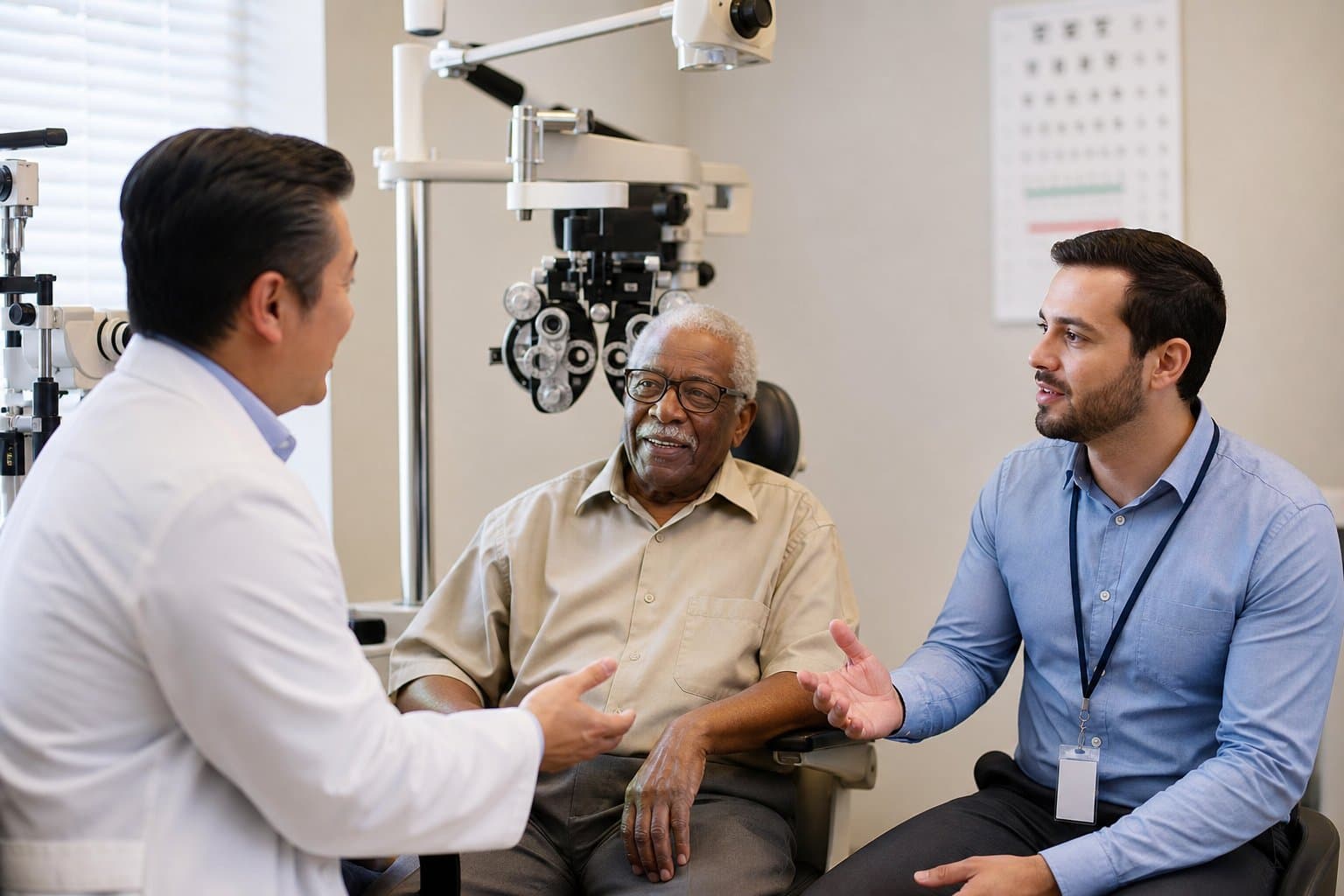
The visit turns on what the patient understood about the exam, the treatment, and when to come back.
The reason for the visit, history, medications, and insurance happen before the exam. Patients should be able to give that information themselves.
Drops, dilation, procedures, and treatment options need a conversation in the patient's language. The clinician explains the exam. The interpreter conveys that explanation and does not judge the clinical finding.
Findings, prescriptions, and restrictions after the exam are what patients take with them. Spoken interpreting and translated written instructions cover different parts of that handoff.
The next appointment, referrals, and questions about glasses, contacts, or medication belong in the patient's language. Scheduling that conversation is part of the visit.
Eyecare facilities may communicate with patients about visits, examination findings, treatment discussions, and the next appointment. HHS explains meaningful access for people with limited English proficiency. The National Eye Institute’s information about dilated eye exams notes conversations about exam findings, treatment, and scheduling the next appointment. Practical language assistance can help patients, families, and staff access these discussions and related written information in the languages they use.
This is general information about language support for this setting, not clinical or legal advice.
Tell us the visits, the languages, and whether you need someone on-site or remote.