
Insights
Forklift Operator Certification Interpreters Indiana
A forklift certification only counts if the operator actually understood it. This guide helps Tri-State manufacturers certify every operator in a language they understand.
Published September 13, 2026 · By Heartland Language Team
By the Heartland Language Team
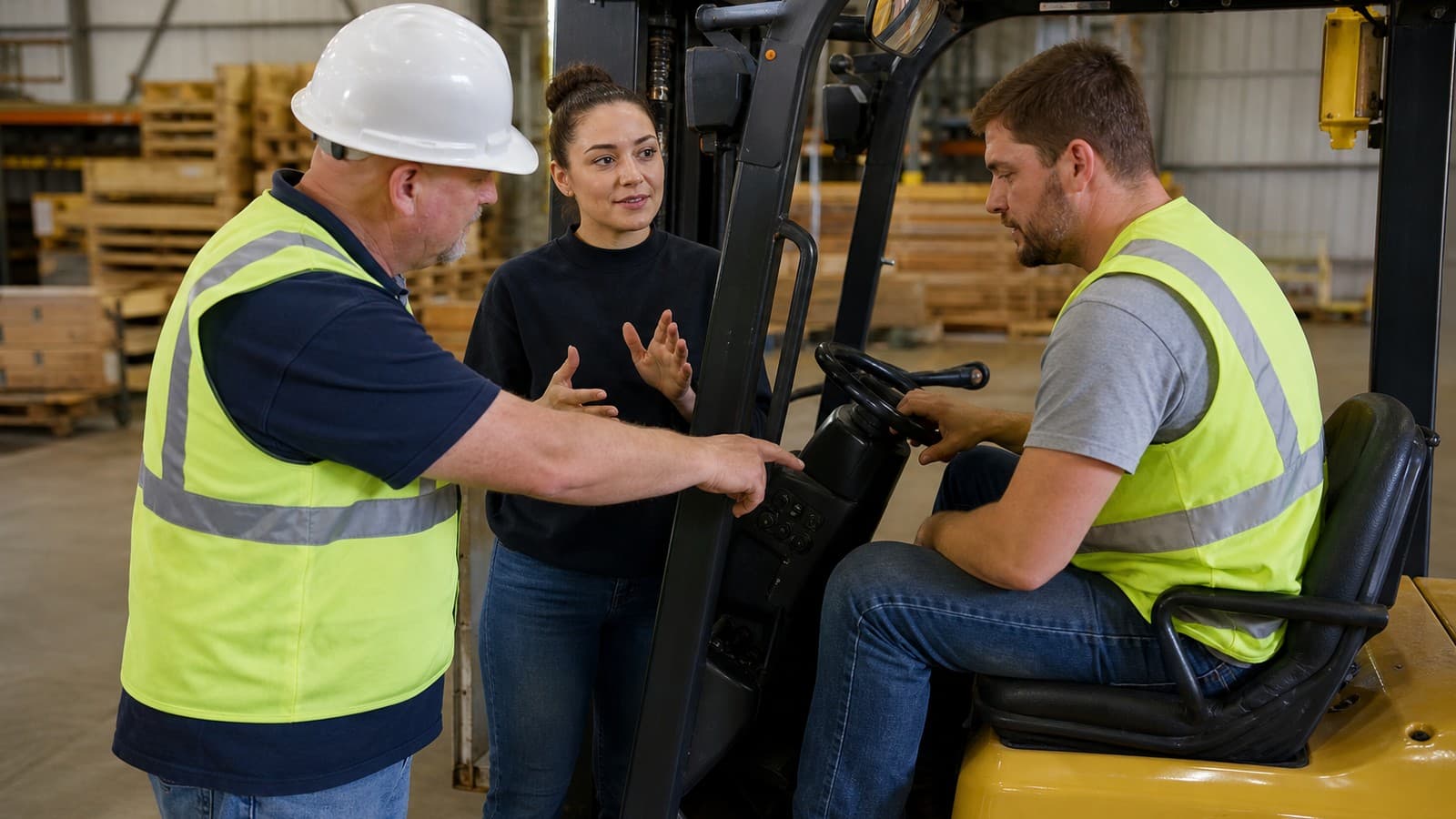
A forklift operator's classroom instruction and hands-on driving evaluation only count for as much as the operator actually understood them. The forklift operator certification interpreters Indiana manufacturers and distribution centers bring into that training turn a checked box on a certification card into demonstrated competency behind the wheel. A new operator learning the stability triangle, a transferred operator moving to a narrow-aisle reach truck, and a veteran operator returning after a near-miss all need the same thing: a certification process they can genuinely follow, not one they nodded through.
Manufacturers and warehouses across Evansville and Jasper, Indiana; Henderson and Louisville, Kentucky; and Southeast Illinois certify dozens of forklift operators a year across food processing, plastics, automotive supply, and distribution operations with meaningfully multilingual workforces. A plant that interprets general safety orientation carefully, then runs forklift certification through an English-only slideshow and a rushed practical test, has left its highest-injury-risk equipment credential uninterpreted.
Quick summary
- OSHA's powered industrial truck standard requires both formal classroom instruction and a hands-on evaluation before an operator is certified, and comprehension has to carry through both parts.
- A translated slide deck alone does not meet the standard's intent if the operator cannot demonstrate understanding of load capacity, stability, and pedestrian hazards.
- The hands-on evaluation happens in real time on a moving forklift, which makes live interpretation, not a translated handout, the only way to correct a mistake before it becomes an incident.
- OSHA requires refresher training and evaluation after specific trigger events, including a near-miss, an accident, or an assignment to a different truck type, each needing the same interpreted rigor as initial certification.
- A bilingual coworker is not a substitute for a qualified interpreter during a forklift certification evaluation.
The compliance case for forklift operator certification interpreters Indiana employers can defend
OSHA's powered industrial trucks standard requires every operator to complete formal instruction, practical training, and an evaluation of the operator's performance in the actual workplace before running a forklift unsupervised. The standard's own training requirements, published at 29 CFR 1910.178(l), tie certification to demonstrated competency, not attendance. A plant that certifies an LEP operator after a class delivered only in English, with no confirmation the operator actually understood load capacity, center of gravity, or pedestrian right-of-way rules, has produced a certification card without the competency the standard requires behind it.
That gap matters most at the exact moment a forklift shares floor space with pedestrians, stacked pallets, or a loading dock edge. A certification process an operator couldn't fully follow creates real operational risk: an under-trained operator ends up behind the controls of equipment that causes some of the most severe injuries on a manufacturing or distribution floor.
Classroom-only training misses what a forklift operator has to actually understand
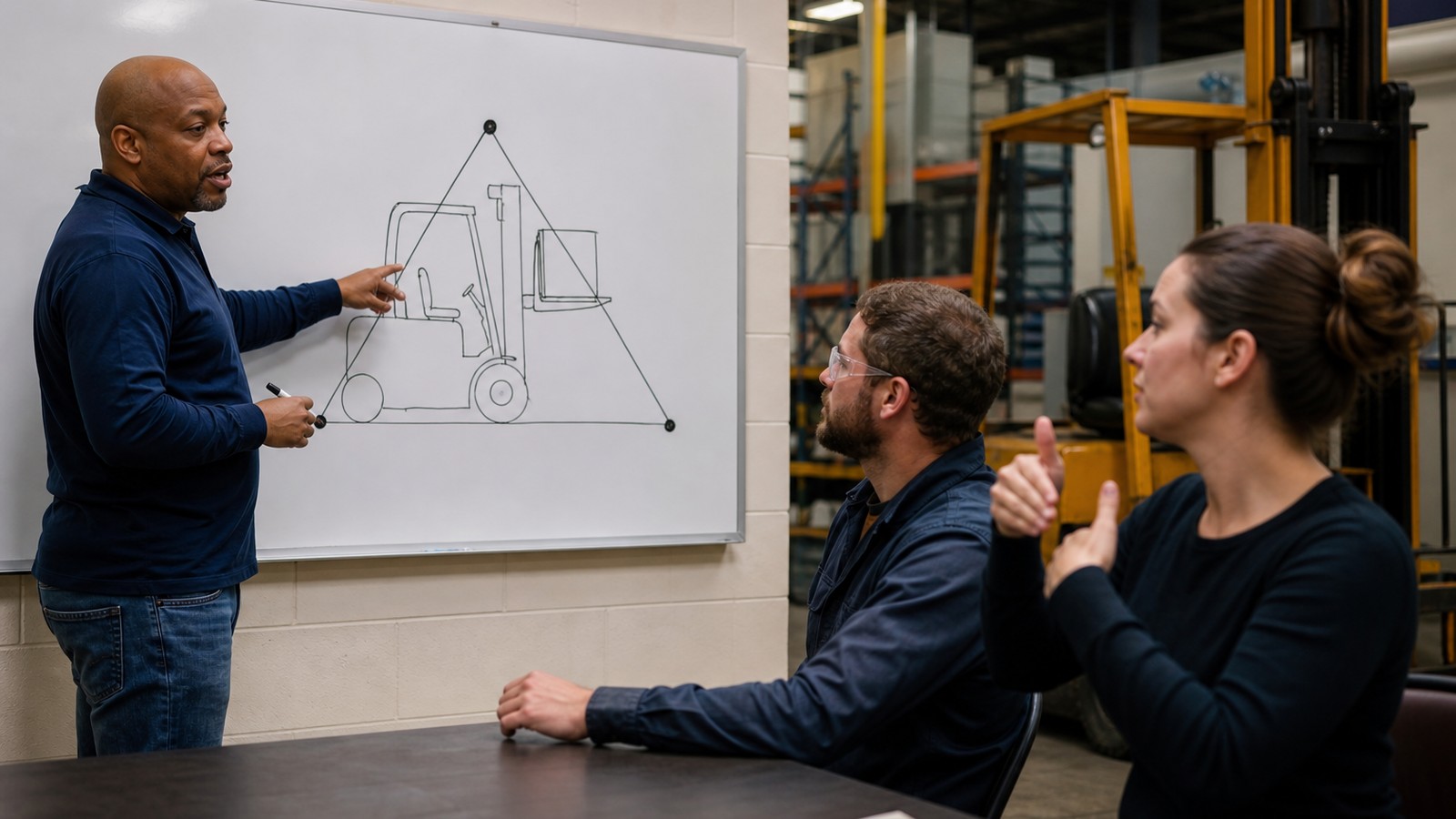
The classroom portion of forklift certification covers stability principles, load-capacity ratings, pre-shift inspection steps, and site-specific hazards like dock plates, ramps, and narrow aisles. Each concept carries real consequences if misunderstood: an operator who doesn't grasp how load weight shifts the stability triangle, or who can't read a truck's capacity plate, is one miscalculated lift away from a tip-over. A translated handout an operator reads alone, with no interpreter available for questions, rarely confirms the operator absorbed concepts that dense.
The hands-on evaluation needs live interpretation, not a translated handout
The practical evaluation is where a translated slide deck stops being enough. A trainer watching an operator navigate a loaded pallet through a narrow aisle, back a truck up to a dock plate, or stop short of a pedestrian crossing has to correct mistakes in real time, while the mistake is happening, not after the fact through a written summary. An interpreter present during the evaluation lets the trainer give immediate, specific feedback, lower the forks before you turn, check your mirror before backing, in a language the operator understands while the correction is still fresh and useful.
Running the practical evaluation without an interpreter and relying on gestures or a bilingual coworker's rough translation from the sideline turns a safety-critical evaluation into a guessing exercise for both the trainer and the operator.
Recertification triggers deserve the same interpreted rigor as day-one training
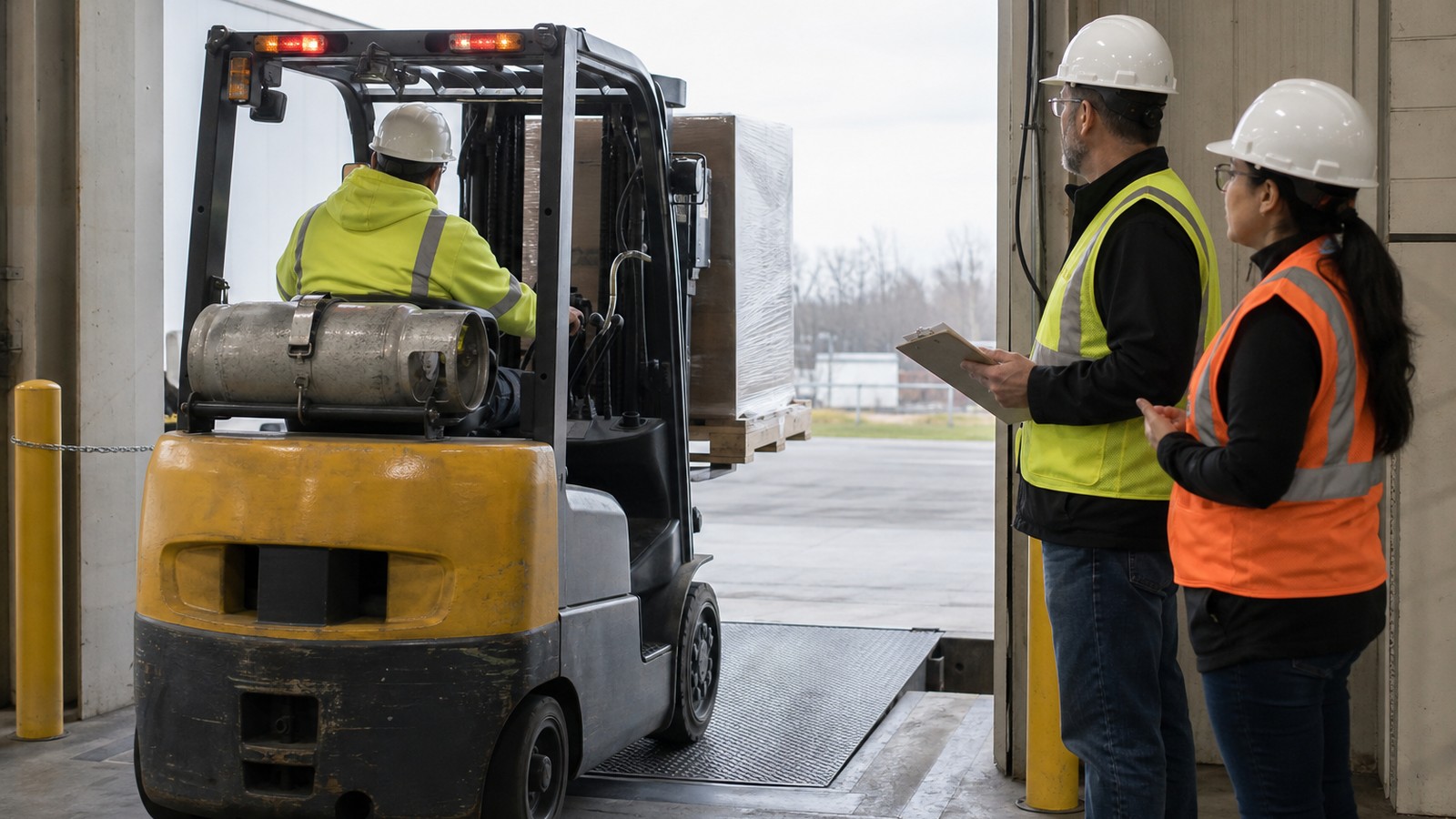
OSHA doesn't treat forklift certification as a one-time event. An operator involved in an accident or a near-miss, one observed operating unsafely, one assigned to a different type of truck, or one reassigned to a new work environment all trigger a refresher evaluation under the standard. Each moment carries its own reason an interpreter matters: an operator returning from a near-miss has to understand what actually went wrong, beyond simply repeating a class already sat through once, and an operator moving from a sit-down counterbalance truck to a stand-up reach truck is learning different controls and hazards, not reviewing familiar material.
Never substitute a bilingual coworker for a forklift certification evaluation
Pulling a bilingual coworker off the floor to interpret a forklift evaluation is a common shortcut, and it's also one of the riskiest available on a manufacturing or distribution floor. A coworker without interpreter training may not know the technical vocabulary for stability, capacity, or hazard classes, may soften a trainer's correction to avoid an awkward moment, and is placed in the position of judging a peer's competency behind the wheel of equipment that can seriously injure someone. A trainer who can't confirm the operator understood a specific correction has no reliable way to know whether the certification reflects real competency or a passed-along guess.
Building interpreter access into Tri-State forklift certification programs
Tri-State manufacturers and distribution centers serving Evansville, Henderson, Louisville, Jasper, and the surrounding Southeast Illinois communities certify and recertify forklift operators year-round across food processing, plastics, automotive supply, and warehousing operations with real multilingual crews. Heartland supports manufacturing employers with on-site interpreting for classroom instruction and hands-on evaluations alike, paired with corporate language training for the trainers and supervisors who run certification programs, as part of broader spoken-language interpreting built around shift schedules and recurring recertification cycles.
Scheduling interpreter coverage for a known certification class or a recertification triggered by an equipment reassignment, the same way a plant schedules coverage for new-hire orientation, keeps one of the floor's highest-injury-risk credentials from being the one issued with the least confirmation of understanding.
Forklift certification interpretation mistakes that increase risk
Treating a translated handout as equivalent to an interpreted class is the most common mistake. A packet an operator reads alone doesn't create the back-and-forth a trainer needs to confirm real comprehension of stability, capacity, and site-specific hazards before handing over the keys.
Skipping the interpreter for the hands-on evaluation because the classroom portion was already interpreted is the second common mistake. The practical test is where a misunderstood concept turns into an actual driving error, and it's the part of certification where live, in-the-moment interpretation matters most.
Forklift operator certification interpreter checklist
- Schedule a qualified interpreter for both the classroom instruction and the hands-on driving evaluation, not one or the other.
- Confirm the operator can explain stability, load capacity, and site-specific hazards back through the interpreter before certifying them.
- Keep the interpreter present during the practical evaluation for real-time correction, not a post-test summary.
- Apply the same interpreted process to every OSHA-required recertification trigger, including near-misses, accidents, and truck-type reassignments.
- Never substitute an untrained bilingual coworker for a qualified interpreter during a certification evaluation.
- Brief the interpreter on truck-specific terminology and site hazards before the session begins.
- Document the interpreter's name or vendor ID alongside each operator's certification record.
- Apply the same standard across every language spoken by the plant's operator pool.
This checklist is an operational starting point. Employers should confirm their specific OSHA training and recordkeeping obligations with their own safety compliance professionals.
Forklift certification Tri-State operators can pass on understanding, not guesswork
A forklift operator certification is only as reliable as the operator's actual understanding of what they were taught. Interpreted classroom instruction, an interpreted hands-on evaluation, and recertification handled with the same rigor give Tri-State manufacturers and distribution centers a defensible way to certify every operator, in every language on their floor, on real competency instead of a signed card.
Building interpreter coverage into your forklift certification program? Request a quote from Heartland Language and include your operator count, common floor languages, and current certification and recertification schedule.
Frequently Asked Questions
Does OSHA require an interpreter for forklift certification training?
OSHA's powered industrial truck standard ties certification to demonstrated competency, shown through formal instruction and a hands-on evaluation, which makes qualified interpretation a practical necessity when an operator isn't fluent in the language the training is delivered in.
Is a translated safety handout enough for forklift certification?
No. A handout an operator reads alone doesn't create the back-and-forth needed to confirm real understanding of stability, load capacity, and site-specific hazards, and it can't help at all during the hands-on evaluation, where mistakes need real-time correction.
Can a bilingual coworker interpret a forklift certification evaluation?
A bilingual coworker typically lacks interpreter training and technical safety vocabulary, may soften a trainer's correction, and is placed in the uncomfortable position of judging a peer's competency on equipment that can cause serious injury.
What triggers a forklift recertification under OSHA rules?
An accident, a near-miss, an observed unsafe operation, an assignment to a different truck type, or a reassignment to a new work environment all trigger a refresher evaluation, and each deserves the same interpreted rigor as initial certification.
About the author
Heartland Language Team
Heartland Language Team shares practical guidance from Heartland Language Services on clear, reliable communication for multilingual workplaces.
Keep reading
Related articles
September 1, 2026
Manufacturing Onboarding Interpreters Indiana: Day-One Guide
A new hire's first week is the highest-risk week for safety comprehension. This guide helps Tri-State manufacturers onboard every employee in a language they understand.
Read article →August 24, 2026
Lockout/Tagout Training Interpreters Indiana: Machine Safety Guide
A locked-out machine only stays safe if every worker near it understands what the lock means. This guide helps Tri-State manufacturers interpret lockout/tagout training correctly.
Read article →July 27, 2026
Multilingual Incident Reporting Indiana: A Manufacturing Guide
When a safety concern, injury, near miss, or equipment issue must be reported, every employee needs a practical way to speak up and be understood. This guide helps Tri-State manufacturers plan language support before an incident occurs.
Read article →