
Insights
ASL Interpreter Services: How to Plan and Request One for Appointments and Meetings
Planning ASL interpreting for a patient, applicant or employee? See when to arrange it, how to choose on-site or video and what to include in your request.
Published October 26, 2026 · By Heartland Language Team

ASL interpreter services help people who use American Sign Language (ASL) take part in appointments and meetings. Start with the person's communication preferences, then confirm the setting, timing and participants. Heartland's American Sign Language interpreting services page explains what to share when you request support.
Quick summary
- ASL is a visual language used in the Deaf community. It is distinct from English, so it is not the same as a written or spoken English translation.
- Live ASL interpreting supports a specific conversation. It is not written document translation.
- Organizations covered by the ADA must provide appropriate communication aids and services when needed for effective communication, subject to the applicable legal requirements and limitations.
- Share the setting, timing and participants in your request. Heartland's ASL page asks for these three details before a service is planned.
What is ASL interpreting?
ASL interpreting is a live service in which an interpreter conveys a conversation between a person who uses ASL and a person who does not. The interpreter signs what is said aloud and voices what is signed, so both people can take part in the same conversation.
Three points help you plan:
- ASL is its own language. According to Heartland's ASL page, it is distinct from English. It is not a signed version of English words.
- It is visual. The interpreter and the person using ASL need to see each other clearly, which affects room layout, lighting and technology.
- It is not document translation. A form or handbook is translated in writing. Live ASL interpreting covers the conversation about it.
Who needs an ASL interpreter, and who doesn't?
Not everyone who is deaf or hard of hearing uses sign language. The ADA guidance from the U.S. Department of Justice makes the point directly: sign language interpreters are effective only for people who use sign language, and people who lost their hearing later in life may not sign at all. Other options include real-time captioning, written materials or assistive listening devices.
So do not assume. Ask the person how they prefer to communicate, and write the answer down. If the answer is ASL, plan for a qualified interpreter. The ADA guidance defines "qualified" as someone able to interpret effectively, accurately and impartially, both receptively and expressively, using any necessary specialized vocabulary.
When should you arrange ASL interpreting for a medical appointment?
When a patient uses ASL, assess interpreting needs before a new patient visit, a medical history, a diagnosis, consent for a procedure or instructions after care. The ADA guidance gives a medical example: in a doctor's office, an interpreter generally will be needed for taking the medical history of a patient who uses sign language, or for discussing a serious diagnosis and its treatment options.
Good moments to plan ahead include:
- Intake and medical history
- Specialist visits, where new terms and instructions come up
- Informed consent before a procedure
- Discharge and follow-up instructions
These effective-communication duties also cover appropriate companions. The ADA guidance describes a companion as a family member, friend or associate who is an appropriate person for the organization to communicate with, and covered organizations must provide effective communication for companions who have communication disabilities too.
For health programs covered by Section 1557, 45 CFR 92.202 requires that communications with people with disabilities be as effective as communications with people without disabilities. Auxiliary aids and services must be provided "free of charge, in accessible formats, in a timely manner, and in such a way to protect the privacy and the independence of the individual with a disability." The definition of auxiliary aids in 45 CFR 92.4 includes qualified interpreters on-site or through video remote interpreting (VRI). This is general information, not legal advice; your compliance team or attorney can tell you how it applies to you.
Our article on Section 1557 language access for Indiana healthcare covers the spoken-language side of these rules.
How does ASL interpreting work for job interviews and workplace meetings?
For employers covered by the ADA, ASL interpreting may be a reasonable accommodation for a job interview, staff meeting or training session. The U.S. Equal Employment Opportunity Commission (EEOC) gives two examples in its guidance on hearing disabilities in the workplace:
- An interview. When an applicant asks for an ASL interpreter for an interview, absent undue hardship the employer's obligation is to provide one, in person or through a video remote interpreting service.
- Large meetings. An employee who can lip-read in one-on-one conversations may still need an interpreter for large-group meetings, where people outside their line of sight are speaking. The employer would have to provide the interpreter, in person or by VRI, absent undue hardship.
The EEOC also notes that applicants do not have to disclose a hearing disability unless they need an accommodation for the application process, such as a sign language interpreter.
Interviews, onboarding, safety talks, training and HR conversations are all worth planning for. Our multilingual workplace solutions page describes how Heartland supports employers with language needs more broadly.

On-site or video: which format fits?
Both formats are recognized under the ADA, and the right choice depends on the person, the setting and the technology. The DOJ guidance says organizations may choose VRI or an on-site interpreter when either would be effective, and that VRI will not be effective in every circumstance. For example, it will not work if the person who needs the interpreter has difficulty seeing the screen, and an on-site interpreter may be required.
If you choose VRI, the DOJ guidance lists what the setup must include:
- Real-time, full-motion video and audio over a high-speed, wide-bandwidth connection, with no lags, choppy or grainy images or irregular pauses
- A sharply delineated image large enough to show the interpreter's face, arms, hands and fingers, and the same for the person using sign language, regardless of body position
- Clear, audible transmission of voices
- Staff trained to set up and run the equipment quickly
A few practical questions help you decide:
- How long is the conversation? Longer, more complex sessions are harder to manage on a small screen.
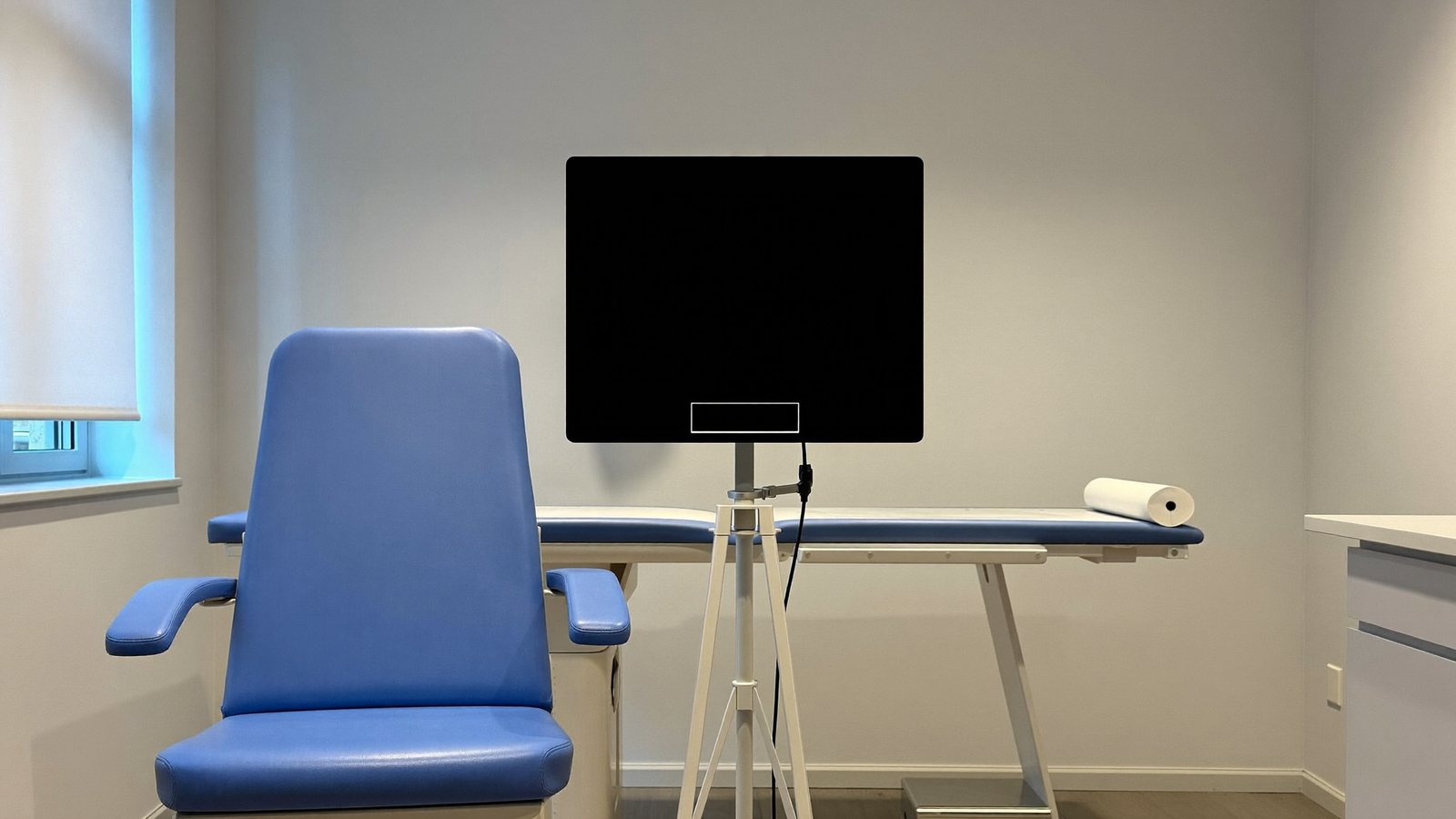
- Can everyone see the screen clearly? Think about seating, lighting and the person's position, for example in an exam room or during a procedure.
- What does the person prefer? Title III entities are encouraged to consult the person about what will be effective, and state and local governments must give primary consideration to the person's choice.
Our guides to choosing on-site, video or phone interpretation and to VRI versus on-site medical interpretation cover the general trade-offs.
What should you include when you request an ASL interpreter?
Include the setting, the timing and the participants. Heartland's ASL page asks for exactly these details, and says they need confirmation before an ASL interpreting service is planned. Having them ready lets you start the conversation with a clear picture.
- The setting. For example, an orthopedic follow-up, a job interview, a safety training or a school meeting. Include the location, and whether you expect on-site, video or either.
- The timing. The date, start time and expected length. For a series of visits or meetings, say so.
- The participants. Who will be in the conversation, including the person who uses ASL, and roughly how many people will attend.
- Any materials. Forms, agendas or slides the interpreter could review beforehand.
- Communication preferences. What the person has told you they prefer, and anything about seating or technology that would help.
- A contact on the day. A name and phone number for check-in.
Plan as early as you can. The ADA allows organizations to require reasonable advance notice but not excessive advance notice, and it requires them to honor walk-in requests to the extent possible.
Ready to plan? Request an ASL interpreting quote and share the setting, timing and participants.
The DOJ guidance also describes limits, including undue burden and fundamental alteration. If a particular aid would create an undue burden, a covered organization must still provide another effective aid or service when possible. Ask your compliance team to assess the applicable requirements.
Who should not interpret?
Do not ask a family member, a friend or a child to interpret. The DOJ guidance explains that an organization cannot require a person to bring someone to interpret for them. It lists only two narrow exceptions:
- Emergencies. In an emergency involving an imminent threat to safety or welfare, an accompanying adult or minor child may be relied on only when a qualified interpreter is not available.
- At the person's request. In other situations, an accompanying adult may interpret only when the individual requests it, the adult agrees and relying on them is appropriate. This exception does not apply to minor children.
Even under the second exception, an organization may not rely on an accompanying adult when there is reason to doubt that person's impartiality or effectiveness.
ASL interpreter services with Heartland
Heartland is based in southwest Indiana and plans live ASL interpreting for conversations such as planned meetings and events. Our ASL page describes three areas of support:
- Planned conversations: coordinating ASL interpreting for a specific conversation or gathering.
- Meetings and events: sharing the setting, timing and participants so the request can be reviewed.
- Visual communication planning: using a quote request to confirm the details of an ASL interpreting need.
Heartland also provides spoken language interpreting in 350+ languages, which is a separate service from ASL. If your location is in or near Evansville and Newburgh, include it in your request. For healthcare teams, our healthcare language solutions page lists the settings we support.
Frequently asked questions
Is ASL the same as English?
No. ASL is a visual language used in the Deaf community and is distinct from English. Live ASL interpreting conveys a conversation between ASL and spoken English, and it is not the same as translating a written document.
Does everyone who is deaf or hard of hearing need an ASL interpreter?
No. Sign language interpreters are effective only for people who use sign language. Other people may prefer captioning, written materials or assistive listening devices. Ask the person what works for them.
Can we use video for ASL interpreting?
Often, yes, if the setup meets the person's communication needs. The video image must show the interpreter's and the signer's face, arms, hands and fingers clearly, with no lag or blur. If the person cannot see the screen well, an on-site interpreter may be required.
What should a quote request include?
The setting, the timing and the participants. Heartland's ASL page asks for these three details so the service need can be confirmed before anything is planned.
Plan your ASL interpreting
Tell us the setting, the timing and the participants, and we will review what is needed for your appointment or meeting. Get a Free Quote or call (812) 499-1696.
Sources
- U.S. Department of Justice, ADA Requirements: Effective Communication (page last updated February 28, 2020; read October 26, 2026): ada.gov
- U.S. Equal Employment Opportunity Commission, Hearing Disabilities in the Workplace and the Americans with Disabilities Act (issued January 24, 2023; read October 26, 2026): eeoc.gov
- Electronic Code of Federal Regulations, 45 CFR 92.202, Effective communication for individuals with disabilities (current text displayed through October 22, 2026; read October 26, 2026): ecfr.gov
- Electronic Code of Federal Regulations, 45 CFR 92.4, definition of auxiliary aids and services (current text displayed through October 22, 2026; read October 26, 2026): ecfr.gov
- Heartland Language, American Sign Language (ASL) Interpreting Services (read October 26, 2026): heartlandlanguage.com
About the author
Heartland Language Team
Heartland Language Team shares practical guidance from Heartland Language Services on clear, reliable communication for multilingual workplaces.
Keep reading
Related articles
November 14, 2025
Are You Only Using 20% of Your On-Demand App? 5 Untapped Ways to Expand Your Reach
When you first partnered with Heartland for on-demand interpreting, you likely had one big challenge to solve: a patient at the front desk, a customer on the phone, or a new family enrolling in school. But what if that was just the beginning?
Read article →October 22, 2026
Marshallese Language Services: A Practical Guide for Clinics and Employers
Serving Marshallese-speaking patients or staff? How to plan interpreting and translation, what federal rules say, and seven questions to ask before you book.
Read article →October 19, 2026
Medical Insurance Translation: EOBs, Denial Letters, Prior Authorizations and Appeals
EOBs, denial letters, prior authorizations and appeal forms: what medical insurance translation covers and the language help your health plan must offer.
Read article →