
Insights
Manufacturing Work Instruction Translation Indiana Guide
Clear work instructions help multilingual production teams perform the same task the same way. This guide explains how Tri-State manufacturers can build a controlled translation process.
Published August 3, 2026 · By Jacob Brown
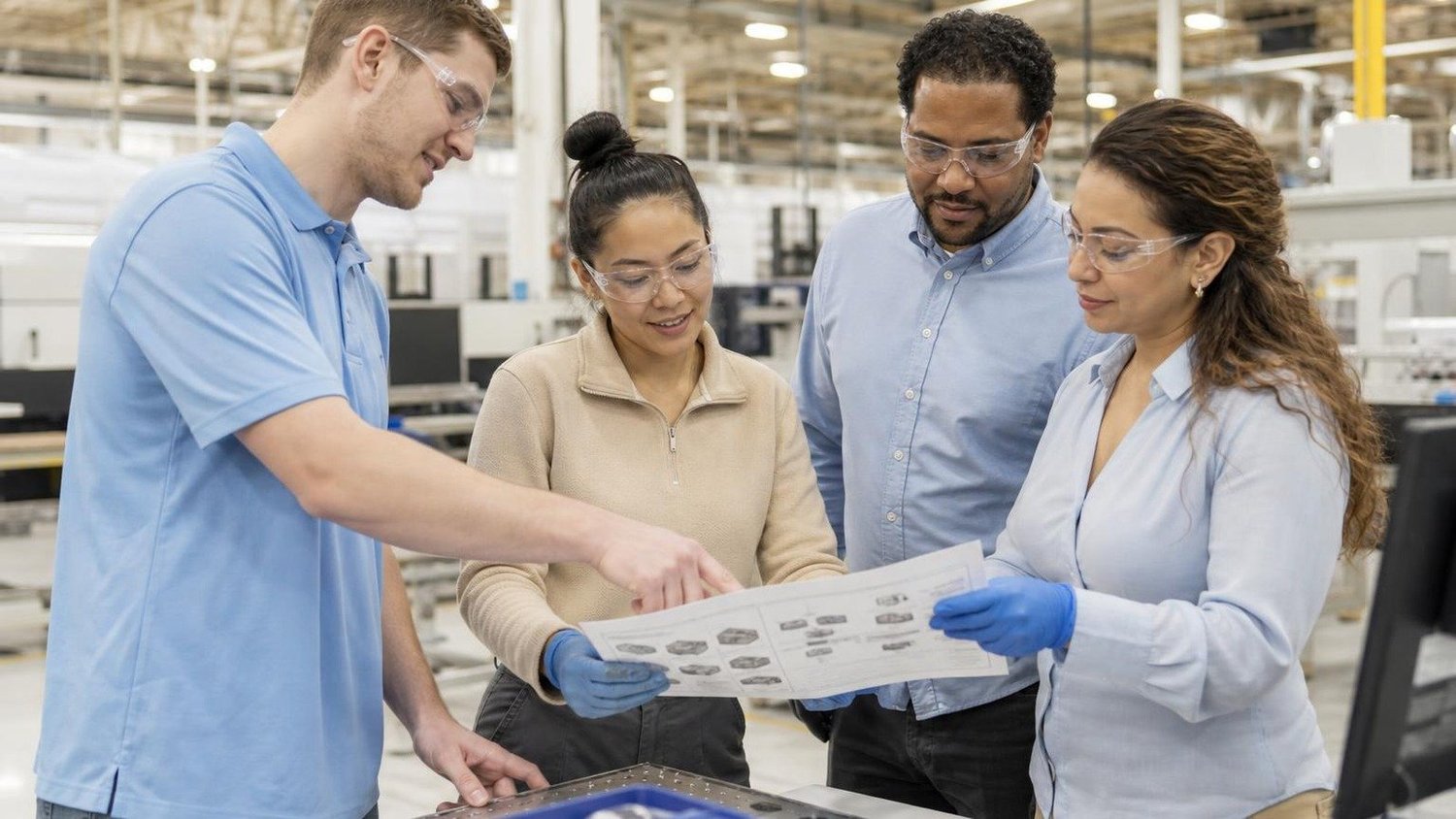
Clear work instructions help multilingual teams work safely and consistently.
A production line depends on repeatable actions. Operators need to know which tool to use, what sequence to follow, where to record a measurement, and when to stop and escalate a problem. When employees work in more than one language, manufacturing work instruction translation Indiana teams can use is not a courtesy document. It is part of the system that keeps training, quality, and daily work aligned.
That need is familiar across Evansville and Jasper, Indiana; Henderson and Louisville, Kentucky; and Southeast Illinois (SE Illinois). Tri-State manufacturers often operate multiple shifts, move employees between cells, and update processes as equipment, customers, or materials change. A controlled translation workflow helps every approved version reach the people expected to use it.
Quick summary
Translate the approved source, not an outdated file saved on someone’s desktop.
Treat diagrams, callouts, labels, and measurement conventions as part of the instruction.
Use qualified language professionals who understand manufacturing context and terminology.
Review translated instructions with both a subject-matter expert and a native-language reviewer when appropriate.
Link revision control, training, and floor deployment so withdrawn versions do not remain in use.
Why manufacturing work instruction translation Indiana needs control
A work instruction can look simple while carrying a large operational load. It may define torque values, inspection points, personal protective equipment, machine states, cleaning steps, defect criteria, or the exact moment an operator must call a supervisor. If the source is ambiguous, the translation will preserve that ambiguity. If the source is outdated, an accurate translation can still be operationally wrong.
Start by naming an owner for the source document. That owner should confirm the current revision, intended audience, affected equipment or process, and approval status before translation begins. The translation provider should receive a clean source file rather than screenshots, partial scans, or a collection of conflicting drafts.
For safety-related procedures, employers should also understand the standards that apply to their operation. OSHA’s control of hazardous energy standard addresses lockout/tagout requirements for servicing and maintenance. A translated work instruction does not replace an employer’s safety program, required training, or professional compliance review. It can, however, support clear communication when employees must understand an approved procedure.
Build a source that is ready to translate
Translation quality begins before a linguist sees the document. Source authors should use direct sentences, consistent terms, and one action per step. Avoid unexplained abbreviations, idioms, and vague references such as “adjust as needed” unless the instruction defines who decides and what acceptable adjustment means.
A translation-ready source should include:
A unique document number and revision date
The process, product family, line, or machine covered
Required qualifications, tools, and protective equipment
Numbered steps in the correct sequence
Clear warnings and stop-work conditions
Labeled diagrams or photographs tied to specific steps
Defined acceptance criteria and required records
The owner and approval path for future changes
Manufacturers can reduce avoidable rework by maintaining a terminology list. If one site calls a component a “guard,” another calls it a “cover,” and a supplier calls it a “shield,” the team should decide which term belongs in the controlled instruction. The glossary should include approved product names, machine terms, abbreviations, units, and phrases that must remain in English for operational reasons.

Visual clarity matters when translating manufacturing instructions.
Translate meaning, layout, and visual cues
A work instruction is both language and interface. Operators scan headings, step numbers, icons, arrows, photographs, and tables while performing a task. Translation should preserve the relationship between each visual cue and the action it supports.
Text expansion matters. A sentence translated into Spanish, Haitian Creole, Vietnamese, or another language may require more space than the English source. A cramped table or clipped warning can make a finished document difficult to use. The layout should be reviewed at the actual size employees will see on a workstation, tablet, screen, or printed sheet.
Measurements also deserve attention. Do not silently change units or decimal conventions. If a facility uses both U.S. customary and metric units, the approved source should define the displayed values and tolerances. Translators should not infer engineering decisions. Questions about values, symbols, or process intent should return to the document owner.
Heartland supports auto and manufacturing language services for organizations that need coordinated interpretation and translation. Broader interpretation and translation services can support the spoken training that accompanies written procedures.
Add manufacturing review before release
A bilingual employee can provide useful operational feedback, but fluency alone does not establish a controlled translation process. Reviewers need a defined role. A subject-matter expert checks whether the procedure still reflects the approved process. A qualified language reviewer checks terminology, clarity, grammar, and audience fit. When possible, an end-user review can reveal whether the document works in the environment where it will be used.
The review should answer practical questions:
Does every translated step match the approved source?
Are warnings, cautions, and stop conditions complete and prominent?
Do labels and image callouts point to the correct component?
Are product names, measurements, and codes unchanged where required?
Can an operator distinguish the revision and know where to report a conflict?
Is the document readable at the point of use?
Back translation can be useful for selected high-risk text, but it is not automatically the best quality method for every document. A stronger plan combines qualified translation, terminology control, subject-matter review, and final-format proofreading. The right review level depends on the instruction’s risk, complexity, audience, and regulatory context.

Qualified interpretation supports stronger multilingual shift training.
Connect the translated instruction to training
Handing an employee a translated sheet is not the same as confirming understanding. Supervisors should explain how the instruction fits the job, demonstrate critical steps, allow questions, and document training according to company policy. If the conversation happens across languages, a qualified interpreter can help preserve the direct relationship between trainer and employee.
Teach-back or show-back can provide a practical check. The employee explains or demonstrates the process in their own words while the trainer verifies performance against the approved instruction. This is not a language test. It is a process check that can identify unclear steps, missing context, or a training gap before those issues affect production.
For shift changes and new-hire onboarding, define where employees find the current instruction and how they recognize it. A QR code or document system can be helpful only if access is reliable on the floor and withdrawn versions are removed from binders, shared drives, and local devices.
Manage revisions across every language
The most common long-term failure is version drift. The English instruction changes, but one or more translations remain unchanged because no one owns the update. A document-control trigger should identify every language version affected by a source revision.
Use a simple revision matrix that records the source version, target language, translation status, review status, approval date, and deployment location. When a revision affects only one paragraph, do not assume the rest of the translated file can be reused without review. Changes can alter numbering, references, diagrams, and surrounding meaning.
After release, remove obsolete copies and communicate the change to every affected shift. Preserve records according to the manufacturer’s quality and compliance policies. If a discrepancy appears, employees need a clear escalation path rather than pressure to choose which document seems right.
Use a practical rollout checklist
Before a translated work instruction goes to the floor, confirm:
The source owner approved the current English revision.
The requested languages match the workforce that will use the process.
The translator received editable source files, reference images, and terminology.
A manufacturing subject-matter expert answered language questions.
The final layout was proofread after formatting.
Training and interpreter needs were arranged.
Old versions were removed from every point of use.
The revision matrix and training records were updated.
This checklist is an operational starting point, not legal, engineering, or safety advice. Each organization should adapt its process to its equipment, workforce, quality system, contracts, and applicable requirements.
Clear instructions support consistent work
Reliable instructions help teams produce consistent results across shifts and locations. For Tri-State manufacturers in Evansville, Jasper, Henderson, Louisville, and Southeast Illinois, a controlled translation process connects the approved source to the employee performing the work. It gives supervisors a repeatable way to train, gives operators a clearer point of reference, and gives document owners a method for keeping every language current.
Need a controlled translation plan for work instructions, training materials, or manufacturing documents? Request a quote from Heartland Language and share the languages, file formats, timeline, and review requirements involved.
Frequently Asked Questions
Which manufacturing documents should be translated first?
Prioritize documents employees must understand to work safely and consistently, such as critical work instructions, onboarding materials, emergency procedures, quality checks, and frequently used forms. Risk, frequency of use, and workforce needs should guide the order.
Can bilingual employees translate work instructions?
A bilingual employee may understand the process and provide valuable review, but translation also requires writing skill, terminology control, accuracy, and quality assurance. Use defined roles rather than asking one person to translate and approve their own work.
Should every source revision trigger a new translation?
Every change should trigger an impact review. Some revisions require full retranslation; others require a controlled update and review. The key is to prevent language versions from drifting away from the approved source.
Does a translated instruction replace training?
No. Written instructions support training and point-of-use reference, but employers remain responsible for appropriate instruction, supervision, safety programs, and verification of employee understanding.

About the author
Jacob Brown
Jacob Brown shares practical guidance from Heartland Language Services on clear, reliable communication for multilingual workplaces.
Keep reading
Related articles
August 10, 2026
Food Manufacturing Interpreters Indiana: Compliance Guide
Learn how food manufacturing interpreters in Indiana support safer training, regulatory compliance, audits, and clear communication across multilingual teams.
Read article →July 30, 2026
Same-Day Medical Interpreters Indiana: Tri-State Clinic Guide
Same-day appointments do not remove the need for clear communication. This guide helps Tri-State clinics prepare a reliable interpreter-request process for urgent and routine care.
Read article →July 27, 2026
Multilingual Incident Reporting Indiana: A Manufacturing Guide
When a safety concern, injury, near miss, or equipment issue must be reported, every employee needs a practical way to speak up and be understood. This guide helps Tri-State manufacturers plan language support before an incident occurs.
Read article →