
Insights
Food Manufacturing Interpreters Indiana: Compliance Guide
Learn how food manufacturing interpreters in Indiana support safer training, regulatory compliance, audits, and clear communication across multilingual teams.
Published August 10, 2026 · By Jacob Brown
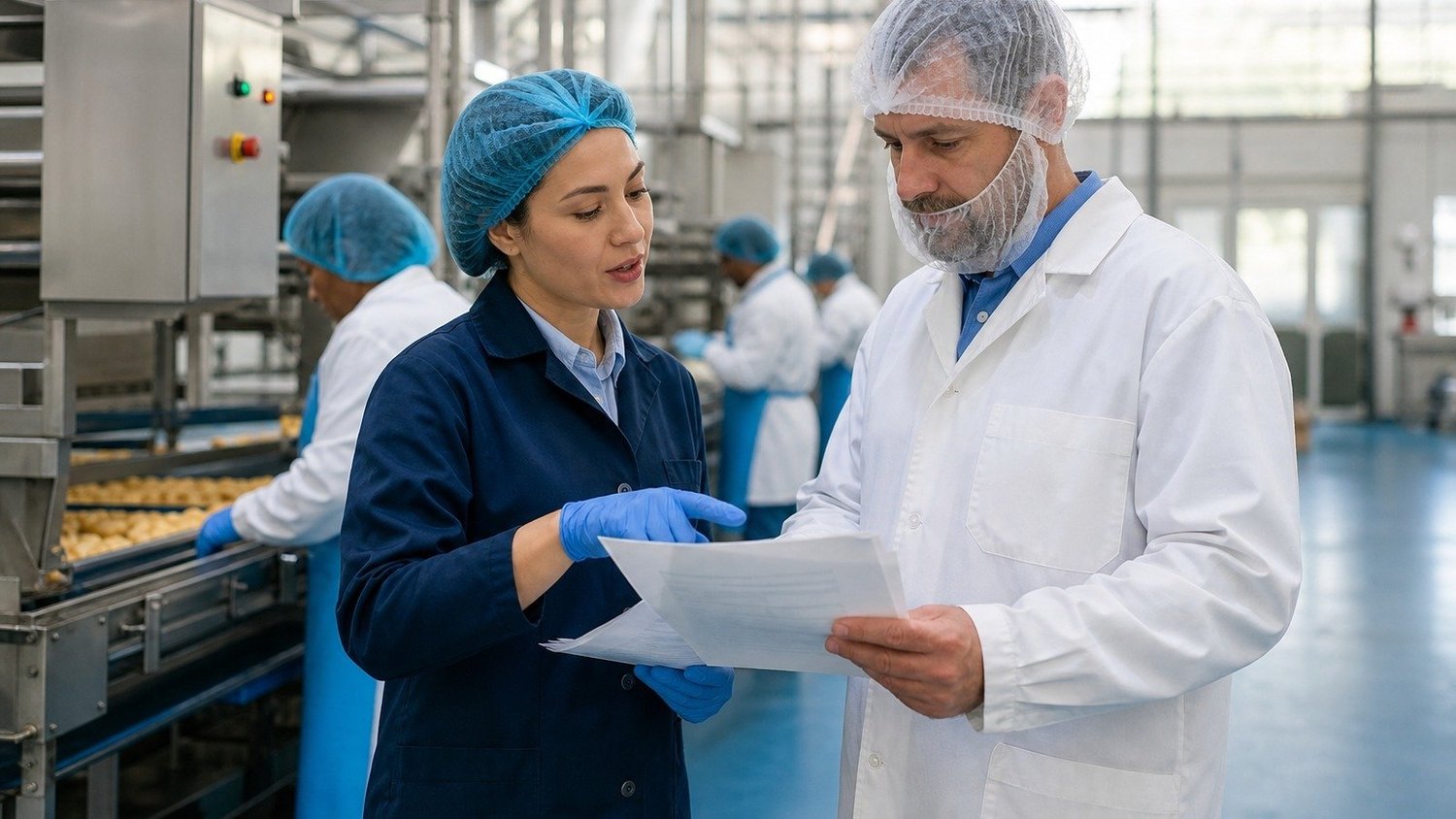
Interpreter supporting food safety communication on the manufacturing floor.
A food production line runs on precise timing, exact temperatures, and instructions nobody can afford to guess at. When a line operator, sanitation crew member, or quality technician has limited English proficiency, a missed instruction can mean a contaminated batch, a recordable injury, or a failed audit finding. A planned food manufacturing interpreters Indiana workflow gives supervisors, auditors, and multilingual staff a single accurate conversation instead of a guess.
Plants across Evansville and Jasper, Indiana; Henderson and Louisville, Kentucky; and Southeast Illinois increasingly run production floors where a meaningful share of the workforce speaks a language other than English at home. A qualified interpreter closes that gap during training, audits, incident response, and daily supervision, so instructions travel accurately in both directions.
Quick summary
Train and audit floor staff through a qualified interpreter, not an untrained bilingual coworker pulled off the line.
Treat SOPs, Safety Data Sheets (SDS), and allergen documentation as translation projects with version control, not one-time favors.
Prepare interpreters before FDA or USDA visits so questions and answers travel accurately in both directions.
Build a recall and allergen-complaint communication path that works in every language spoken on the floor.
Keep a written language-access plan so the same standard applies across every shift.
Why food manufacturing interpreters Indiana plants need a real process
A plant's food safety plan is only as strong as the instructions workers actually receive. Written SOPs matter, but most day-to-day correction happens verbally: a supervisor catching a missed hand-wash step, a sanitation lead explaining a chemical dilution ratio, a line lead walking a new hire through a critical control point. If that exchange happens through gestures, a coworker's rough translation, or a phone app during a busy shift, the plant is trusting food safety to chance.
Ad hoc language solutions create three recurring problems. First, a bilingual employee pulled from their own station to translate is now doing two jobs badly instead of one job well, and their line loses supervision during the gap. Second, informal translation tends to compress or paraphrase, which strips out exactly the qualifiers — "within two hours," "below 41 degrees," "before the next changeover" — that food safety depends on. Third, when an auditor or inspector asks a direct question, a paraphrased answer from an unqualified interpreter can misrepresent what actually happens on the floor, which is worse for the plant than an honest answer through a qualified interpreter.
A planned interpreter relationship removes the guesswork. The interpreter renders what is said, not a summary of what someone believes was meant, and the supervisor or auditor keeps full control of the conversation.
FSMA, HazCom, and the language-access gap
The FDA's Food Safety Modernization Act shifted food safety from reacting to contamination toward preventing it, which means every plant needs documented preventive controls, verified training, and a recall plan that actually works under pressure. None of that holds up if the people executing it cannot understand the instructions behind it.
OSHA's Hazard Communication standard adds a second layer: employees have to understand the chemical hazards they work around, including sanitation chemicals common on food production floors. A translated Safety Data Sheet sitting in a binder does not satisfy that requirement if the worker mixing the chemical was trained through a rushed, informal explanation. Training has to be delivered — and verified — in a way the employee actually understands, which is exactly where a qualified interpreter earns its cost back the first time an incident is avoided.
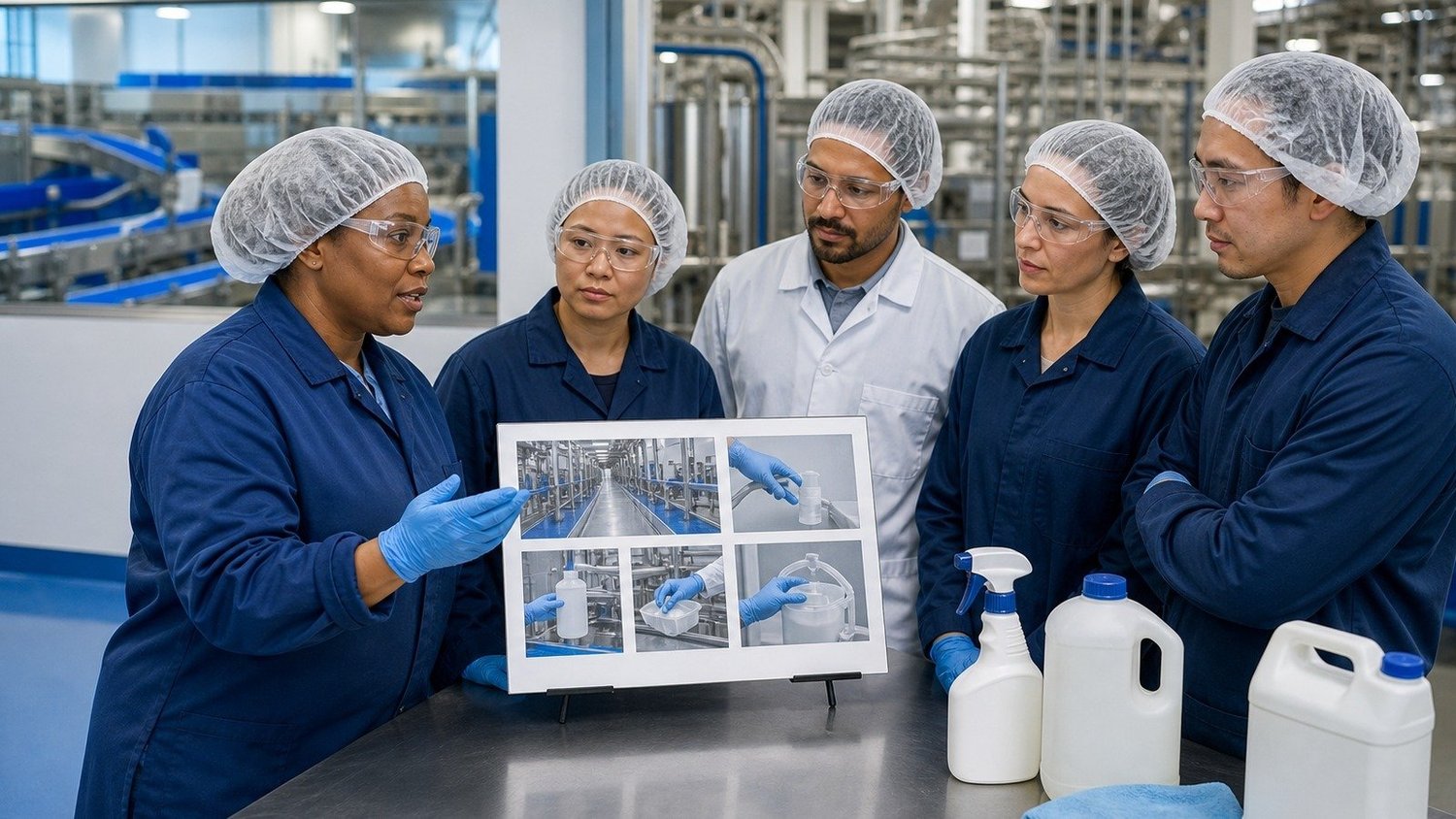
Food safety training supported by a qualified manufacturing interpreter.
Build a multilingual food-safety training program
Initial food safety and HazCom training, along with the annual refreshers most plants run, should include a qualified interpreter for any language spoken by a meaningful part of the workforce. Schedule the interpreter for the full session rather than a condensed side conversation afterward, and give the trainer a short pre-brief on terminology — critical control points, allergen zones, lockout/tagout, changeover — so the interpreter can prepare accurate vocabulary in advance.
Verification matters as much as delivery. If the plant tests comprehension with a quiz or a supervised demonstration, that check should also happen through the interpreter, not just the initial delivery. A worker who nodded through training but never confirmed understanding in their own language has not actually completed it, regardless of what the training log shows.
Translate SOPs, SDS sheets, and allergen documentation correctly
Interpretation supports live conversation; translation produces the written documents workers reference on their own. Standard operating procedures, Safety Data Sheets, allergen control plans, and posted critical-control-point charts should exist as professionally translated documents, not machine-translated printouts taped to a wall.
Keep a simple document log: source file, language, translator, date translated, and the version currently posted on the floor. When an SOP changes, the translated version needs to change with it — a translated document that is one revision behind the English original can quietly reintroduce the exact risk the update was meant to close.
Prepare interpreters for audits and regulatory visits
FDA and USDA visits move fast, and questions can shift from general process review to a specific worker's actions in seconds. Brief the interpreter on the visit's likely scope beforehand — which lines, which systems, which prior findings — so unfamiliar vocabulary does not slow the exchange down mid-question.
During the visit, the plant's quality or compliance lead should keep control of the conversation and speak in the first person to the worker or auditor, letting the interpreter render each exchange directly. That structure keeps the record accurate and avoids the appearance that the plant is filtering answers through an intermediary.
Heartland provides food manufacturing language services built around plant floor conditions, along with broader interpretation and translation services for HR, compliance, and leadership conversations off the floor.

Compliance planning supported by professional food manufacturing interpretation.
Handle allergen and recall communication without delay
An allergen complaint or a recall does not wait for business hours, and neither can the plant's ability to communicate about it. Identify in advance which languages the recall communication plan needs to cover, and confirm how quickly an interpreter can be reached for an urgent call, a floor announcement, or a rapid-response meeting.
Recall and allergen communication should never rely on a bilingual employee's on-the-spot judgment about how to phrase a health risk. The exact wording matters, and a qualified interpreter working from an approved script keeps that message consistent no matter who is on shift when the call comes in.
Choose interpreters who understand plant floor conditions
Not every qualified interpreter is comfortable on a production floor. Effective food manufacturing interpreters understand PPE requirements, can work around production noise, and know the difference between a critical control point and routine housekeeping — distinctions that change how carefully a sentence needs to be rendered.
Food manufacturing language-access checklist
Identify every language spoken by a meaningful share of the workforce.
Translate SOPs, SDS sheets, and allergen documentation, and keep a version log.
Schedule a qualified interpreter for initial and refresher food-safety and HazCom training.
Verify comprehension in the worker's own language, not just attendance.
Brief interpreters before FDA or USDA visits on likely scope and vocabulary.
Confirm rapid interpreter access for allergen complaints and recalls.
Record the plan in the plant's written food-safety and training documentation.
Better language access supports safer plants
Across the Tri-State's food manufacturing floors, the plants with the fewest language-related near-misses tend to be the ones that planned for language access instead of improvising it shift by shift. A qualified interpreter does not replace a plant's food safety program — it makes sure every worker on the floor can actually follow it.
Need an interpreter for food-safety training, an FDA or USDA visit, or floor supervision? Request a quote from Heartland Language and include the language, shift, location, and general purpose of the assignment.
Frequently Asked Questions
Does a translated SOP satisfy OSHA's Hazard Communication training requirement?
A translated document helps, but HazCom requires employees to understand the training itself. Verified, interpreter-supported training — not just a translated handout — is what demonstrates comprehension.
Can a bilingual line lead interpret during an FDA inspection?
An employee can help with informal communication, but a qualified interpreter is the safer choice for regulatory visits, since accuracy and impartiality directly affect the plant's official record.
How much advance notice does a food manufacturing interpreter need?
Routine training and scheduled audits benefit from several days' notice so the interpreter can prepare vocabulary. Recall and allergen situations need a faster path, which should be arranged and tested before an emergency, not during one.
What languages do Tri-State food manufacturing plants most often need?
It varies by plant and shift, which is why an initial language-access assessment matters more than assuming a single language covers the workforce.

About the author
Jacob Brown
Jacob Brown shares practical guidance from Heartland Language Services on clear, reliable communication for multilingual workplaces.
Keep reading
Related articles
July 10, 2026
Spanish Interpretation Services in Evansville, Indiana
Businesses across Evansville and the Tri-State area rely on professional Spanish interpretation to communicate clearly, protect compliance, and serve multilingual communities. Learn how Heartland Language supports healthcare, legal, manufacturing, and business teams.
Read article →July 6, 2026
Manufacturing Interpreter Indiana: Protecting Workers Through Language Access
Manufacturing interpreter services help Indiana employers reduce safety risk, improve HR communication, and support multilingual teams across Evansville, Henderson, Louisville, Jasper, and Southeast Illinois.
Read article →August 3, 2026
Manufacturing Work Instruction Translation Indiana Guide
Clear work instructions help multilingual production teams perform the same task the same way. This guide explains how Tri-State manufacturers can build a controlled translation process.
Read article →