
Insights
Manufacturing Equipment Training Interpreters Indiana
A new machine only pays off if every operator understood the vendor's commissioning and safety training. This guide helps Tri-State manufacturers get equipment installation and training right in every language on the floor.
Published September 19, 2026 · By Heartland Language Team
By the Heartland Language Team
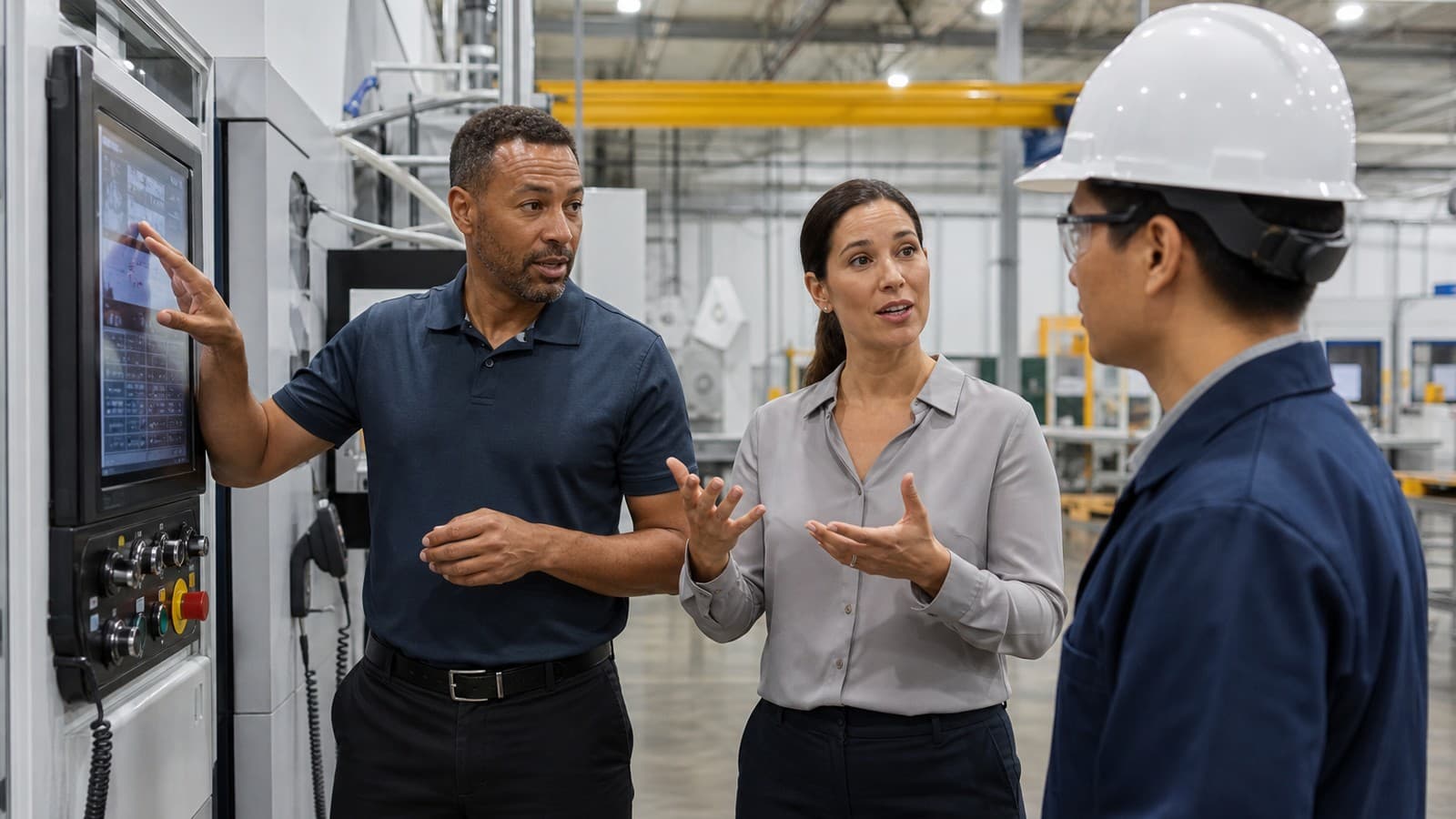
A new machine shows up at the plant, and for two or three days an OEM field-service technician runs the show: commissioning the equipment, walking operators through the control panel, and training maintenance staff on the energy-isolation points before handing the line back to the plant. Manufacturing equipment training interpreters Indiana employers bring to that visit are what turn a rushed, English-only walkthrough into training every operator actually understood, because the vendor rep who explains the e-stop, the guarding interlocks, and the warranty conditions is usually gone before the next shift starts.
Manufacturers across Evansville and Jasper, Indiana; Henderson and Louisville, Kentucky; and Southeast Illinois install new or upgraded equipment on a regular cycle, and the technician sent to commission it is almost always English-speaking, on a tight travel schedule, and not equipped to train a multilingual floor without help. A plant that carefully interprets its own recurring safety meetings, then leaves the one-time vendor training session uninterpreted, has skipped the exact visit where the equipment-specific hazards and warranty terms are explained once and never repeated.
Quick summary
- OSHA's machine guarding standard requires that operators understand how a machine's guards, interlocks, and emergency stops actually work, not just that guards are physically present.
- Vendor commissioning almost always includes an energy-isolation walkthrough that overlaps with the plant's own lockout/tagout program under OSHA's control-of-hazardous-energy standard.
- Many equipment warranties condition coverage on operators completing the vendor's documented training, which gives a plant a paper-trail reason to interpret the session on top of the safety one.
- The vendor technician is typically on-site for a fixed window and will not return to re-explain what a bilingual coworker paraphrased incompletely the first time.
- A translated user manual handed out afterward does not substitute for the live walkthrough where the technician answers questions about the specific machine in front of the operator.
The safety case for manufacturing equipment training interpreters Indiana employers can defend
OSHA's general machine guarding standard, published at 29 CFR 1910.212, requires that machines be equipped with guarding to protect operators from hazard points, and that guarding be used and maintained as intended. A guard bolted on correctly does nothing for an operator who was never told, in a language they understand, which interlock disables the machine and which panel is never to be opened during operation. The standard's protection depends on operators who actually understand how the machine's safety features work; a machine arriving with the right hardware installed doesn't by itself satisfy that.
That same understanding gap shows up during commissioning itself. New equipment installation routinely requires locking out multiple energy sources, electrical, pneumatic, hydraulic, before a technician can safely work inside the machine, and OSHA's control of hazardous energy standard is the framework both the vendor and the plant's own maintenance staff are expected to follow. A vendor walkthrough that names the disconnect points and lockout devices specific to the new machine gives maintenance staff information they cannot get anywhere else once the technician leaves.
Vendor commissioning is a one-time visit, not a recurring class
Plants build recurring safety meetings, shift huddles, and onboarding sessions into an interpretation routine over time. A vendor commissioning visit does not work that way: the technician typically has two or three days on-site, a fixed travel schedule, and no plan to come back and re-explain a control sequence a plant relied on a bilingual coworker to paraphrase. Whatever the operators understand from that visit is largely what they will know about the machine going forward, because the technician who could answer a follow-up question in person is no longer available.
Treating the vendor visit as a scheduling afterthought, arranged only if a bilingual employee happens to be free that day, leaves a plant's most safety-critical, least-repeatable training session as the one most likely to be incompletely understood.
Equipment warranties often condition coverage on documented training
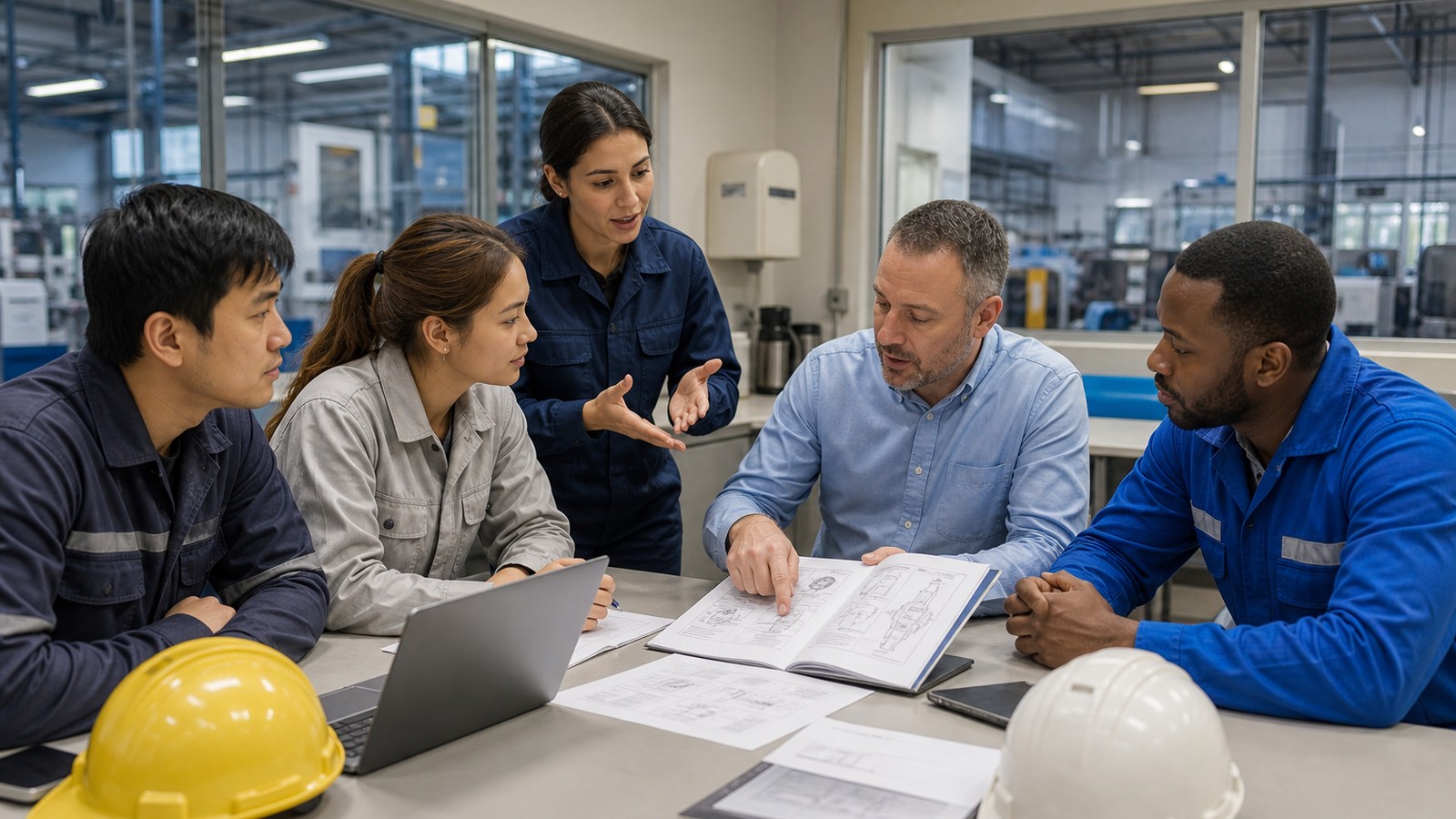
Many OEM equipment warranties require operators to complete the vendor's training program as a condition of coverage, and some require the plant to document who attended and what was covered. An interpreter present for the session does more than close a comprehension gap: a plant that can show operators received full, interpreted training, not an abbreviated coworker summary, has a stronger position if a warranty claim is later questioned over an operator error the vendor attributes to inadequate training.
A translated copy of the equipment manual handed out after the visit does not recreate what the live session covered. The technician answers questions specific to the unit as installed, points to the actual control panel and guard positions, and adjusts the explanation based on what operators ask, none of which a manual, translated or not, can do on its own.
Never let a bilingual coworker stand in for the vendor's commissioning walkthrough
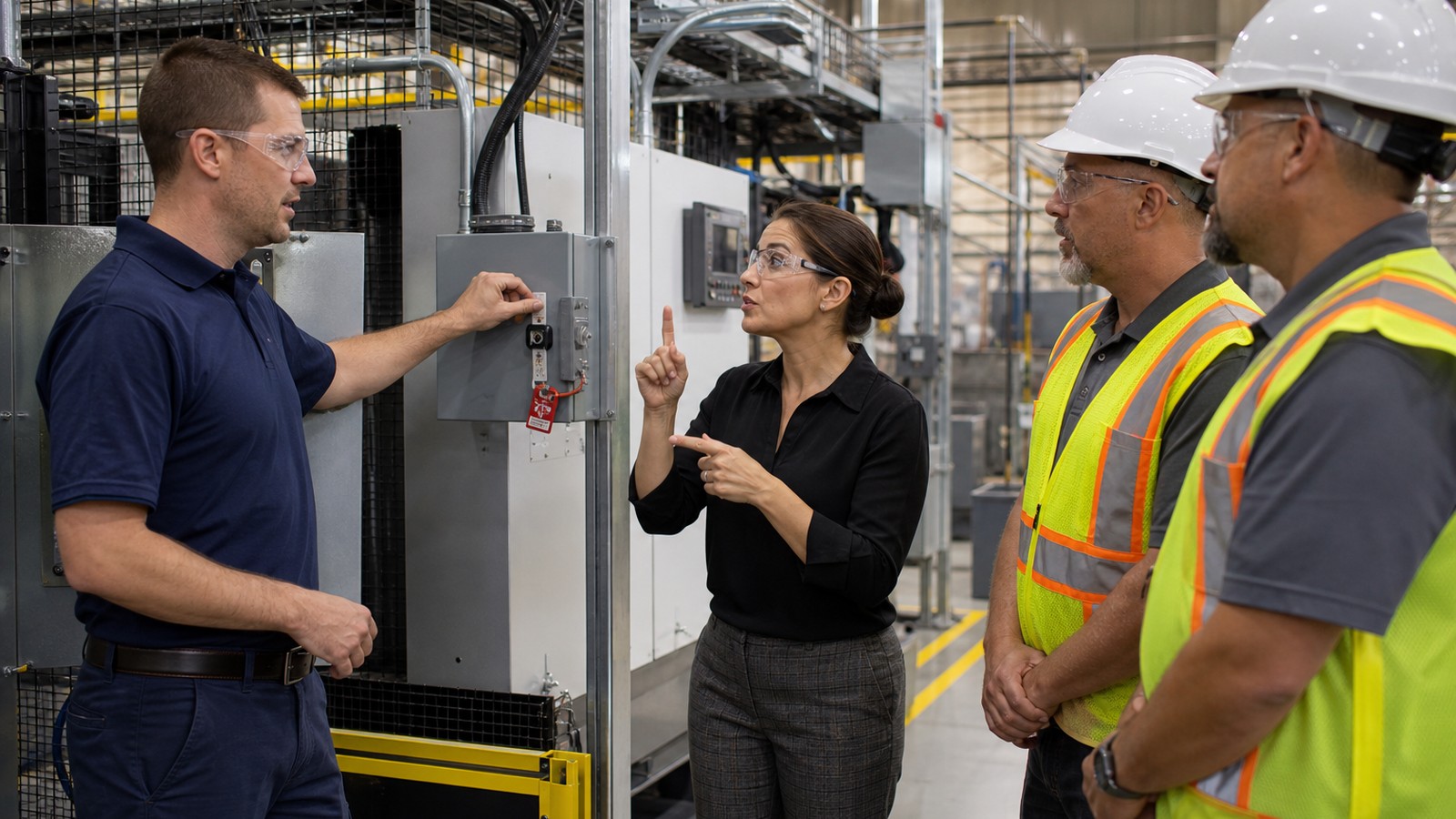
Pulling a bilingual employee off the floor to informally relay a vendor technician's explanation is a common shortcut, and it is a risky one for a training session covering hazard points and energy-isolation procedures specific to a machine the coworker has never operated. An employee without interpreter training and without prior familiarity with the new equipment may miss or oversimplify a warning about a specific pinch point, an unusual startup sequence, or a caveat about which interlock must never be bypassed.
A vendor technician who cannot confirm the training was fully understood has no reliable way to know whether operators actually absorbed the machine-specific hazards covered, or a well-meaning coworker's incomplete version of them.
Building interpreter access into Tri-State equipment rollouts
Tri-State manufacturers and food-processing employers serving Evansville, Henderson, Louisville, Jasper, and the surrounding Southeast Illinois communities bring in new or upgraded equipment across meaningfully multilingual workforces on a regular basis. Heartland supports manufacturing employers with on-site interpreting for vendor commissioning and operator training visits, paired with corporate language training for the HR and maintenance staff who coordinate vendor schedules, as part of broader spoken-language interpreting built around equipment installs, technician site visits, and the documentation that follows.
Scheduling interpreter coverage for a known vendor visit, the same way a plant schedules coverage for a safety audit, keeps the one training session with no re-do from becoming the one operators get through only partly understood.
Equipment training interpretation mistakes that increase risk
Assuming the vendor will bring its own interpreter is the most common mistake. Most OEM field-service technicians travel alone and have no plan or budget for interpretation; the plant hosting the visit is the only party positioned to arrange it in advance.
Waiting until the technician arrives to look for interpreter coverage is the second common mistake. Vendor visits are usually scheduled weeks ahead, which gives a plant enough lead time to book a qualified interpreter rather than scrambling on the morning the technician shows up.
Manufacturing equipment training interpreter checklist
- Confirm the vendor commissioning and training schedule as soon as it is set, and book interpreter coverage at the same time.
- Brief the interpreter on the equipment type and known hazard points before the technician arrives, when documentation is available.
- Keep the interpreter present for the full technical walkthrough, not just the opening safety overview.
- Interpret the energy-isolation and lockout/tagout portion of the walkthrough with the same priority as the general operating instructions.
- Never substitute a bilingual coworker for a qualified interpreter during vendor-led equipment training.
- Document which operators attended the interpreted training, consistent with the equipment warranty's documentation requirements.
- Apply the same standard across every language spoken by operators and maintenance staff assigned to the new equipment.
This checklist is an operational starting point. Employers should confirm their specific OSHA and equipment-warranty obligations with their own safety compliance and procurement professionals.
Equipment installations Tri-State manufacturers can trust, not guess through
A new machine is only as safe and as covered as what the operators and maintenance staff actually understood during commissioning. Interpreted vendor walkthroughs, energy-isolation training, and documented sign-off give Tri-State manufacturers a defensible record and give operators equipment training they can genuinely follow, in every language on the plant floor.
Bringing in new equipment and need interpreter coverage for the vendor visit? Request a quote from Heartland Language and include your installation date, common floor languages, and expected training duration.
Frequently Asked Questions
Does OSHA require an interpreter for new equipment training?
OSHA's machine guarding standard requires operators to understand how a machine's guards, interlocks, and emergency stops work, which makes qualified interpretation a practical necessity when an operator isn't fluent in the language the vendor's training is delivered in.
Will the equipment vendor bring its own interpreter?
Usually not. Most OEM field-service technicians travel alone with no interpretation budget or plan, which leaves the hosting plant as the only party positioned to arrange coverage in advance.
Is a translated equipment manual enough after the vendor leaves?
No. A manual, translated or not, can't answer a question specific to the installed unit or repeat a hazard warning the technician gave in person, and the technician is typically unavailable to return once the visit ends.
Can a bilingual coworker interpret a vendor's commissioning walkthrough?
A bilingual coworker typically lacks interpreter training and prior familiarity with the new equipment, and may miss or oversimplify a warning about a specific hazard point or energy-isolation step that a qualified interpreter would catch.
About the author
Heartland Language Team
Heartland Language Team shares practical guidance from Heartland Language Services on clear, reliable communication for multilingual workplaces.
Keep reading
Related articles
September 16, 2026
Occupational Health Clinic Interpreters Indiana
A pre-employment physical, respirator clearance, or injury visit only counts if the employee actually understood it. This guide helps Tri-State manufacturers get occupational health clinic visits right in every language on the floor.
Read article →August 24, 2026
Lockout/Tagout Training Interpreters Indiana: Machine Safety Guide
A locked-out machine only stays safe if every worker near it understands what the lock means. This guide helps Tri-State manufacturers interpret lockout/tagout training correctly.
Read article →September 13, 2026
Forklift Operator Certification Interpreters Indiana
A forklift certification only counts if the operator actually understood it. This guide helps Tri-State manufacturers certify every operator in a language they understand.
Read article →